IREN Blackwell expansion has become a sharper test of how quickly AI infrastructure providers can turn hardware access into contracted revenue. The company said on May 26 it agreed to buy about $1.6 billion of air-cooled Blackwell systems from Dell Technologies, a move Reuters reported will help IREN bring more capacity online as demand for AI computing remains intense.
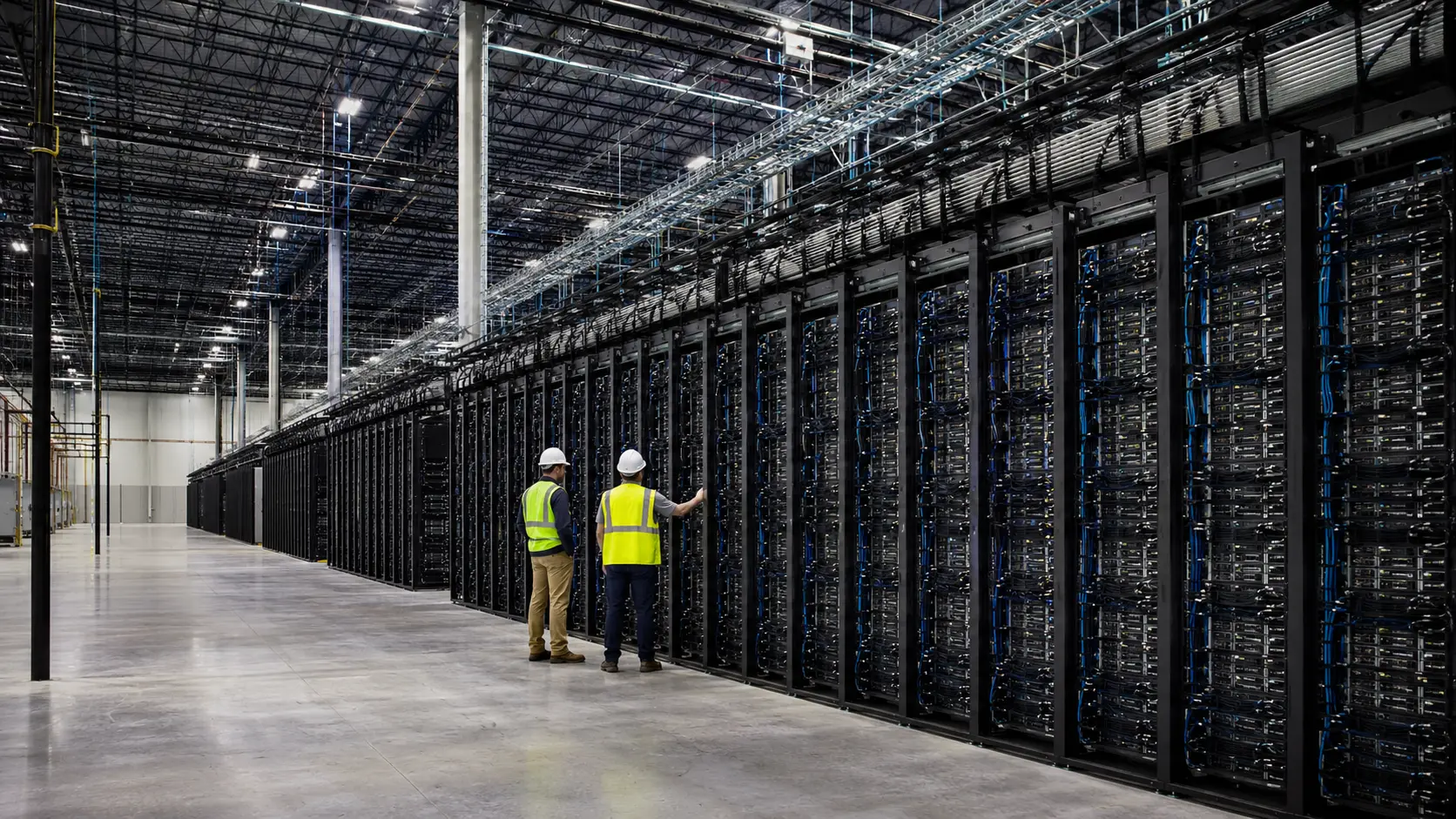
According to IREN’s statement, the systems will be deployed across existing data centers at its Childress, Texas campus and are targeted for commissioning in early 2027. Once that capacity is online, the company said its annualized run-rate revenue is expected to rise to $4.4 billion from $3.7 billion.
The announcement matters beyond one hardware order. It shows that in the current AI buildout, owning land and power is only part of the equation. Operators also need dependable access to advanced chips, system integration, financing and customers willing to sign multiyear contracts before all the capacity is even live.
Why the IREN Blackwell Deal Matters Now
The latest agreement adds another layer to IREN’s attempt to reposition itself as a full-scale AI cloud operator rather than a company defined mainly by its earlier bitcoin-mining business. In its May 7 quarterly update, IREN said its results reflected continued progress in that transition, even as near-term revenue and earnings were affected by the retirement of some mining hardware ahead of GPU installation.
That context is important because the Dell purchase is not just a procurement detail. It is part of a broader race among AI infrastructure providers to secure scarce components, stand up data halls fast and convert those deployments into visible revenue for investors and enterprise customers.
IREN Blackwell Capacity Moves Closer to Revenue
IREN said the Dell agreement covers GPUs, servers, storage, networking, ancillary equipment, integration services and warranties, with payments structured on a post-shipment basis. That matters because it reduces some near-term cash timing pressure while still committing the company to a large execution program.
The company tied the purchase directly to a previously announced five-year, $3.4 billion managed-services AI cloud contract with NVIDIA. In its May 7 announcement, IREN said it would provide NVIDIA with managed GPU cloud services for internal AI and research workloads, serviced by air-cooled Blackwell platform systems deployed at Childress.
Seen together, the May 7 and May 26 statements make the business logic clearer. The Dell hardware order is the physical layer needed to support a contract that IREN has already framed as revenue-bearing, helping the company narrow the gap between future AI demand and monetizable installed capacity.
Dell Extends the Hardware Lock-In Race
The Dell angle also highlights how AI infrastructure economics are being shaped by supply-chain access as much as by chip design. In a market where leading GPUs remain difficult to secure at scale, companies that can line up servers, networking and deployment services alongside the chips themselves can move faster than rivals still waiting on fragmented procurement.
IREN co-CEO Daniel Roberts said in the company’s release that securing capacity and accelerating commissioning are top priorities in a market where time-to-compute is critical. That phrasing captures the central industry issue: customers increasingly value speed to usable compute, not just headline capacity announcements.
For Dell, the agreement reinforces how traditional enterprise-hardware suppliers are becoming more central to the AI spending cycle. For IREN, it reduces the risk that strong customer demand will outrun its ability to install and activate the systems needed to serve those contracts.
How Childress Fits the AI Cloud Buildout
Childress has emerged as the operational center of IREN’s near-term AI strategy. The site is where the company has been moving to reuse and expand existing infrastructure, pairing secured power and data-center buildouts with Blackwell-based cloud services for large customers.
That is one reason the story has broader relevance than a single purchase agreement. The question for investors is not whether AI demand exists, but which operators can turn a favorable site position into reliable capacity, customer trust and recurring revenue at scale.
IREN Blackwell at Childress Builds on the NVIDIA Contract
IREN said on May 7 that its NVIDIA agreement would be deployed within roughly 60 megawatts of existing data centers at Childress. In the same update, the company described a wider strategic partnership with NVIDIA tied to a planned 5-gigawatt global infrastructure pipeline.
That earlier disclosure also said NVIDIA received a five-year right to buy up to 30 million IREN shares at $70 each, representing a potential investment of as much as $2.1 billion subject to conditions. While the equity right is separate from the Dell hardware purchase, it underlines how strategically important IREN’s platform has become to partners trying to secure AI capacity.
The May 26 announcement shows that the next step is not abstract partnership language but equipment arriving, being financed and getting commissioned. That is where many AI infrastructure stories become more meaningful, because the market can begin judging delivery schedules and revenue conversion instead of simply future ambition.
Microsoft Shows the Same Campus Is Already Strategic
IREN’s Childress development also sits alongside another major relationship. Reuters noted that Microsoft signed a $9.7 billion deal with IREN in November that includes access to NVIDIA’s advanced chips, giving the campus a second major proof point as a destination for large-scale AI workloads.
That overlap helps explain why the Dell purchase carries weight beyond its price tag. If one campus is being used to support relationships with both NVIDIA and Microsoft, the site becomes more than a speculative expansion story. It starts to look like a strategic node in the commercial AI compute network now forming around major model developers and cloud buyers.
At the same time, concentration at a single site can create pressure to execute cleanly on power, cooling, integration and schedule. Delays, cost overruns or weaker-than-expected utilization would matter more when a campus is central to multiple high-value customer commitments.
What Investors Should Watch Next
The immediate headline is straightforward: IREN has ordered a large batch of Blackwell-based systems and says the deployment can lift annualized run-rate revenue by another $700 million. But the more important question is how much of that projected revenue becomes durable, high-quality cash generation once the systems are live.
Management’s assumptions already show the difference between contracted business and modeled upside. In the May 26 release, IREN said its $4.4 billion annualized run-rate figure includes contracted Microsoft and NVIDIA revenue plus additional estimated revenue from planned GPU deployments, and it explicitly noted that not all of that amount is fully contracted.
IREN Blackwell Financing Still Carries Execution Risk
IREN said it is advancing GPU financing in connection with the Dell agreement, consistent with prior hardware deployments. That should help preserve flexibility, but it also means investors will be watching the structure and cost of financing closely as AI infrastructure projects become larger and more capital intensive.
The company’s May 7 quarterly update said near-term capital expenditure was expected to be met through existing cash, operating cash flow, GPU financing and additional financing initiatives. That provides a framework, but it does not remove the normal risks tied to delivery timetables, financing terms and the challenge of bringing expensive hardware into productive service quickly.
In other words, the market has moved beyond rewarding every AI capacity announcement equally. Companies now need to show that they can finance the build, receive the equipment, install it on schedule and keep utilization high enough to justify the capital involved.
AI Infrastructure Economics Depend on Time-to-Compute
The deeper reason this story matters is that it captures the new operating logic of the AI boom. Winning is increasingly about compressing the time between securing demand, sourcing equipment, energizing facilities and handing customers usable compute at scale.
That is why the Dell purchase, the NVIDIA services contract and the Microsoft relationship fit together as one business narrative. They suggest IREN is trying to position itself as a vertically integrated bridge between scarce power, scarce hardware and customers that do not want to wait years for new AI capacity.
If the company executes, the Childress deployment could become another example of how secondary infrastructure players are being pulled into the center of the AI economy. If it stumbles, it will reinforce how difficult it is to convert the current rush for GPUs and data centers into disciplined, repeatable infrastructure earnings.
For now, the Dell agreement gives IREN a fresh way to show that AI infrastructure value is increasingly created at the point where hardware availability, site readiness and customer contracts finally meet. Readers can continue following related business and technology coverage at Berrit Media.
Discover more from Berrit Media
Subscribe to get the latest posts sent to your email.