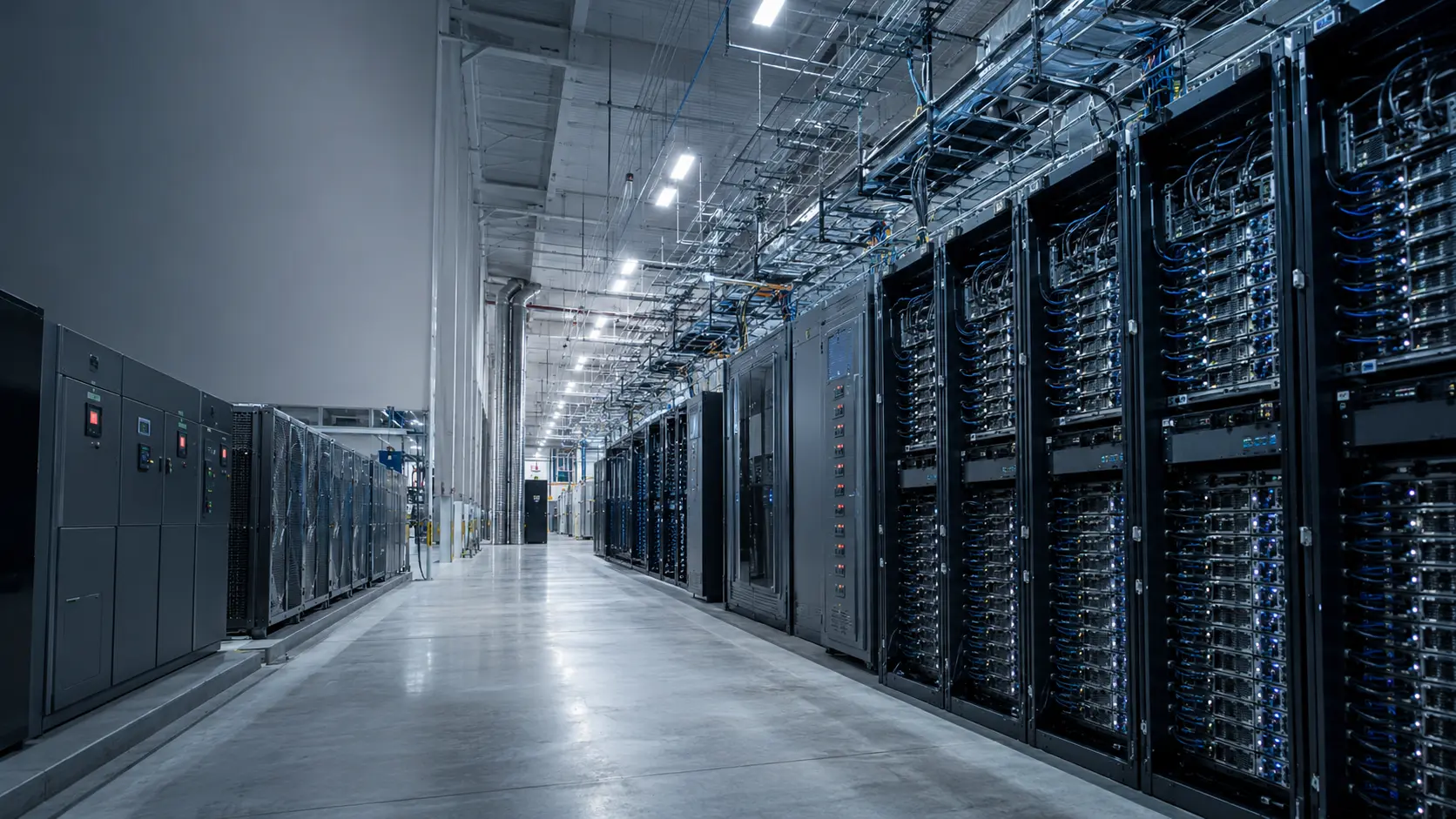
TPU cloud is moving beyond an in-house Google advantage after Google and Blackstone said on May 18 that they will form a new U.S.-based company to sell access to Google Cloud’s Tensor Processing Units through a compute-as-a-service model. The structure turns one of the company’s most important artificial-intelligence assets into the center of a standalone infrastructure business.
Blackstone said it will make an initial $5 billion equity commitment to bring 500 megawatts of capacity online in 2027, with plans to scale significantly over time. Google will supply hardware, including TPUs, along with software and services, while Benjamin Treynor Sloss, a longtime Google executive focused on infrastructure and operations, is set to lead the new company as chief executive.
The announcement matters because it is not only another data-center expansion story. It shows how the AI race is starting to reorganize around who can package chips, power, facilities, networking, and financing into a product that customers can buy without waiting for the next hyperscaler capacity cycle.
It also gives Google a fresh route to commercialize its custom silicon outside the usual boundaries of Google Cloud. In practical terms, that means customers will have another way to reach Google’s AI hardware while Blackstone uses its balance sheet and infrastructure experience to help turn scarce compute into a larger utility-like business.
Why TPU Cloud Matters Beyond Google Cloud
The most important point in the announcement is that the venture is not being framed as a conventional supplier agreement. Blackstone and Google said the new company will offer data-center capacity, operations, networking, and TPUs together, which means the service is being built as a full stack for AI workloads rather than a simple equipment lease or wholesale hosting contract.
That distinction helps explain why the TPU cloud story deserves attention from investors, enterprise buyers, and infrastructure groups alike. For years, access to frontier AI compute has depended heavily on hyperscalers’ own capacity planning and internal priorities. This model suggests Google now sees room for an additional commercial lane that can sit beside Google Cloud rather than only inside it.
The Venture Structure Is Unusually Direct
Blackstone’s press release said the joint venture will create a U.S.-based company that gives customers another option to access cloud TPUs in addition to using them through Google Cloud. Google’s own blog echoed that point, saying the arrangement is meant to give customers more choice and flexibility in how they reach TPU capacity.
That language matters because it signals a deliberate extension of Google’s distribution model. Instead of keeping TPU access tied exclusively to its own cloud platform, Google is now allowing a separate infrastructure company to package those chips with dedicated operational capacity and sell the result as a distinct service.
The result is a more specialized offer aimed at organizations that care less about broad cloud menus and more about dependable accelerated compute. That does not replace Google Cloud’s role, but it does widen the commercial pathways through which Google can monetize its custom hardware and the software stack wrapped around it.
TPU Cloud Demand Is Tied to a Wider AI Capacity Shortage
Reuters reported that the venture is aimed at capitalizing on what the companies described as insatiable demand for AI computing services. That framing fits the wider market reality of 2026, in which companies are competing not only on model quality but on whether they can secure enough training and inference capacity at workable economics.
Blackstone said TPUs have been developed and deployed in production for more than a decade and now power workloads for major AI labs, capital-markets firms, and other organizations running complex high-performance computing applications. It also said the chips power Gemini and AI-driven products used by billions of people globally, underscoring that this is mature internal infrastructure being pushed harder into the external market.
Reuters added that analysts and investors have said Google is taking a sizeable share of new AI-driven computing demand, helped by its business tools and custom chips. In that context, the TPU cloud venture looks less like an experiment and more like a response to a market where supply access has become a competitive product in its own right.
What Blackstone Brings to the TPU Cloud Push
Google is bringing the chips, software, and technical domain expertise, but the announcement would look very different without Blackstone’s role. The private-markets giant said it has more than $1.3 trillion in assets under management and described itself as the largest global provider of data centers, a combination that gives it unusual leverage in capital-intensive infrastructure markets.
That makes Blackstone more than a financial sponsor. In AI infrastructure, capital is no longer only a funding input. It shapes how quickly operators can secure land, power, equipment, construction timelines, and long-duration expansion plans. The venture effectively treats those financing capabilities as part of the product being sold to future customers.
Capital and Power Become Part of the Product
The initial $5 billion equity commitment and 500-megawatt 2027 target are important because they make the scale concrete. Many AI announcements talk broadly about demand, partnerships, or future possibilities. This one ties the thesis to a specific capacity target, a defined starting capital commitment, and an explicit timeline for bringing the first wave online.
Reuters noted that Blackstone has been stepping up investments in data centers, power generation, and transmission assets as the AI boom pushes operators to secure long-term energy supply deals. That wider posture helps explain why this venture is strategically coherent for the firm. The company is not simply betting on one customer or one chip. It is investing across the supporting systems that determine whether AI infrastructure can actually be built at speed.
Seen that way, the TPU cloud business is also a story about industrial organization. Whoever can reliably combine energy, financing, construction, and advanced silicon will have a meaningful advantage as AI infrastructure becomes harder, slower, and more expensive to expand with each new wave of demand.
A Google Veteran Will Run the TPU Cloud Buildout
Blackstone said Benjamin Treynor Sloss, a Google executive with more than two decades of experience building and operating Google’s global infrastructure and operations, will lead the new company as CEO. That detail reduces one obvious execution question: whether a private-capital-backed venture can move fast enough in a business where technical reliability matters as much as project finance.
Leadership matters especially in a TPU cloud buildout because the operational challenge is broader than filling data halls with chips. The company will have to line up networking, cooling, energy, customer onboarding, capacity management, and software services in a way that feels credible to buyers running expensive AI workloads.
Putting a longtime Google infrastructure operator in charge suggests the partners want the new company to inherit some of the institutional discipline behind Google’s own systems rather than function as a loose financial joint venture. That matters because the real bottleneck in AI infrastructure is often execution, not just money.
How the TPU Cloud Venture Could Reshape AI Competition
The bigger strategic question is what this means for the shape of AI competition. The market has spent most of the last year focusing on models, chipmakers, and hyperscaler capital spending. This deal points to another layer of competition, one in which financial sponsors and platform companies create dedicated vehicles to turn compute access into a standalone service category.
That matters because customers increasingly want alternatives. Some need more flexibility than a standard public-cloud arrangement offers. Others want dedicated capacity, clearer economics, or a procurement path that is closer to infrastructure contracting than general cloud consumption. The TPU cloud model appears designed to speak directly to that demand.
More Access Could Change TPU Cloud Pricing
Neither company announced pricing, and it is too early to say how the economics will compare with standard cloud contracts. Still, the basic commercial signal is clear. More routes to the same class of Google hardware could give large buyers more leverage in how they negotiate access to high-end AI capacity.
If that happens, the TPU cloud venture could influence the market even before it reaches full scale. Customers do not need dozens of identical suppliers for pricing pressure to appear. They need a credible alternative that is well funded, operationally serious, and built around hardware with proven production use. This announcement checks each of those boxes more convincingly than many earlier AI infrastructure partnerships did.
At the same time, greater access does not necessarily mean cheaper compute across the board. The business still depends on expensive facilities, power availability, networking, and specialized operations. What may change first is bargaining power and deal structure rather than headline list prices.
Google Is Externalizing an Internal Advantage
Google’s TPUs have long been one of the company’s strongest strategic assets, but much of their value has historically been expressed through internal products and Google Cloud. By backing a separate TPU cloud route, Google is effectively externalizing more of that advantage and allowing a partner-backed vehicle to widen the market around it.
That move could matter well beyond this one venture. Reuters reported that Google has been attracting new AI-driven demand with its custom chips and business tools, and the Blackstone partnership gives the company another way to convert that momentum into infrastructure scale. In effect, Google is using outside capital to expand the commercial footprint of a platform it already knows how to operate.
For the wider industry, the lesson is straightforward. The next phase of AI competition may be defined less by who can announce the biggest model and more by who can repeatedly create reliable channels to advanced compute. This TPU cloud venture does not settle that race, but it shows Google and Blackstone want a larger role in deciding how access is packaged and sold. Readers can continue following related technology and infrastructure coverage at Berrit Media.
Discover more from Berrit Media
Subscribe to get the latest posts sent to your email.