Lee acquisition became the clearest signal yet that Kontoor Brands wants to be judged less as a multi-label denim house and more as a tighter portfolio built around brands it believes can grow faster and earn better returns. On May 21, Kontoor said it had agreed to sell Lee to Authentic Brands Group for up to $1 billion, a package that includes a $750 million initial transaction value and a potential $250 million earnout tied to Lee’s performance under its new owner.
The agreement matters beyond a straightforward divestiture. Reuters reported that Kontoor has struggled to get the same momentum from Lee that it has delivered at Wrangler, while the company’s own filings and statements show management has already been reorganizing the business around Wrangler and Helly Hansen. That turns the Lee acquisition into a broader test of how apparel groups are reshaping portfolios when some heritage labels still carry name recognition but no longer fit the capital and growth priorities of the parent company.
Why the Lee Acquisition Matters for Kontoor
Kontoor framed the sale as a deliberate strategy choice, not a distressed exit. In its announcement, the company said the transaction would let it sharpen its portfolio, increase investment behind Wrangler and Helly Hansen, and improve financial flexibility.
That positioning is important because the company had already signaled earlier this month that Lee was moving out of the center of the story. In first-quarter results released May 7, Kontoor said it had launched a competitive process to divest Lee and had begun reporting the business in discontinued operations.
Lee Acquisition Caps a Quarter of Portfolio Reordering
The Lee acquisition did not emerge from nowhere. Kontoor’s first-quarter statement said Lee generated $195 million in revenue during the period, while the company’s updated full-year outlook reflected about $750 million of expected Lee revenue being shifted into discontinued operations. Management was already preparing investors to evaluate the company through the lens of its continuing operations.
That same release also made clear what Kontoor wanted the remaining company to look like. Revenue from continuing operations was driven by Wrangler growth and the contribution from Helly Hansen, and management raised its full-year outlook while arguing that a leaner brand set would better match the company’s long-term priorities.
In that context, the Lee acquisition looks less like a sudden breakup and more like the completion of a plan that had moved quickly from internal review to signed agreement. Kontoor said the board unanimously approved the sale and expects it to close in the second half of 2026, subject to regulatory approvals and customary conditions.
Why Wrangler and Helly Hansen Now Carry the Story
Kontoor’s own language leaves little doubt about what comes next. Chief executive Scott Baxter said the company wants greater focus on Wrangler and Helly Hansen, describing them as brands with significant white-space opportunities and stronger alignment with the group’s growth agenda.
The numbers in the first-quarter release help explain that confidence. Kontoor said Wrangler revenue rose 4% globally in the quarter, while Helly Hansen delivered better-than-expected revenue and profitability after joining the portfolio in 2025. Those trends give management a cleaner case for concentrating spending, distribution effort, and leadership attention on businesses it thinks can scale more efficiently.
The company also outlined how the sale proceeds could be used. Kontoor said it expects the proceeds to support increased share repurchases under its $750 million authorization as well as voluntary term-loan payments, while still preserving room for disciplined reinvestment. That makes the Lee acquisition as much a capital-allocation story as a brand story.
Authentic’s Playbook for the Lee Acquisition
For Authentic Brands Group, the deal fits a very different operating model. The company is known for assembling a portfolio of established consumer labels and then expanding them through licensing, partnerships, and brand management rather than owning every part of the operating chain itself.
That difference in approach is one reason the transaction makes strategic sense for both sides. A brand that no longer matches one owner’s growth priorities can still become valuable inside a platform designed to monetize heritage, reach, and licensing relationships across regions and product categories.
The Lee Acquisition Fits Authentic’s Licensing Model
Reuters said Authentic already owns brands including Reebok and Guess and generates roughly $38 billion in systemwide retail sales, according to its website. That scale matters because it gives the company a broad operating network for brand extensions, distribution partnerships, and category-specific licensing deals that can revive or stabilize labels that still have global recognition.
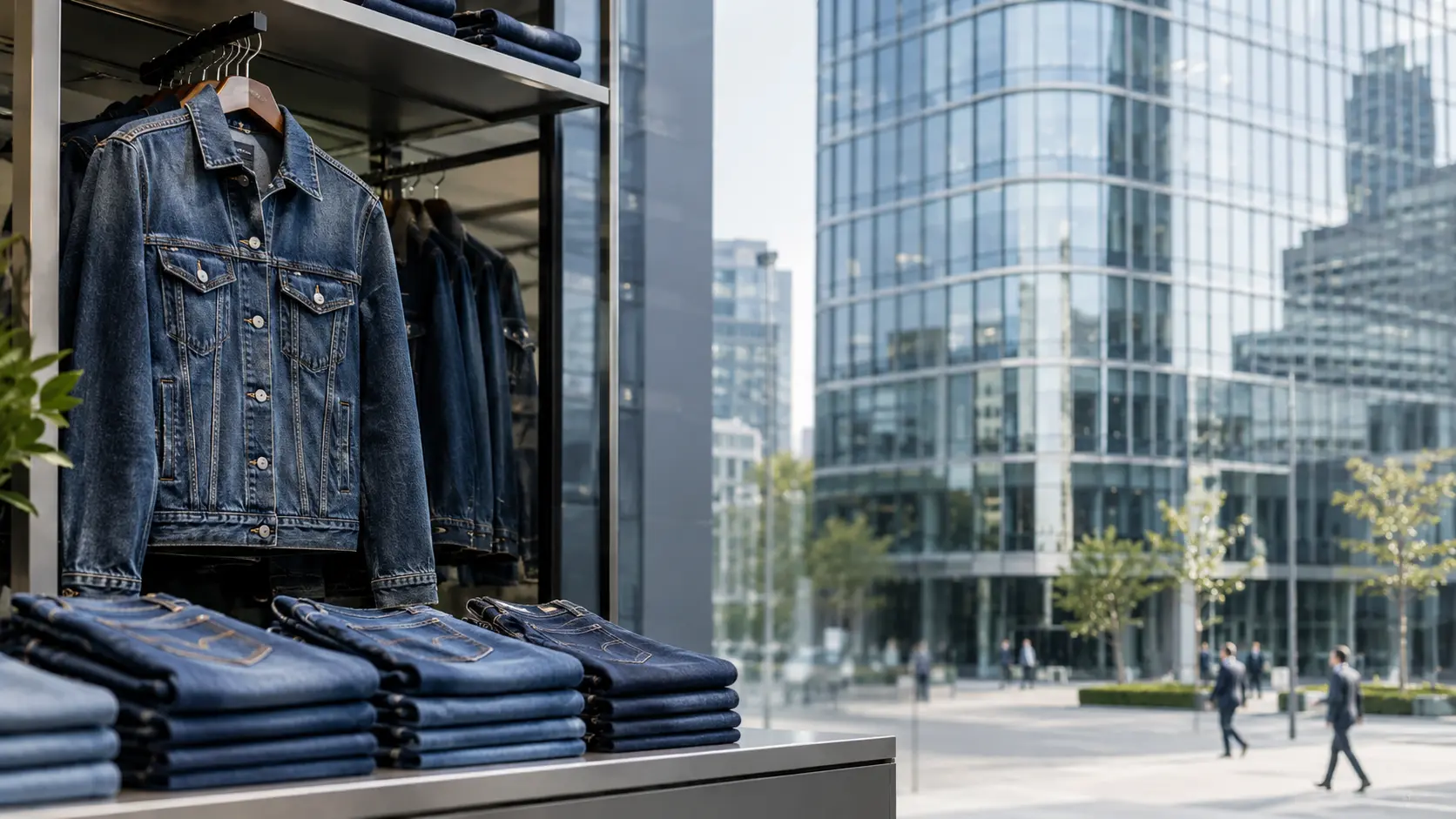
Lee offers exactly that kind of opportunity. It is one of the better-known names in denim, even if its recent commercial performance has lagged at Kontoor. Under a licensing-heavy model, the value of the brand can come less from rebuilding a large integrated apparel business and more from extracting returns through selective partnerships, geographic expansion, and tighter management of intellectual property.
The Lee acquisition therefore looks consistent with Authentic’s wider brand-building formula. Rather than betting on organic turnaround inside a traditional public-apparel structure, Authentic can treat Lee as another heritage asset whose recognition still has commercial value if matched with the right operators.
What Lee Adds to Authentic’s Global Brand Stack
Lee also broadens Authentic’s position in everyday apparel. The group has spent years building a portfolio that spans sportswear, casualwear, department-store staples, and labels with durable consumer familiarity. Adding a denim brand with deep history gives it another anchor in a category that remains globally visible even when competition is intense.
That may matter even more because the denim market no longer rewards all brands equally. Heritage still helps with awareness, but execution, distribution, and product relevance now decide whether a label can grow. A platform like Authentic’s is effectively making a wager that the Lee name still travels well enough to support a new chapter under different stewardship.
There is also timing value. Reuters noted that Authentic named Matt Maddox as chief executive officer this week, with founder Jamie Salter moving to executive chairman. Even without overstating the connection, the Lee acquisition gives the company a notable transaction to underscore continuity in its acquisition-led strategy as leadership responsibilities shift.
What the Deal Says About Apparel Strategy
This transaction also says something broader about the state of consumer and apparel strategy in 2026. Public companies are under heavier pressure to prove that every brand in a portfolio deserves capital, while specialized buyers are still willing to pay for labels with enough history, awareness, and licensing potential.
That creates a more active market for portfolio simplification. Instead of treating legacy brands as permanent fixtures, management teams are showing more willingness to separate slower assets from faster ones, especially when the proceeds can support buybacks, debt reduction, or reinvestment behind clearer growth engines.
Midmarket Denim Has Made the Lee Acquisition Harder to Avoid
Reuters said Lee has faced uneven demand, especially in the United States, and stronger competition in the mid-tier denim segment. That backdrop helps explain why Kontoor decided the brand no longer fit as comfortably inside its preferred growth narrative.
The pressure is not just about one quarter of sales. Midmarket apparel brands are navigating cautious consumers, channel shifts, tariff uncertainty, and a more crowded field in which global labels, value retailers, and digitally responsive players all compete for attention. In that setting, a heritage name without strong recent momentum can become more of a management challenge than a strategic advantage.
The Lee acquisition is therefore a reminder that not every recognizable brand should remain in the same corporate home forever. For some owners, the best outcome is to redeploy capital rather than keep trying to force a turnaround that competes with stronger assets for investment.
Investors Will Judge the Lee Acquisition on Execution
The next chapter depends on whether both sides deliver on the logic they have laid out. For Kontoor, investors will want proof that a narrower portfolio can indeed produce faster growth, better returns, and cleaner capital deployment. The company has already pointed to buybacks, debt management, and deeper backing for Wrangler and Helly Hansen as the main benefits.
For Authentic, the question is whether Lee can become more valuable inside a licensing-and-brand-management structure than it was inside a traditional apparel owner trying to balance multiple operating priorities. That case is plausible, but it still has to be earned through partner selection, product stewardship, and disciplined rollout.
Because the transaction is not expected to close until the second half of 2026, there is still room for timing, approval, and integration risks. Even so, the Lee acquisition already stands out as a useful case study in how consumer companies are redefining focus: less sentimental attachment to legacy portfolios, more emphasis on where capital can work hardest.
Whether the sale ultimately looks prescient will depend on what Kontoor and Authentic do next, but the strategic message is already clear. Readers can continue following how deals, brands, and business strategy are shifting across sectors in related coverage at Berrit Media.
Discover more from Berrit Media
Subscribe to get the latest posts sent to your email.