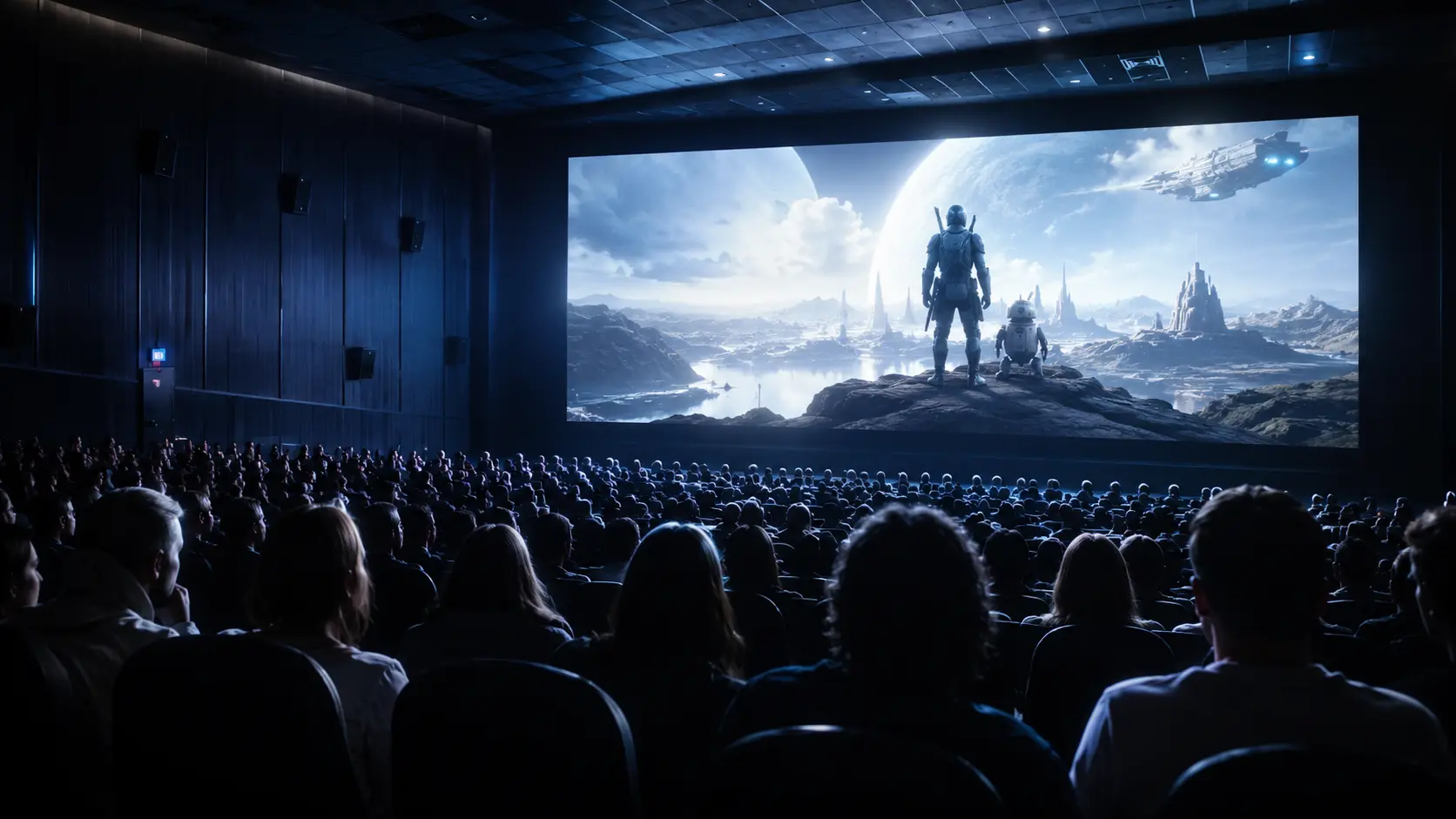
Star Wars returned to theaters this weekend with a meaningful but closely watched result for Disney, as The Mandalorian and Grogu opened to an estimated $165 million worldwide. The launch gave the company a fresh theatrical hit and, just as importantly, a real-world test of whether a franchise rebuilt on streaming can still produce large cinema traffic.
Star Wars Opens Strong, but Below Past Franchise Peaks
Disney said the film was on track to deliver about $102 million across the four-day Memorial Day frame in the United States and Canada, alongside roughly $63 million from international markets. That brought the global opening to $165 million, according to studio estimates reported by Reuters.
Box Office Mojo listed the film’s three-day domestic opening at about $81.96 million from 4,300 theaters, with the estimated Monday holiday gross lifting the North American total to $102 million. AP, citing Comscore and studio estimates, also reported an $82 million three-day domestic start, reinforcing the same broad picture: a successful No. 1 opening, but not an all-conquering one.
Star Wars Lands a Solid but Smaller Debut
The opening matters because it marks the franchise’s first return to the big screen in seven years. That alone guaranteed close scrutiny from investors, exhibitors and Disney executives looking for signs that the company’s most important intellectual property can still anchor a theatrical event in an era shaped by streaming habits and franchise fatigue.
On the numbers, the result looks respectable rather than explosive. The film clearly won the weekend and generated global scale from the start, but the opening did not match the kind of launch once routinely associated with the Star Wars brand at its modern peak. That leaves Disney with a commercially viable debut, while also reminding the market that even elite franchises now face a narrower margin between success and disappointment.
That distinction matters for Berrit Media’s audience because media companies increasingly rely on large, familiar properties to stabilize earnings and justify investment across multiple business lines. A solid opening can support that strategy. A merely decent one, however, raises harder questions about ceiling, repeat attendance and whether a brand still commands event-level urgency.
Disney’s Cost Discipline Changes the Math
Reuters reported that The Mandalorian and Grogu cost much less to make than several earlier Star Wars films under Disney. That changes the financial interpretation of the weekend. A lower production burden does not erase the pressure on the box office, but it does mean the film has a more forgiving path to profitability than some previous franchise entries.
That cost discipline is strategically important. Disney is no longer operating in the period when prestige franchise releases were often judged mainly on their headline opening weekend and cultural noise. The company now has to consider total platform value, including streaming engagement, merchandising, international market reach and the ability to extend character life across its wider media ecosystem.
In practical terms, that means a $165 million global start can still be useful even if it does not reset any records. If Disney can combine steady theatrical legs with downstream value from Disney+ and consumer products, the project may still prove that a more measured franchise model can work better than a maximalist spend-first approach.
Why Star Wars Looked Different This Time
The business context around this release is very different from the one that shaped the last Star Wars theatrical cycle. When The Rise of Skywalker debuted in December 2019, Disney+ was only about a month old. This time, the franchise is returning to theaters after years in which television, not cinema, carried much of its fan engagement.
That shift makes The Mandalorian and Grogu more than another sequel or spin-off. It is effectively a test of platform conversion: whether a streaming-born hit can move its audience into theaters at scale, without losing casual viewers who may not have followed the series closely enough to feel urgency on opening weekend.
Streaming Roots Reshape the Star Wars Audience
AP noted that the film can be judged on a different curve because it began life as a series and will eventually return to Disney+ as added value for subscribers. That is a useful way to frame the result. Disney is not just selling a ticket here. It is using a film release to reinforce the economics of a larger franchise machine.
The advantage of that model is obvious. Characters such as Grogu already have wide recognition, strong merchandising potential and built-in audience familiarity. Disney did not need to introduce a brand-new universe or teach viewers why the property matters. It could extend a relationship that had already been built over years on streaming.
The limitation is just as important. A streaming audience is not automatically a theatrical audience. Viewers trained to consume a story at home may be more selective about paying cinema prices unless the release feels essential, exclusive or culturally unavoidable. That gap between subscriber affection and box-office urgency is one of the central media questions behind this opening.
Disney Needs Theatrical Reach Beyond Core Fans
The early box office suggests Disney still drew a strong base of committed Star Wars fans, families and franchise loyalists. The next phase will depend on whether that audience broadens. For a film built on an already familiar series, long-term performance will hinge on reaching viewers who recognize the brand but are not automatically first-weekend customers.
That is where word of mouth, mainstream appeal and release timing become more important than franchise mythology. AP’s coverage pointed to the unusual position of a movie that is both a big-screen event and a future streaming asset. If the theatrical run remains healthy, Disney strengthens the case that its streaming franchises can still drive cinema demand. If momentum fades quickly, the market may conclude that the property works better as subscriber content than as a tentpole movie.
For Disney, the distinction is not academic. The company has to decide how aggressively to bring Disney+ properties back into theaters, how much to spend on future spinoffs, and how to sequence releases across cinemas, streaming and consumer products. The response to this film therefore informs a broader capital-allocation question inside the media business.
What the Opening Means for Disney and the Wider Media Business
Hollywood studios are still searching for a durable post-streaming franchise playbook. Some are trying to protect theatrical exclusivity at all costs, while others are using theaters more selectively as a premium marketing layer for intellectual property that already lives elsewhere. Disney now sits at the center of that debate because it owns one of the few brands big enough to test both approaches credibly.
The performance of The Mandalorian and Grogu will not settle that debate in one weekend, but it does provide a useful data point. It shows there is still significant demand for a Star Wars theatrical release. At the same time, it suggests brand recognition alone may no longer guarantee the kind of breakout opening that once came more easily to top-tier franchises.
Star Wars Merchandising and Disney+ Still Matter
One reason Disney can tolerate a less spectacular opening than earlier eras is that Star Wars remains more than a box-office property. The franchise supports licensing, subscription retention, international distribution and consumer-products demand in ways that traditional film accounting does not capture cleanly in a single weekend total.
That wider commercial base is especially important for a title centered on Grogu, one of Disney’s most marketable recent characters. Even without relying on speculative revenue estimates, it is reasonable to say the company benefits when theatrical exposure refreshes character relevance, keeps the franchise visible between releases and feeds future traffic across its own platforms.
For investors, that means the opening should be read as part of an ecosystem rather than as an isolated film result. The theatrical line still matters, but the strategic value also lies in whether Disney can keep Star Wars commercially active across multiple formats without exhausting the brand or teaching audiences to wait for the streaming version.
Theatrical Strategy Remains a Media Signal
The film’s opening also matters beyond Disney because rival studios are watching the same experiment. The question is no longer whether a known franchise can draw attention. The question is whether companies can rebuild the habit of theatrical attendance for properties that have become deeply associated with home viewing.
If The Mandalorian and Grogu holds well over the coming weeks, it will support the argument that streaming-era franchises can still expand into cinemas when the release is packaged as an event and the cost base stays under control. If the film fades quickly, the lesson may be that streaming-first storytelling narrows theatrical upside unless studios create a much stronger perception of exclusivity.
Either way, Disney has now generated a result the market can measure instead of a strategy slide it can only debate. That alone makes the opening important. It moves the conversation about franchise economics, theatrical windows and streaming conversion from theory into hard commercial evidence.
Star Wars is back in theaters, but the deeper story is Disney’s effort to prove that a franchise built for the streaming age can still deliver meaningful cinema business without relying on old-era box-office assumptions. Readers can continue following related media and strategy coverage at Berrit Media.
Discover more from Berrit Media
Subscribe to get the latest posts sent to your email.