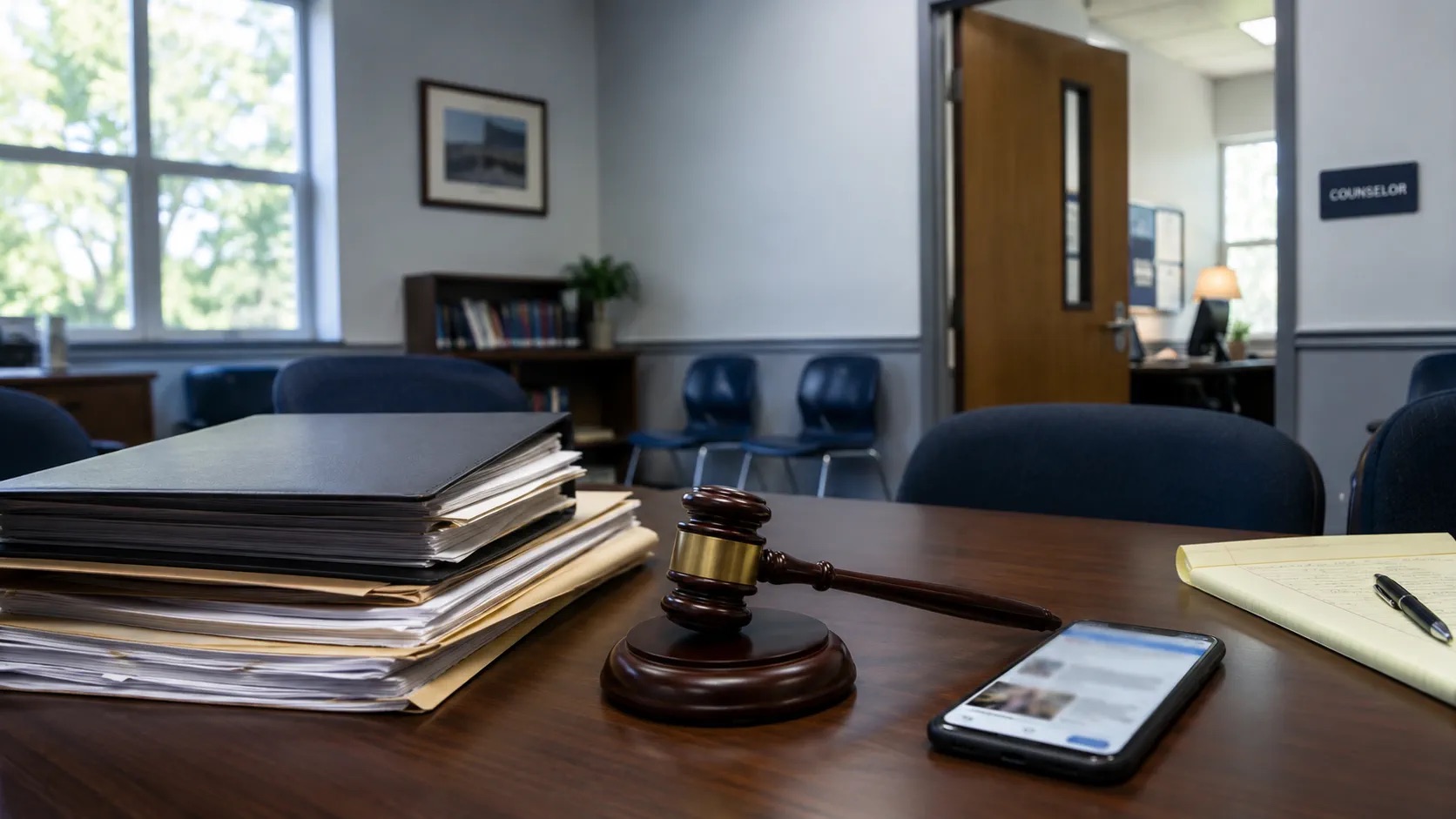
Social media companies are edging toward a new legal test after YouTube, Snap and TikTok reached settlements with Kentucky’s Breathitt County School District, leaving Meta to face the first school-district bellwether trial in the federal addiction litigation. The agreements were disclosed in court filings on Friday in Oakland, California, and they remove three defendants from a case that schools say forced them to spend more on counseling, discipline, safety and student support.
The terms were not disclosed. What is clear, however, is that the case now carries even more weight for Meta because it sits at the front of a much broader line of litigation. Reuters reported that Breathitt County is one of about 1,200 school districts suing the social media companies over claims that they helped fuel a student mental-health crisis and then left schools to absorb the operational fallout.
Why This Social Media Case Mattered Before Trial
Even before the settlements, this lawsuit was already significant because it was designed to test whether school districts can recover the costs they say addictive platform design has imposed on public education. That makes it different from the more familiar personal-injury and parental suits that focus on harm to individual teenagers.
Instead, the Breathitt County case asks whether a school system can show that platform design choices created a measurable financial burden for a district itself. In practical terms, the claim is that schools had to redirect scarce money and staff time toward mental-health intervention, disciplinary issues, threat response and classroom disruption linked to compulsive use of social apps.
Settlement Timing Changes the Leverage
The timing matters. Settlements that arrive just before trial often signal that defendants want to avoid the uncertainty of a public record, a jury verdict and the precedent-setting effect that can follow a bellwether case. In mass litigation, one well-developed trial can shape settlement expectations far beyond the original parties.
That is especially true here because the federal litigation has grown into a national test of how courts treat claims that platform recommendation systems, feedback loops and engagement features are not merely popular products but design choices with foreseeable institutional costs. A school district verdict would not decide every case, but it could give plaintiffs and defendants a reference point for valuing the rest.
It also sharpens the legal and commercial contrast among the companies involved. YouTube and Snap each indicated the matter had been resolved amicably, while TikTok also moved to settle according to court filings cited by major outlets. By stepping aside before evidence begins, those companies avoid becoming the first targets in a school-focused jury trial over alleged addiction harms.
Meta Now Carries the School-District Test
That leaves Meta in a more exposed position. According to the court’s March 25 pretrial order, jury selection is set to begin on June 12 in Oakland, while opening statements and evidence are scheduled to start no earlier than June 15. With the other settling defendants removed, Meta becomes the company most directly tied to the next phase of the courtroom fight.
This does not mean Meta has lost the case. It does mean the company now faces a cleaner, more concentrated trial narrative. Plaintiffs can focus their argument on whether Facebook and Instagram features allegedly encouraged compulsive youth engagement and whether that in turn produced costs that schools were forced to bear.
For Meta, the challenge is not only legal but reputational. A company can often manage broad public criticism more easily than a tightly framed trial in which a school district describes staffing strain, student crises and budget tradeoffs in front of a jury. That kind of venue turns an abstract policy debate into a sequence of concrete institutional harms.
How Schools Framed the Cost of Social Media
The broader school-district litigation has always rested on a practical argument: even if the most visible harms appear in children’s lives, public institutions are often the ones that must respond first. Schools see the behavioral fallout in attendance, classroom management, counselor caseloads, crisis response and communication with families.
That institutional framing helps explain why the cases have drawn attention from executives, investors and policymakers. If the theory survives trial, platform risk is no longer confined to consumer litigation or regulatory fines. It becomes a cost-recovery issue for public systems that can argue they were forced to spend money because of product design choices made elsewhere.
From Counseling to Classroom Disruption
The plaintiffs’ master complaint in the multidistrict litigation says local governments and school districts have had to divert financial and human resources to counseling, mental-health services, disciplinary support, threat investigations, staff training and other interventions tied to the youth mental-health crisis they attribute to social media addiction. That framing is central because it translates a cultural and health debate into a budgetary one.
For business readers, that is the real shift. Once claims are expressed as operational costs instead of moral criticism alone, the litigation starts to resemble other corporate-liability disputes where plaintiffs seek compensation for services they say they were forced to provide. The logic is less about punishing speech and more about assigning the downstream bill.
Schools also benefit from a sympathetic factual posture. A district can tell a jury that it did not build the products, did not profit from the engagement loops and did not choose the algorithms, yet still had to absorb the consequences inside classrooms and counseling offices. That narrative may prove easier for a public institution to present than for an individual plaintiff to quantify alone.
Why the Claims Survived Dismissal
The case also gained momentum because a federal judge in February rejected an effort by Meta, Google, TikTok and Snap to end the school-district claims before trial. That ruling did not decide the merits, but it cleared the way for Breathitt County to try to prove its allegations to a jury and signaled that the court saw a path for the district’s theory to be tested in full.
That procedural step matters more than it might appear. Many novel technology cases lose force before they ever reach a jury because judges decide the legal theory is too remote, too speculative or too broad. Here, the district cleared that gate, which is one reason the pretrial settlements are being watched as a meaningful sign rather than routine docket management.
The survival of the claims also puts more pressure on platform companies to explain where legal responsibility should stop. They can argue that parents, schools and society all play roles in adolescent well-being. Plaintiffs, by contrast, argue that design decisions meant to maximize attention made the harms foreseeable and therefore shifted part of the burden back to the companies.
What a Meta-Only Trial Could Mean for the Industry
If the June proceedings move forward as scheduled, the result will be watched far beyond Silicon Valley and school law. Advertisers, investors, policymakers and other platform operators all have an interest in whether a court begins to treat youth-engagement architecture as a source of measurable institutional liability rather than a disputed social concern.
That is why this case belongs in a business and media conversation, not only a legal one. The core question is whether the economics of scale in digital media can remain untouched if the institutions dealing with youth harm become effective plaintiffs. A loss for Meta would not by itself rewrite platform business models, but it could raise the long-term cost of defending them.
Social Media Business Models Face Broader Scrutiny
The deeper issue is that the litigation attacks a core assumption of the social media era: that maximizing engagement is primarily a product and growth problem, not a public-cost problem. If courts increasingly accept the latter view, design choices around recommendation, notifications, autoplay, social feedback and moderation become more exposed to discovery, expert testimony and damages theories.
That would have consequences well beyond Meta. Even companies that settle early would still be operating in a changed environment if plaintiffs can show that public institutions deserve reimbursement for mental-health and education costs. The risk would move from one-off controversy toward a more durable line item in legal, compliance and product planning.
It could also affect how boards and investors assess platform resilience. A company can handle criticism, but repeated litigation tied to children, schools and mental health carries a different kind of strategic drag. It complicates product roadmaps, heightens regulatory attention and increases the likelihood that plaintiffs in other jurisdictions borrow the same institutional-cost theory.
Settlement Math May Shift Across the Docket
The remaining trial schedule therefore has importance even for parties that are no longer in the courtroom. Bellwether cases help both sides estimate value, risk and narrative strength. A strong showing by plaintiffs can pull future settlement numbers higher, while a defense win can slow momentum and narrow the claims that remain economically viable.
For now, the confidential deals mean the market does not know what YouTube, Snap and TikTok decided the case was worth in dollars. Yet the strategic message is visible enough: at least three companies preferred certainty over a public trial record in the first school-district test case.
Meta, meanwhile, is left to defend not just itself but, in some ways, the broader proposition that platform companies should not be held financially responsible for the institutional consequences schools link to youth engagement design. The answer will emerge in court, not in commentary.
For now, the settlements have narrowed the field without settling the bigger issue. The June trial could become one of the clearest business tests yet of whether social media companies can be made to pay for harms that schools say show up every day in classrooms, counselor offices and district budgets. Keep following Berrit Media for related coverage on technology, media and policy shifts shaping the global business landscape.
Discover more from Berrit Media
Subscribe to get the latest posts sent to your email.