ProLogium SPAC plans would take the Taiwanese solid-state battery developer to Nasdaq through a merger with Translational Development Acquisition Corp., giving the company a new route to fund factory build-out and broader commercialization. The agreement announced on May 27 values ProLogium at about $3.8 billion on a pre-money, net cash-free basis and would leave the combined company trading under the ticker PRLG if the deal closes.
The transaction matters beyond one listing. Solid-state batteries have spent years attracting engineering attention and investor excitement, but far fewer companies have shown commercial shipments, large-scale manufacturing assets, or a credible plan to turn advanced chemistry into industrial output. That makes ProLogium’s decision to use a SPAC vehicle notable at a moment when public-market investors have become more selective about capital-intensive technology stories.
Why the Deal Matters Now
ProLogium is presenting the listing as a financing step tied directly to manufacturing rather than a branding exercise. In its announcement, the company said the transaction is expected to support the scaling of fourth-generation battery production, the construction of its Dunkirk gigafactory in France, and expansion into adjacent markets including AI data centers, aerospace, robotics and defense.
Reuters reported the agreement as a $3.8 billion SPAC deal that would take the Taiwanese battery maker public in New York. That framing is important because the pitch is not simply about electric vehicles. ProLogium is trying to sell investors on a wider industrial-energy platform, one that could serve mobility, backup power and other high-performance applications if the technology holds up in real deployment.
ProLogium SPAC Brings a Commercialization Claim to Market
What sets the ProLogium SPAC story apart from many battery listings is the company’s emphasis on operating history. ProLogium said it reached commercial-scale manufacturing for solid-state batteries in 2013 and has shipped more than 2.4 million battery cells to customers since then, including more than 800,000 third-generation cells from its Taiwan gigafactory.
Those figures do not remove execution risk, but they do give management a stronger footing than companies still centered mainly on prototypes or pilot lines. ProLogium also says it has more than 1,100 patents and patent applications, and it points to third-party testing from TÜV Rheinland that confirmed 360 Wh/kg energy density for its latest battery.
The company is using those milestones to argue that it is further along the commercialization curve than many peers in the solid-state field. For public investors, that claim will be central, because battery markets have a long history of rewarding laboratory promise before forcing companies to prove manufacturing consistency, cost discipline and customer adoption.
A Selective Route Back to Public Capital
The structure of the transaction also says something about current market conditions. A few years ago, a battery company entering public markets through a SPAC might have been judged largely on future demand narratives. In 2026, the bar is higher. Investors want a more direct link between proceeds, factory timelines and addressable customers.
ProLogium’s own materials acknowledge that reality. The company said it plans to combine TDAC’s cash in trust with a targeted common equity PIPE, while its investor presentation assumes about $300 million raised from trust proceeds and PIPE financing before transaction expenses. That assumption matters because actual cash availability will still depend on shareholder redemptions and deal completion conditions.
The deal is expected to close in the second half of 2026, subject to shareholder and regulatory approvals. That timeline gives investors months to weigh the company’s technology claims against the harder questions that always sit behind industrial listings: how much capital will really be available, how quickly can capacity come online, and what margins are plausible once production ramps.
Dunkirk and the Industrial Test
The clearest use of proceeds is in France. ProLogium said the transaction is expected to help fund construction of its new Dunkirk gigafactory, a project the company says is backed by an approved subsidy package of up to about 1.4 billion euros from the French government. That turns the listing into a story about industrial policy and manufacturing geography as much as battery technology.
Dunkirk has become one of Europe’s focal points for battery investment, and ProLogium’s project fits France’s effort to build more strategic manufacturing capacity onshore. For Berrit Media readers, the bigger point is that public capital, government subsidies and energy-transition supply chains are increasingly working together. Companies that can combine all three may have a clearer path to scale than those trying to commercialize advanced hardware alone.
ProLogium SPAC Connects Wall Street to France’s Battery Push
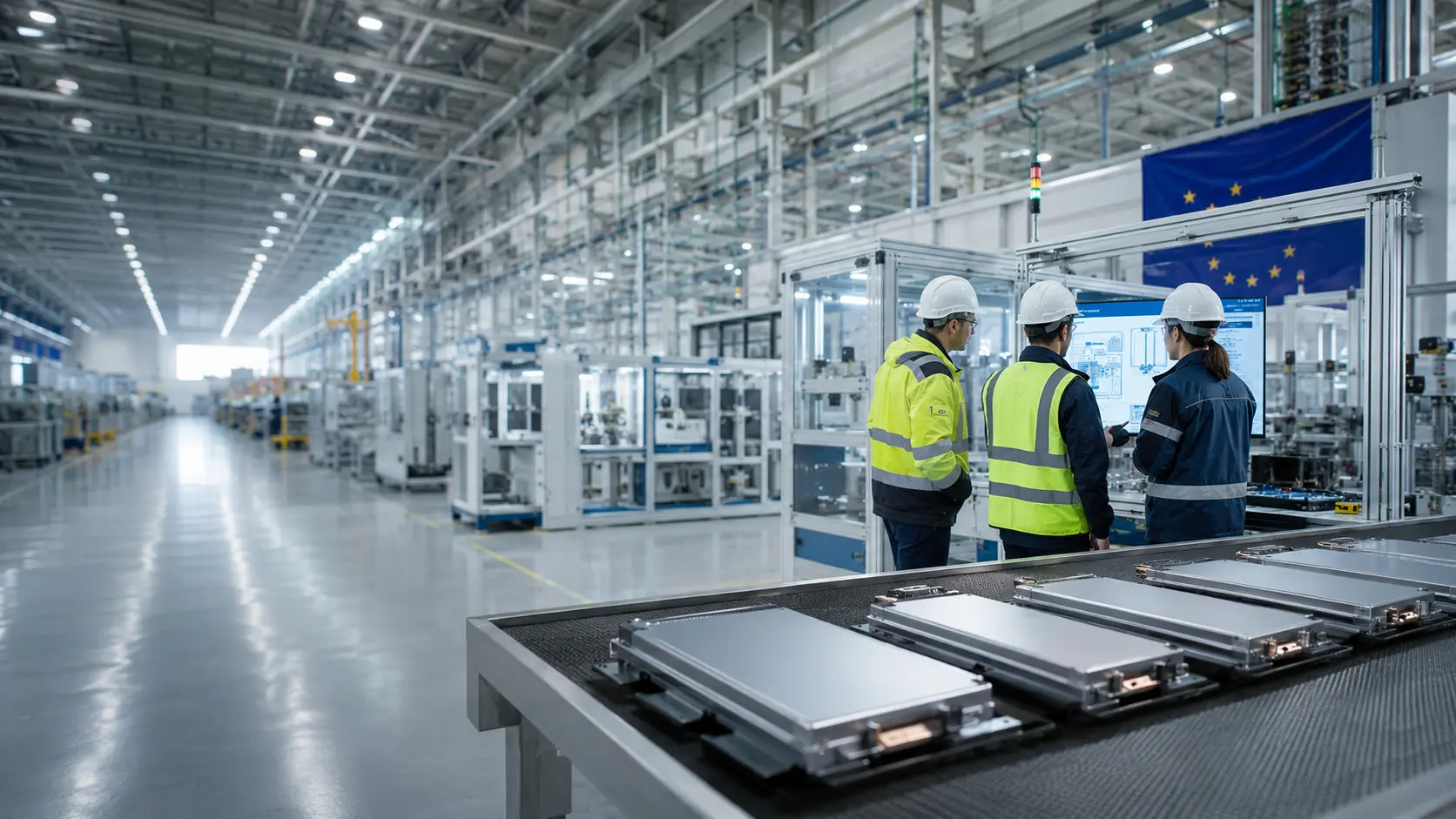
In ProLogium’s materials, Dunkirk is not a symbolic overseas site. It is the company’s main route to larger-scale international production. The investor presentation describes the France facility as having design capacity of up to 44 GWh, while the company’s press release says construction is expected to begin in 2026.
The timetable is not immediate. ProLogium said ramp-up is expected between the fourth quarter of 2028 and the first quarter of 2029, followed by formal mass production and deliveries in the second quarter of 2029. That long runway is exactly why financing matters. Advanced manufacturing businesses can look compelling in technology terms while still running into timing, capital and demand mismatches.
From an investment perspective, that makes the SPAC less about a quick listing event and more about whether public investors are willing to finance a multi-year industrial build with delayed payoff. If the market supports the transaction, it would suggest capital is returning to hardware-heavy energy themes when the project has a clearer manufacturing roadmap and public-policy backing.
Timelines Matter More Than Technology Hype
The most disciplined reading of the announcement is that ProLogium still has a great deal to prove. Management is promising scalable fourth-generation batteries, a manufacturing expansion in France and growth into sectors beyond passenger EVs. All of that may be credible, but none of it becomes economically meaningful until output, customer qualification and delivery schedules start matching projections.
That is why the details around timing deserve more attention than the headline valuation. Battery investors have seen plenty of ambitious commercialization calendars drift. ProLogium’s disclosure that mass production in Dunkirk is expected only in 2029 gives the market a more realistic frame than near-term hype would.
It also means the company is inviting a more serious kind of scrutiny. Public investors are likely to focus less on whether solid-state batteries sound transformative in theory and more on whether ProLogium can navigate permitting, factory construction, customer ramp-up and capital needs without repeated resets.
Beyond EVs, a Wider Demand Story
Another reason this transaction is worth watching is the company’s attempt to broaden the demand narrative around solid-state batteries. ProLogium is not positioning itself only as an electric-vehicle supplier. Its announcement and investor materials place equal emphasis on applications in AI data centers, aerospace, robotics and defense.
That framing aligns with a wider shift in advanced manufacturing and energy technology. Infrastructure linked to AI, automation and strategic supply chains is attracting capital because buyers increasingly care about performance, safety, resilience and geopolitics at the same time. A battery company that can serve several of those priorities may have more ways to justify scale than a company tied to one end market.
ProLogium SPAC Expands the Battery Narrative
For years, the solid-state story has been told mainly through the lens of EV range, charging speed and safety. ProLogium is still leaning on those themes, but it is also telling investors that high-growth industrial markets could matter just as much. The company explicitly points to data centers, aerospace and robotics as expansion areas alongside EVs.
That broader pitch is not accidental. AI data centers, for example, are creating new conversations around backup power, thermal management, uptime and infrastructure resilience. If battery developers can show credible performance advantages in those environments, they may find customers whose buying decisions depend more on reliability and safety than on consumer price sensitivity alone.
Still, diversification works only if the product can meet the standards of each market. Selling into robotics, aerospace or data-center energy systems can require long qualification cycles and different reliability thresholds. The strategy may widen the opportunity set, but it also expands the list of execution hurdles investors will monitor after listing.
Public Investors Will Want Execution, Not Promise
That is the central takeaway from the ProLogium SPAC transaction. The company has assembled a stronger industrial narrative than many speculative clean-tech listings: a named factory site, government support, disclosed production timelines, prior shipment history and a more developed commercialization story than early-stage concept companies usually offer.
Even so, the market is unlikely to reward narrative alone. Investors will want to see whether the final transaction secures enough cash, whether customer demand converts into durable programs, and whether the France project moves from approved plan to operating asset on schedule. The gap between technical promise and factory economics remains the hardest part of the battery business.
If ProLogium can close the deal and keep hitting its milestones, the company may become one of the more important tests of whether public markets are ready to finance strategic battery manufacturing again. If not, the transaction will reinforce how difficult it remains for capital-intensive industrial technology companies to move from admired engineering to repeatable public-market credibility.
For now, ProLogium’s proposed listing offers a useful read on where investors see value in the next battery cycle: not in abstract chemistry alone, but in companies that can connect technology claims to manufacturing capacity, policy support and real commercial timelines. Keep following related coverage at Berrit Media.
Discover more from Berrit Media
Subscribe to get the latest posts sent to your email.