Sunshine Silver is seeking up to $330 million in a U.S. initial public offering, a capital-markets test that would help finance the restart of a historic Idaho mine and refinery with a rare domestic antimony angle. The company said on May 26 that it plans to offer 20 million shares at $13.50 to $16.50 each, implying a valuation of as much as $2.32 billion.
The proposed listing arrives at a moment when investors, miners, and policymakers are all paying closer attention to supply chains for silver and other strategically important metals. For Berrit Media readers, the story is not only about a new U.S. mining float. It is also about whether public investors are willing to fund a more vertically integrated domestic resource platform when critical-minerals politics and industrial policy are starting to reshape capital allocation.
Sunshine Silver and the IPO Math
Sunshine Silver’s filing gives investors a straightforward headline number but a more layered strategic proposition. Reuters reported that the company is aiming to raise up to $330 million, while the company’s own launch announcement said the shares are being marketed on the New York Stock Exchange under the ticker SSMR.
That framing matters because the IPO is being sold as more than a conventional single-asset mining story. Sunshine is pitching public investors on a restart plan that links mine redevelopment, refinery refurbishment, and future antimony processing into one capital-markets narrative.
Sunshine Silver Sets the Terms
According to the May 26 company announcement and the Reuters report published the same day, Sunshine Silver plans to sell 20 million shares at a price range of $13.50 to $16.50. At the top end, that pricing would value the company at roughly $2.32 billion, putting it among the more closely watched natural-resources listings now trying to reopen appetite for new mining equities.
The company also said Morgan Stanley, Scotiabank, and BMO Capital Markets are serving as joint lead book-running managers. That lineup gives the deal a more mainstream institutional profile than a smaller speculative listing and signals that the company believes there is enough investor interest to support a broader distribution effort.
Reuters also noted that Electrum is expected to retain more than 50% of Sunshine Silver’s outstanding shares after the IPO, based on the filing, with Ospraie Management among the backers. That ownership profile suggests existing sponsors are not exiting wholesale. Instead, the IPO appears designed primarily to fund the next phase of project development while preserving sponsor control.
Why the Valuation Matters
The valuation is important because it forces investors to price not only the underlying mineral resource, but also execution risk, timing risk, and policy relevance. A $2 billion-plus target for a pre-restart mine asks the market to look beyond current production and focus on the potential scarcity value of a U.S.-based silver-and-antimony platform.
That pitch may resonate more in 2026 than it would have a few years ago. Silver demand has been supported by continued interest in energy-transition and industrial applications, while antimony has moved higher on the strategic agenda because of its role in defense, energy storage, chemicals, and other industrial uses. Domestic supply-chain resilience has become a bigger investment theme as governments and companies look to reduce dependence on concentrated overseas processing networks.
Still, the IPO is also a referendum on how much premium the market will assign to strategic positioning before a project is fully back in operation. Sunshine Silver is effectively asking investors to fund a restart story now in exchange for potential leverage to future production, refining capacity, and a more U.S.-anchored critical-minerals chain later.
Sunshine Silver and the Idaho Restart
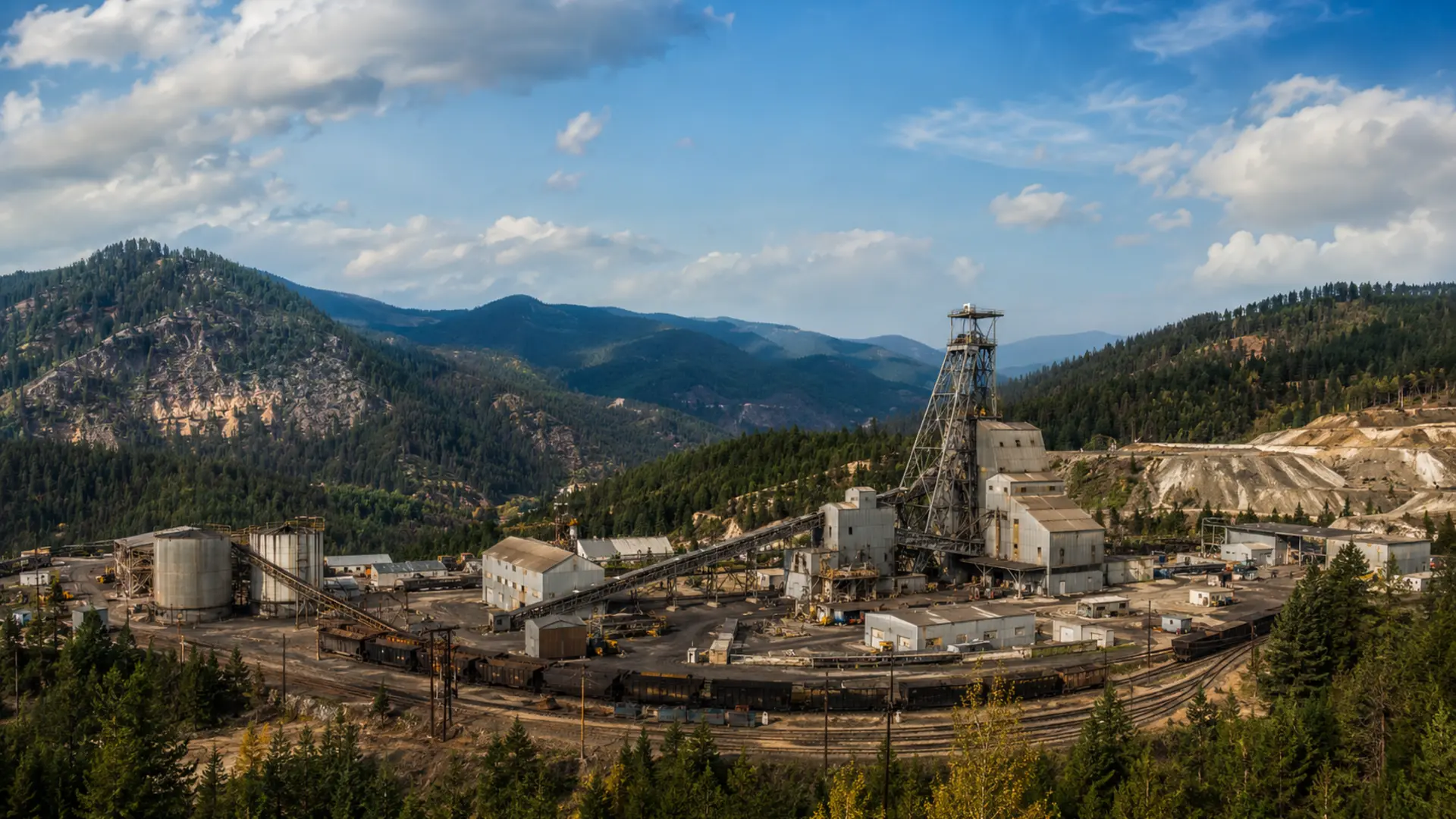
The underlying industrial story is what gives the IPO more substance than a routine new listing. On its corporate website, Sunshine Silver says it has invested about $200 million since acquiring the Sunshine Complex in 2010, expanded its land package nearly fourfold, upgraded infrastructure, and is working toward a return to production in 2028.
That long lead time is crucial context. Investors are not being offered an immediately cash-generating operation. They are being asked to fund the next stage of a redevelopment plan built around a historic mining district, existing permits, and the possibility that prior infrastructure can shorten the path back to commercial output.
What the Mine and Refinery Offer
Sunshine Silver describes the Sunshine Mine as one of the world’s highest-grade primary silver projects. The company says the project currently contains indicated resources of about 104 million ounces of silver and inferred resources of about 160 million ounces, figures it attributes to its S-K 1300 technical reporting.
The company also argues that the asset base is unusual because it combines mine potential with downstream infrastructure. In its May 26 IPO release, Sunshine said it is one of the few U.S.-based operators with a vertically integrated mine-to-mill-to-refinery platform, backed by a permitted onsite silver refinery. That matters because refining bottlenecks can often be just as commercially important as resource quality.
From an editorial perspective, that combination broadens the business angle. This is not only a story about digging more silver out of the ground. It is also about whether investors will finance a more complete domestic industrial chain that captures more value onshore and reduces dependence on third-party processing capacity.
Why Antimony Changes the Story
Antimony is what gives the Sunshine Silver listing a sharper policy and strategic dimension. The company says it holds the major permits required for antimony production and describes the site as the only U.S. location permitted to process antimony domestically in significant quantity.
That claim turns a silver restart into a wider critical-minerals proposition. In Washington and across industry, the concern is no longer limited to headline metals such as lithium, copper, and rare earths. Supply security for niche but essential industrial minerals has also become more important as trade tensions, national-security priorities, and clean-energy investment all raise the cost of import dependence.
For investors, antimony could become the differentiator that helps Sunshine Silver stand out from a crowded resource-financing field. For policymakers and industrial buyers, it offers a reminder that capital markets may play a decisive role in whether the United States can rebuild more of its upstream and midstream mineral capacity at home.
Sunshine Silver and the Wider Market Test
The proposed deal also says something about broader market timing. Reuters noted that North American mining companies are trying to test investor appetite for new listings as demand for metals such as silver has strengthened, making Sunshine Silver part of a wider effort to bring resource-development stories back to public markets.
That backdrop gives the IPO significance beyond one company. If the deal is well received, it could encourage other mining and critical-minerals issuers to pursue public offerings with a stronger supply-chain and industrial-policy framing. If it struggles, it may signal that investors still want more operating certainty before rewarding redevelopment projects with premium valuations.
How the U.S. IPO Window Is Reopening
The U.S. IPO market in 2026 has been selective rather than fully open. Investors have shown they will back companies tied to strong secular themes, but they have also been more disciplined about valuation, funding needs, and the distance between present operations and future cash flow.
Sunshine Silver fits that environment in an interesting way. Its story touches several areas that are in favor, including strategic resources, domestic industrial capacity, and supply-chain resilience. At the same time, it still carries the classic risks of a redevelopment-stage mining business, where permitting, engineering, cost control, and commissioning timelines can all shift the investment case.
That means reception to the IPO may become a useful barometer for similar companies. A successful bookbuild would suggest investors are increasingly willing to finance harder-asset industrial projects when they come with a national-capacity argument. A weaker outcome would imply that thematic appeal alone is not enough without more visible progress toward production.
What Investors Will Still Question
Even with favorable themes, investors are likely to examine how much capital the restart could ultimately require beyond the IPO, how quickly the company can move toward production, and how durable the economics remain under different silver and antimony price scenarios. Those are standard questions in mining finance, but they matter even more when a deal is marketed at a premium strategic valuation.
They will also want clarity on execution. Historical assets can offer permitting and infrastructure advantages, yet old sites can also carry refurbishment complexity, cost surprises, and schedule risk. In other words, existing foundations can be a competitive advantage, but they do not eliminate project risk.
That tension is what makes the deal worth covering now. Sunshine Silver is trying to convert a historic asset, a public-markets reopening, and a critical-minerals narrative into a fundable growth story. Whether investors fully buy that thesis will shape not just this flotation, but potentially the financing path for other U.S. resource projects as well.
Sunshine Silver’s IPO push is therefore more than a routine listing exercise. It is an early test of whether public capital is ready to back the restart of domestic mining and refining assets with strategic relevance, and readers can continue following related coverage at Berrit Media.
Discover more from Berrit Media
Subscribe to get the latest posts sent to your email.