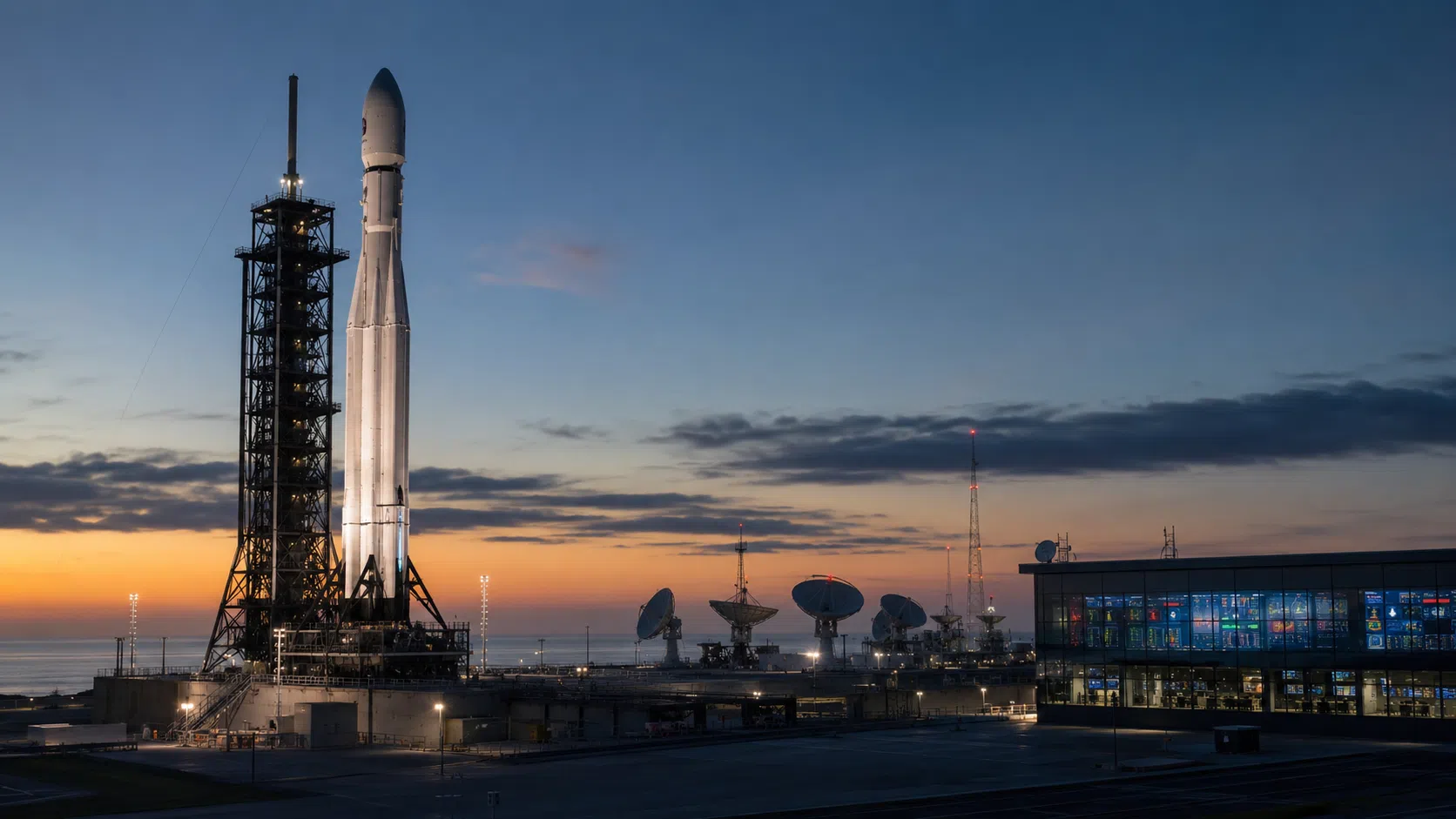
SpaceX IPO documents have opened one of the clearest views yet into Elon Musk’s most ambitious company, showing a business with real cash generation from satellite connectivity, large losses from expansion, and a governance structure that leaves public investors with limited influence. The filing published on May 20 gives markets a rare look at how Space Exploration Technologies Corp. wants to translate private-market mystique into what Reuters has reported could become the largest stock market listing on record.
The central question is not whether SpaceX has scale. It already does. The harder question is whether public investors will accept a structure in which Musk keeps overwhelming control while the company continues funding capital-intensive bets across rockets, satellites, and artificial intelligence. That trade-off makes this more than another large listing. It turns the deal into a test of what public markets will tolerate when growth, scarcity, and founder power arrive together.
Why the SpaceX IPO Matters to Public Markets
The filing matters because SpaceX is not entering public markets as a speculative startup with a narrow product line. It is arriving as a company that already spans launch services, satellite connectivity, and AI infrastructure, with financial disclosures large enough to move expectations for the wider IPO calendar. Reuters reported that SpaceX is targeting a raise of about $75 billion at a valuation nearing $2 trillion, a scale that would tower over most technology debuts.
That matters for Berrit Media readers because blockbuster listings do more than price one company. They reshape valuation benchmarks, absorb investor attention, and influence how other issuers and bankers think about timing. In that sense, the SpaceX deal sits at the intersection of investment sentiment, technology capital spending, and founder-led governance.
SpaceX IPO Comes With Unusual Scale
According to the S-1 filed with the U.S. Securities and Exchange Commission on May 20, the company generated $18.7 billion in revenue in 2025. AP reported that SpaceX also posted a $2.6 billion operating loss last year, underlining the tension between rapid growth and the cost of Musk’s long-range expansion plans.
That combination gives the listing an unusual shape. Investors are not being asked to back a pure software story with high margins and low capital intensity. They are being asked to evaluate a business that blends launch operations, satellite networks, data center ambitions, and AI spending into one corporate package. Each business may reinforce the others strategically, but each also raises the cost base and makes conventional comparisons harder.
The result is a listing that could revive appetite for very large public offerings while also reminding investors that scale does not automatically simplify valuation. SpaceX is big enough to be systemically interesting to public markets, yet different enough that many portfolio managers will have to decide which peer set, if any, actually fits.
SpaceX IPO Reshapes the Listing Calendar
The timing is important. Public market confidence has been improving, but the pipeline has still lacked many listings with genuine scarcity value. SpaceX changes that immediately because the company combines a globally recognized brand, a private valuation already familiar to institutional investors, and a business mix tied to several of the market’s most crowded themes.
Those themes include AI infrastructure, satellite connectivity, defense-adjacent industrial capacity, and founder-led platform control. In practical terms, a deal of this size could pull capital toward itself, affect how investors think about risk budgets for other offerings, and put pressure on companies planning to list in the same window. Even businesses with stronger governance or steadier earnings could struggle for attention if SpaceX dominates the calendar.
That is why the SpaceX IPO matters beyond Musk’s empire. It is a barometer for whether investors still reward narrative power at extreme scale, even when the underlying business remains uneven across segments and deeply dependent on continued capital investment.
SpaceX IPO Depends on Starlink Cash and Costly Expansion
For all the excitement around rockets and AI, the operating core of the story is more grounded. AP reported that Starlink generated $4.4 billion in operating income in 2025 and serves 10 million people across 150 countries and territories. That gives SpaceX a real commercial engine rather than a purely aspirational one.
Yet the filing also shows why the company remains difficult to price. Reuters reported that the connectivity segment was the only profitable division in the first quarter, while AI-related expansion and other long-horizon bets continued to push spending higher. Investors therefore have to decide how much weight to place on present-day cash flow versus future optionality.
Starlink Gives the SpaceX IPO a Real Business Engine
Starlink is arguably the part of SpaceX that public investors can understand most easily. It provides recurring service revenue, global scale, and a visible commercial use case that extends beyond the spectacle of launches. In a filing full of futuristic ambitions, that matters because it gives the group a business with clearer near-term economics.
The service also strengthens the company’s broader investment case. A profitable satellite connectivity arm can help fund infrastructure, support manufacturing scale, and reduce dependence on the timing of individual rocket missions. It makes SpaceX look less like a cyclical aerospace contractor and more like a hybrid platform with communications revenue at its center.
Still, even that strength brings a strategic question. If Starlink is the most legible and profitable business inside the group, investors may wonder whether its earnings power is being diluted by the cost of other projects rather than highlighted through a cleaner corporate structure. The filing does not solve that tension. It simply exposes it.
AI Spending Clouds the SpaceX IPO Story
The filing also shows how quickly Musk has folded AI into the company’s public-market pitch. Reuters reported that the acquisition of xAI made SpaceX more heavily exposed to artificial intelligence but also intensified spending, with that business responsible for 76% of the company’s $10.1 billion in capital expenditure during the first quarter.
That matters because AI remains one of the market’s strongest narratives, but it is also becoming one of the most expensive. Berrit Media recently covered Anthropic’s commitment to pay SpaceX up to $1.25 billion a month for computing capacity, a separate development that highlighted how infrastructure demand can create enormous revenue opportunities. The IPO filing adds the other side of that story by showing how much capital must be committed before those opportunities fully translate into durable public-market returns.
For investors, this creates a familiar but heightened dilemma. AI exposure may justify premium expectations, especially when combined with data center ambitions and control over critical infrastructure. However, those same ambitions can erode clarity, widen execution risk, and make earnings quality harder to judge over the next several reporting cycles.
SpaceX IPO Forces a Governance Decision
If the operating story is complicated, the governance story is much clearer. Reuters reported that Musk will retain 85.1% of combined voting power through a dual-class structure in which Class B shares carry ten votes each while the Class A shares sold to public investors carry one vote each. That leaves control concentrated with Musk and a small circle of insiders.
Investors therefore are not simply buying into a growth company. They are also accepting that their rights over major corporate decisions will be sharply limited. In another market environment, that could be a significant deterrent. In this one, it may become a test of how much governance discipline investors are willing to trade away for access to a scarce asset.
Musk Keeps Control After the SpaceX IPO
Axios, citing the filing, noted that Musk’s position is strong enough that outside shareholders will have little practical ability to remove him from leadership so long as he controls a majority of the Class B voting power. That is an unusually blunt disclosure even in an era when founder control has become common across large technology listings.
Supporters will argue that this structure protects long-term strategy. SpaceX is pursuing projects that demand patience, technical risk tolerance, and capital commitments that many public boards might resist. From that perspective, concentrated control can be presented as a mechanism for preventing short-term market pressure from derailing long-cycle industrial and technological bets.
Critics will see the opposite. They will argue that the public is being asked to finance a business without receiving the governance tools usually meant to discipline management when execution slips, capital allocation weakens, or strategy becomes too personalized. The filing does not hide that trade-off. It places it directly in front of investors.
Public Investors Get Exposure, Not Influence
This may be the most important strategic takeaway from the filing. Investors who buy into the SpaceX IPO may gain exposure to one of the world’s most prominent private companies, but they will not gain much influence over how it is run. That distinction matters because public ownership traditionally combines capital access with accountability.
Here, accountability is more limited than usual. That does not automatically make the structure unworkable. Some of the market’s biggest companies have succeeded with unequal voting rights. But it does mean the investment case will rest more heavily on trust in Musk’s judgment, trust in the resilience of Starlink’s cash flows, and trust that the company’s AI and space expansion will eventually justify the governance discount.
If the deal succeeds on strong terms, it may encourage more issuers to test how far public investors will bend on voting rights in exchange for access to high-profile growth stories. If demand proves more selective, it could mark a limit on how much control public shareholders are prepared to surrender, even in a crowded race for scarce assets.
The SpaceX IPO is therefore not just a story about a single listing. It is a wider test of how public markets price ambition, infrastructure, and control when all three arrive at historic scale. Readers can continue following related coverage on technology, investment, and market strategy at Berrit Media.
Discover more from Berrit Media
Subscribe to get the latest posts sent to your email.