Utah lithium is back in the conversation after Compass Minerals agreed to explore a new Great Salt Lake project with EnergyX, reopening a market it walked away from less than two years ago. Reuters reported on May 18 that the companies signed a memorandum of understanding under which EnergyX would invest more than $400 million to develop a direct lithium extraction and refining operation in Utah.
The proposed project matters because it revives a shelved U.S. critical-minerals opportunity without asking Compass to resume the same balance-sheet risk that previously pushed it out of lithium. Instead, the structure would leave EnergyX carrying the operational, financial and regulatory burden while Compass leases equipment, provides access to brine and land, and collects fees if the project advances.
Why Utah Lithium Is Back on the Table
The return of Utah lithium is notable because Compass had already tried and abandoned a similar ambition. In 2022, the company picked EnergySource Minerals to help develop lithium from Great Salt Lake brines, betting that an existing mineral site in Utah could become part of the domestic battery supply chain.
That plan unraveled as the regulatory climate shifted. Reuters reported that Compass said in late 2023 it was suspending lithium spending indefinitely after Utah approved a law tightening water access to the Great Salt Lake, turning what had looked like a strategic growth option into a policy and execution problem.
Utah Lithium Revives a Shelved Compass Plan
The latest agreement effectively gives Compass a second way back into the same resource base. According to Reuters, the company identified a brine resource at the Great Salt Lake containing more than 2.4 million metric tons of lithium, making the site too large to ignore even after its earlier retreat.
Compass’s own corporate timeline says the company identified that 2.4 million metric ton lithium carbonate equivalent resource at its Ogden site in 2021, then divested its lithium business in 2024 to align with its broader strategy. That history is important because it shows the company did not lose interest in the geology so much as lose confidence in the timing, permitting environment and economics of developing it alone.
The new arrangement changes the framing. Rather than building a lithium arm internally, Compass is positioning itself as an infrastructure and resource partner to a specialist developer with fresh capital, which gives the company exposure to any upside if the project works without fully reopening an expensive in-house lithium program.
Utah Lithium Shifts the Burden to EnergyX
Reuters said EnergyX plans to assume all of the operational, financial and regulatory risk for the project, a key distinction from Compass’s earlier approach. The startup aims to bring the facility online by 2030, an ambitious timeline that signals how much engineering, permitting and commercial work still lies ahead.
Under the proposed structure, EnergyX would lease equipment from Compass and secure access to the brine that Compass already uses in its existing fertilizer operations, while also paying a license fee. That creates a more asset-light role for Compass and suggests the minerals producer sees value in monetizing infrastructure and resource access even if it remains cautious about direct project ownership.
The timing also fits Compass’s current financial posture. In its fiscal second-quarter 2026 results published on May 6, Compass said total debt had fallen to $713 million from $807.6 million a year earlier and that its net leverage ratio improved to 2.7 times from 4.6 times, reinforcing why management may prefer lower-risk structures over another capital-intensive internal buildout.
The Great Salt Lake Project Faces a Long Execution Path
The proposed Utah lithium project is large enough to matter beyond one regional mining story. EnergyX said the plan could support up to 30,000 tons per year of lithium production in two phases and become one of the first commercial-scale direct lithium extraction facilities in the United States.
But the same numbers that make the project strategically attractive also underline how early it still is. A memorandum of understanding is not a final investment decision, and a commercial startup target of 2030 leaves plenty of room for technical setbacks, slower permitting, cost inflation or changes in market conditions.
Great Salt Lake Brine Offers Scale and Infrastructure
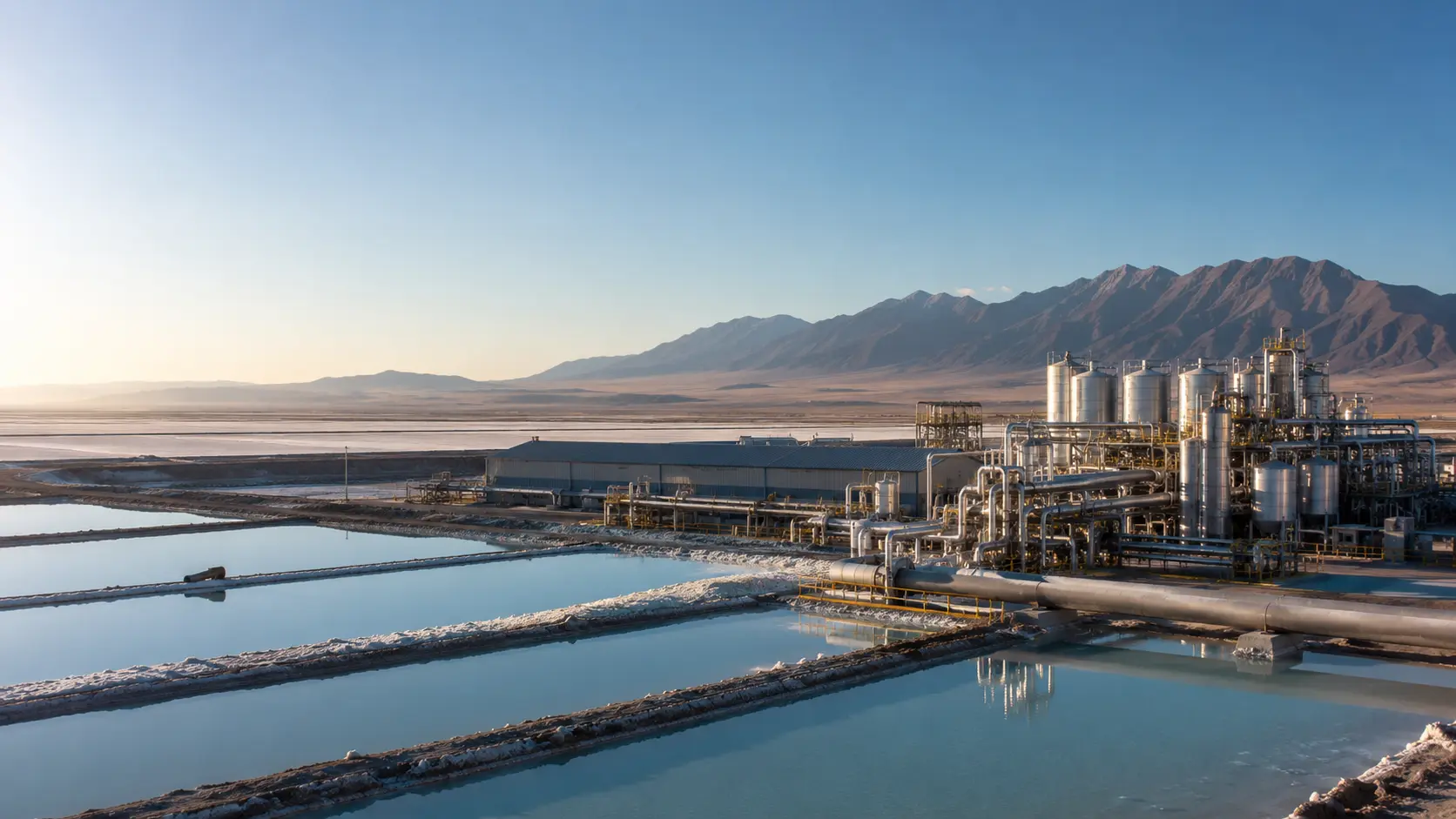
One reason the proposal stands out is that it is not a pure greenfield bet. EnergyX said the first phase would target up to 10,000 tons per year using ponds already employed by Compass for salt and mineral production, which could give the project a practical development advantage compared with starting from scratch on an undeveloped site.
EnergyX also branded the planned Utah development as Project Powder Hound and said it would invest roughly $400 million across two phases. The company described the Ogden area as one of the richest lithium brine regions in the United States, a claim that aligns with Compass’s earlier resource work and helps explain why the asset remains strategically relevant despite the previous shutdown.
For U.S. industrial policy, existing infrastructure matters almost as much as geology. A domestic lithium project tied to an established mineral operator and a site already used for industrial production offers a more plausible route to supply-chain scale than many earlier battery-materials concepts that lacked land control, utilities, processing plans or credible development partners.
Direct Lithium Extraction Still Needs to Prove Itself
The deal also rests on a technology promise that the market still treats cautiously. Reuters described direct lithium extraction, or DLE, as a filtration-style approach that companies hope can recover lithium faster and more efficiently than traditional evaporation methods, especially in regions where water use and permitting are politically sensitive.
EnergyX has tried to show it is further along than many rivals. In March, the company said it commissioned Project Lonestar in Texas, a first-of-its-kind U.S. lithium production facility designed to validate its GET-Lit extraction and refining technology at demonstration scale. That helps the credibility of the Utah lithium pitch, but a 250-ton-per-year demonstration plant is still far removed from a 30,000-ton commercial target.
The broader industry is also still in a race to prove commercial DLE at scale. Reuters said competitors include Lilac Solutions, Exxon Mobil and Standard Lithium, all of which are trying to turn pilot concepts into durable, bankable operating assets. That context matters because investors and policymakers alike have learned that promising extraction technology does not automatically translate into reliable industrial output.
The Deal Says More About U.S. Critical-Minerals Strategy
The appeal of Utah lithium goes beyond one company comeback story. Reuters said lithium prices have risen about 75% this year, while Washington’s push to expand domestic critical-minerals output has sharpened commercial interest in projects that might have looked marginal when prices were weaker and policy support less explicit.
That combination of price recovery and industrial policy is helping revive deals across the battery-materials chain. The Compass-EnergyX plan fits that pattern by linking a legacy minerals operator with a venture-backed technology company in a structure aimed at restarting domestic production ambitions without requiring the incumbent to absorb the full risk.
Utah Lithium Aligns With Supply-Chain Politics
EnergyX has repeatedly framed its strategy around U.S. supply security. In its March Project Lonestar announcement, the company said China controls roughly 70% to 75% of global lithium chemical conversion capacity, arguing that even when lithium resources exist in the United States, a lack of scaled domestic refining leaves the country dependent on foreign processing.
That narrative helps explain why the Utah lithium project could resonate with investors, automakers and policymakers. EnergyX is backed by General Motors, and Reuters noted that concerns about Western lithium shortages are drawing more attention to domestic production pathways that can support electric-vehicle and energy-storage demand.
If the project advances, it could give the U.S. battery supply chain another potential source of locally processed lithium rather than just raw resource optionality. If it stalls, it will still serve as a live test of whether American critical-minerals strategy can move from encouraging announcements to commercially durable operations.
Water Policy and Permitting Will Decide the Outcome
The hardest question may not be the chemistry but the setting. Compass’s prior withdrawal was tied directly to Utah’s tightening of water access around the Great Salt Lake, a reminder that critical-minerals projects in sensitive ecosystems can be reshaped by public policy as quickly as by commodity prices.
EnergyX has tried to address that concern directly. Reuters quoted Chief Executive Teague Egan saying the company would extract the lithium and return the rest of the brine, while the company said in its own materials that the process is designed not to affect the lake’s water levels. Those claims may help politically, but they are unlikely to remove scrutiny from regulators, local stakeholders and environmental observers.
That is why the memorandum of understanding should be read as the beginning of a negotiation rather than the completion of one. The commercial logic behind Utah lithium looks stronger than it did in 2023, but the project still needs definitive agreements, regulatory progress, technology execution and a supportive market before it can be counted as a meaningful new source of U.S. battery materials.
For now, the Compass-EnergyX agreement is best understood as a serious reopening of a previously abandoned resource rather than a completed comeback, and readers can continue following related business, technology and policy coverage at Berrit Media.
Discover more from Berrit Media
Subscribe to get the latest posts sent to your email.