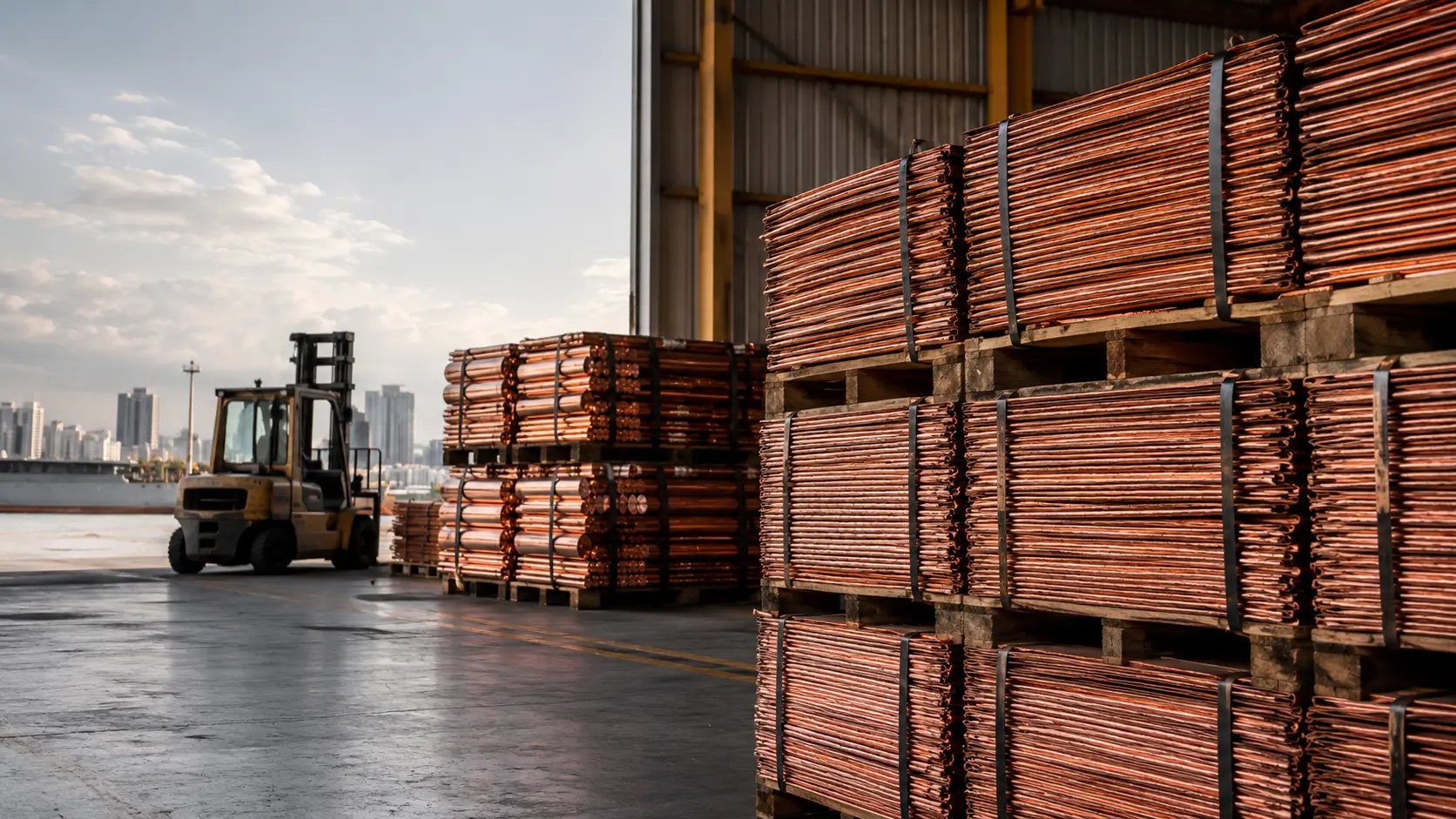
Copper tariffs are reshaping the physical metal trade again as Trafigura moves to withdraw large amounts of exchange-held copper from London Metal Exchange warehouses in New Orleans ahead of Washington’s next decision on refined copper imports. The move matters beyond one trader because it shows how tariff policy is changing where supply sits, how quickly it moves, and who controls nearby inventory.
Reuters reported on May 22, 2026 that Trafigura planned the withdrawals, citing two industry sources, while LME warehouse data showed more than 30,000 metric tons of copper were cancelled in New Orleans on Thursday, taking total cancelled tonnage there to 45,675 tons. Bloomberg separately reported that Trafigura was the main party behind orders to withdraw more than 51,000 tons from LME warehouses in the United States and Asia, reinforcing the market view that the stock movement was deliberate rather than routine.
The broader backdrop is a U.S. Section 232 copper regime that already imposed 50% tariffs on many semi-finished copper products and copper-intensive derivatives in 2025, while leaving refined copper inputs outside those duties for now. A Congressional Research Service brief published in 2026 said the Commerce Secretary must provide the president with a fresh update on U.S. copper markets by June 30, 2026, after which the White House may decide whether to phase in duties on refined copper itself.
Why Copper Tariffs Are Pulling Metal Into the United States
The immediate incentive is simple. If import costs are likely to rise later, traders and consumers have reason to place copper inside the United States before any broader refined-metal duty arrives. Once material is already sitting in the country, buyers gain optionality and can secure supply at pre-tariff economics.
That helps explain why exchange warehouses have become more than passive storage sites. The LME says its daily stock breakdown reports track opening stocks, cancelled tonnage, and movements by metal and location, making warehouse cancellations one of the clearest public signals that physical material is about to move into another part of the supply chain.
Copper Tariffs Reward Pre-Positioned Supply
Reuters said U.S. copper inventories monitored by COMEX reached 574,864 metric tons, up more than 550% since President Donald Trump ordered a Section 232 investigation into copper imports in February 2025. That buildup shows the arbitrage has been running for months, with traders steadily pushing metal into the United States while policy risk stayed high.
The logic is reinforced by the current structure of the tariff rules. According to the CRS brief and White House tariff materials, copper ores, concentrates, cathodes, anodes, and scrap were not covered by the 2025 Section 232 tariffs, while a later Commerce update could still open the door to duties on refined copper. That leaves the market trading not only today’s tariff schedule, but also the probability of a more restrictive regime after June 30, 2026.
For industrial buyers, that turns inventory location into a strategic decision. Copper sitting in the United States can become more valuable than identical copper elsewhere if the next policy step raises the cost of replacement imports. In that environment, warehousing stops being a back-office issue and becomes part of supply security and pricing strategy.
Exchange Warehouses Become Trade Infrastructure
That shift is visible in the LME numbers. Reuters reported total copper cancellations above 50,000 tons on Thursday, with the bulk concentrated in New Orleans and the rest mainly in Kaohsiung, Taiwan. Cancelled stocks represented nearly 30% of the LME’s 391,900 tons of copper at the time, a high enough share to tighten what is actually available for prompt delivery.
A separate Reuters metals market report on May 22 said available LME copper stocks had fallen to a 10-week low after 53,325 tons were earmarked for delivery. It also noted that more than half of those cancellations were in U.S. warehouses, where COMEX copper was trading at a premium to the LME benchmark as the market waited for Washington’s end-June tariff decision.
The market effect is that exchange warehouses start functioning like trade junctions rather than neutral buffers. They show where copper can be mobilized fastest, where policy is distorting flows, and where commercial players believe the best margin or protection lies.
What Trafigura’s Move Says About the Market
Trafigura itself declined to comment to Reuters, so some caution is still warranted. The public data shows the cancellations, but not the owner behind each lot. That means the company attribution rests on sourcing from Reuters and Bloomberg rather than exchange disclosure.
Even so, the broader interpretation is well supported. Large cancellations in New Orleans, a U.S. tariff review due by late June, elevated COMEX inventories, and a premium for U.S.-based copper all point in the same direction: the market is trying to secure American supply before the rules potentially change again.
Anonymous Orders, Public Market Signals
This is a good example of how commodities stories often work. The identity of the actor can remain private, but the effect still becomes visible through exchange data, freight movements, spreads, and inventory shifts. In this case, those signals line up with the narrative that a major trader is pulling metal toward the U.S. market.
That matters because copper is not a niche industrial input. It sits at the center of power systems, construction, grid upgrades, electric vehicles, consumer electronics, and data-center buildouts. When a major trading house changes where it wants copper to sit, the move can ripple into manufacturers’ procurement plans and investors’ views on near-term supply tightness.
It also highlights the political economy of the metal. The CRS said the United States produced 1.1 million tons of copper in 2024, refined 890,000 tons, and relied on imports for about 45% of refined copper consumption. That dependency helps explain why Washington has treated copper as a strategic material and why traders are taking the tariff timetable seriously.
COMEX Inventories Show the Trade Already Happened
The most telling point may be that this is not an isolated one-day move. COMEX inventories have already swollen dramatically since the Section 232 investigation began, suggesting the industry has been front-running policy for an extended period rather than waiting for a final refined-copper decision.
Reuters’ May 22 market report added another important nuance: RBC Capital Markets said the copper market’s tightness had been worsened by the tons pulled into the United States, and warned that a reversal could send a large amount of metal back into the global supply chain if the tariff threat disappears. In other words, the same inventories now supporting U.S. security could later destabilize pricing if policy changes course.
That possibility turns copper logistics into a two-way risk. If Washington tightens tariffs further, U.S. copper could become scarcer and more expensive for buyers who failed to pre-position supply. If the administration steps back, the stockpile could suddenly look excessive and push metal back toward overseas markets.
The Broader Cost of Copper Tariffs for Industry
The most important business question is not whether one trader moved one batch of metal. It is whether tariff-driven stockpiling makes copper more expensive, less predictable, and less evenly distributed for the industries that depend on it. That is the real economic story behind the exchange data.
Copper is deeply embedded in electrification and digital infrastructure, two areas where governments and companies are already spending heavily. When policy uncertainty changes the economics of inventory and import timing, it can raise working-capital needs, distort procurement schedules, and shift bargaining power toward traders that can finance large stock positions.
Manufacturers Could Face Higher Input Costs
The White House tariff framework was designed to support domestic copper production and processing, but it can also pass costs through to downstream users. CRS noted that critics of the policy warn tariffs could increase expenses for U.S. businesses, strain relationships with trading partners, and encourage exporters to redirect material to other markets such as China.
That risk becomes more relevant when available LME inventories are already tightening. Reuters said the Yangshan copper premium, a gauge of Chinese import appetite, remained at its highest level since mid-April even as analysts expected China to enter a seasonal demand slowdown. So the United States is not the only buyer trying to secure metal; it is competing in a market where demand has not disappeared.
For sectors such as energy equipment, industrial machinery, wiring, electronics, and data-center infrastructure, the result could be a less comfortable supply picture going into the second half of 2026. Even if tariff policy is intended to strengthen national security, companies still have to manage the near-term commercial friction it creates.
The June Decision Could Redraw Copper Tariffs Again
The late-June deadline matters because it could determine whether today’s logistics trade becomes a longer structural shift. If the White House moves ahead with phased duties on refined copper, inventory positioning inside the United States may look prudent and even insufficient. If it does not, some of the urgency behind these flows could unwind.
That makes the current cancellations a live test of expectations. Traders are voting with metal rather than words, and the metal is moving toward the jurisdiction where policy risk is highest. For now, that behavior suggests the market sees more upside in being early than in waiting for absolute certainty.
Whether that proves correct will depend on the administration’s next step and on how quickly manufacturers respond. What is already clear is that copper tariffs are no longer just a Washington trade-policy file. They are actively reshaping inventory decisions, exchange availability, and pricing power across the industrial economy.
Trafigura’s reported withdrawal plan does not settle where copper prices or tariffs will go next, but it does show how quickly policy expectations can reroute real-world supply. Keep following Berrit Media for more coverage of trade, industry, and global market shifts.
Discover more from Berrit Media
Subscribe to get the latest posts sent to your email.