Cormetech acquisition gives Johnson Matthey a larger position in the business of cleaning up power generation just as artificial intelligence is pushing data centers into heavier electricity use.
The British chemicals and sustainable technologies group said on May 28, 2026, that it had agreed to acquire Cormetech, a North Carolina-based maker of selective catalytic reduction catalysts used in stationary power generation and industrial applications. Johnson Matthey placed the enterprise value at $360 million, payable in cash on completion, with closing expected at the end of June or in July 2026 after customary regulatory approvals.
The deal is more than a bolt-on purchase. It connects Johnson Matthey’s clean-air business with the rapid expansion of U.S. data-center power demand, where operators and utilities are under pressure to add capacity while managing nitrogen oxides, carbon monoxide, volatile organic compounds, and other emissions from backup and generation systems.
Cormetech Acquisition Links AI Growth to Industrial Clean Air
Johnson Matthey framed the Cormetech acquisition as a way to create a global leader in stationary emissions control, a market that is gaining visibility as AI infrastructure turns electricity supply into a strategic constraint.
The company said Cormetech is well placed in the U.S. AI and data-center buildout and has a $1 billion medium-term project pipeline. That pipeline makes the transaction a signal about where industrial suppliers see growth as cloud companies, utilities, and power developers race to support compute-heavy workloads.
Why Cormetech Acquisition Fits Johnson Matthey’s Strategy
Johnson Matthey has spent recent years narrowing its portfolio around areas where it believes its catalyst and platinum group metals expertise can support cash generation. The group has also moved to sell its Catalyst Technologies business to Honeywell, a transaction that would make the Cormetech purchase part of a broader reshaping rather than an isolated acquisition.
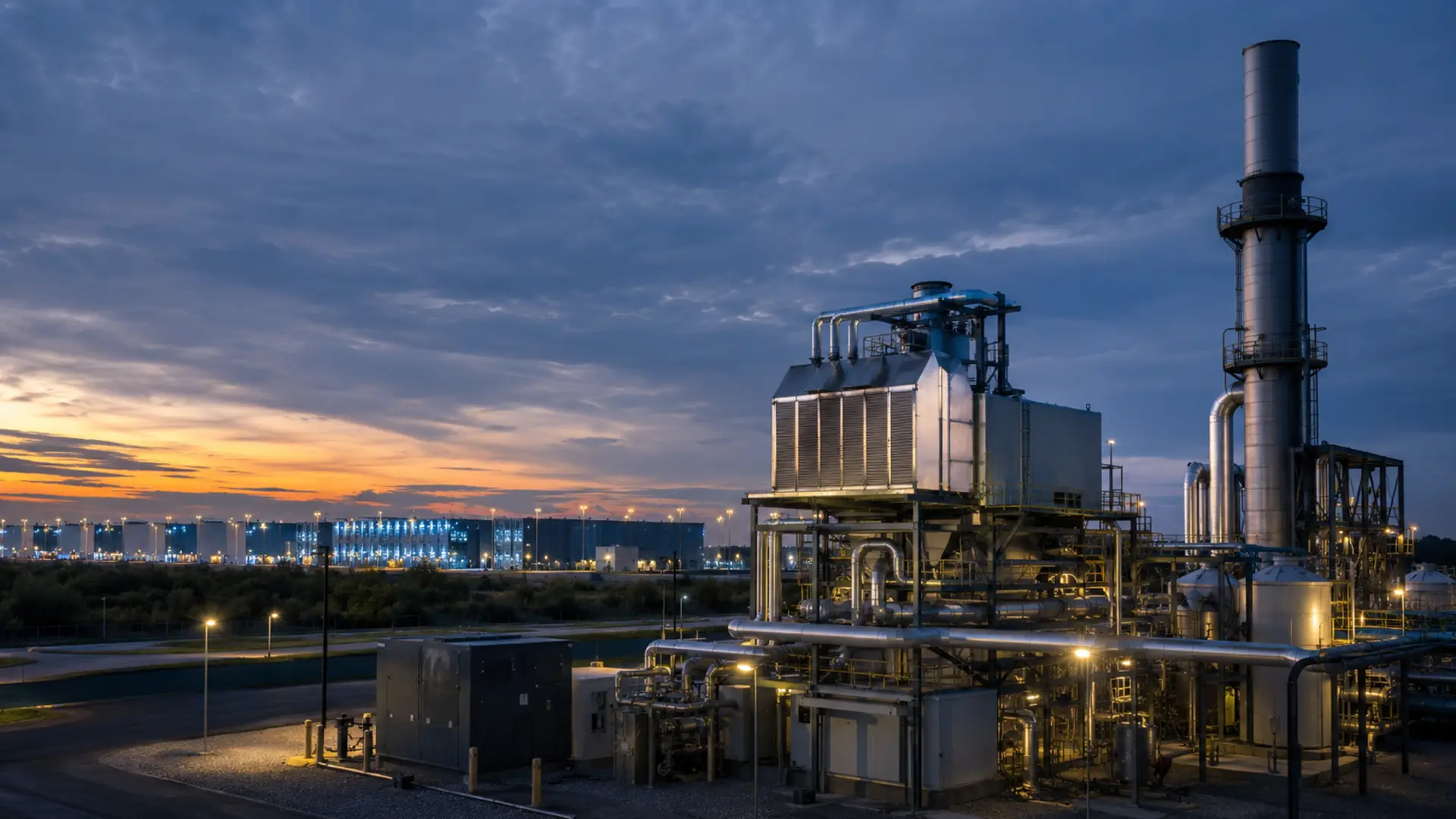
Cormetech’s main strength is stationary emissions control. Its selective catalytic reduction technologies are used to reduce nitrogen oxide pollution from natural gas turbines, coal-fired power plants, refineries, and industrial sites. Johnson Matthey’s Clean Air unit has long been associated with vehicle emissions systems, but the shift toward electric vehicles has made stationary applications more strategically important.
The Cormetech acquisition therefore gives Johnson Matthey a clearer route into a market where emissions-control demand is being influenced by power generation, not only by automotive production. That matters because the data-center boom is creating demand for equipment and services that sit outside the traditional technology supply chain.
Data Center Emissions Become a Boardroom Issue
Data centers need reliable electricity, and the biggest AI campuses are forcing companies to look beyond conventional grid connections. Some facilities depend on natural gas generation, backup systems, or utility-scale power arrangements that must satisfy local air-quality rules.
Reuters, in a report syndicated by MarketScreener, said Johnson Matthey Chief Executive Liam Condon told analysts that data centers need to control nitrogen oxide pollution, where Cormetech is strong, while Johnson Matthey has capabilities in carbon monoxide and volatile organic compounds. The combination gives the buyer a broader emissions-control offering for power assets tied to digital infrastructure.
That point gives the story its wider business relevance. AI infrastructure is often discussed through chips, servers, cloud contracts, and capital spending. The Cormetech acquisition shows that the buildout is also pulling industrial compliance technology into the investment cycle.
Power Generation Demand Changes the Data Center Supply Chain
The Cormetech acquisition lands at a time when data-center operators are becoming a major force in electricity markets. More computing capacity means more pressure on generation assets, permitting timelines, fuel availability, and environmental controls.
For industrial suppliers, the opportunity is not limited to selling into data centers directly. It includes serving the power plants, turbine operators, utilities, and industrial facilities that may support the expansion of cloud and AI capacity.
Cormetech Acquisition Extends the Clean Air Portfolio
Johnson Matthey said Cormetech’s technologies are complementary to its own catalyst capabilities. Cormetech brings stationary power and industrial customers, while Johnson Matthey adds scale, chemistry expertise, and global clean-air experience.
The combined portfolio could give customers a wider set of emissions-control tools across mobile and stationary applications. That is strategically useful as regulatory and commercial pressure moves beyond tailpipe emissions toward the full footprint of power-hungry infrastructure.
It also gives Johnson Matthey a more direct stake in a growth market that is being reshaped by AI. If more data-center projects require dedicated or expanded generation capacity, suppliers that help those assets operate within environmental rules could benefit from the same infrastructure cycle that has lifted demand for chips, networking, cooling, and electrical equipment.
The $1 Billion Pipeline Raises the Stakes
Johnson Matthey said Cormetech has a $1 billion project pipeline in the medium term. The company did not provide a full breakdown of that pipeline, so investors will still need to watch how much converts into revenue and earnings after closing.
Still, the figure gives the acquisition a forward-looking angle. At $360 million in enterprise value, Johnson Matthey is paying for a business it believes can grow with U.S. power generation and industrial emissions demand. The buyer also expects Cormetech to contribute to earnings from fiscal 2027.
The financial context is not without caution. Reuters reported that Johnson Matthey forecast low- to mid-single-digit percentage growth in underlying operating profit for the year ending March 2027, excluding Cormetech and the planned Catalyst Technologies divestment, a slowdown from the 14 percent growth it reported for fiscal 2026.
Cormetech Acquisition Tests Execution During Portfolio Reshaping
The Cormetech acquisition gives Johnson Matthey a clearer growth story, but it also increases execution demands during an already active period of portfolio change.
The group is balancing a planned divestment, a new U.S. acquisition, refinery-related costs, and broader geopolitical uncertainty. That mix will make integration discipline as important as strategic fit.
What Investors Will Watch After Closing
Investors will likely focus first on whether Johnson Matthey can integrate Cormetech without distracting from its wider restructuring. The company has positioned the deal as a step toward strengthening Clean Air and supporting long-term value creation, but the market will look for evidence in margins, orders, and cash generation.
Another issue is timing. The acquisition is expected to close around the end of June or in July 2026, subject to customary regulatory approvals. That leaves only part of the fiscal year for any contribution and means the larger strategic case will unfold over several reporting periods.
The industrial logic appears clear: Johnson Matthey is buying a business with exposure to U.S. power generation at a moment when data centers are creating new demand for cleaner, more flexible electricity supply. The commercial test is whether that demand translates into durable earnings rather than a temporary infrastructure rush.
Cormetech Acquisition Shows AI’s Industrial Spillover
The most important implication may be outside Johnson Matthey itself. AI investment is no longer limited to companies selling models, chips, software, or cloud capacity. It is moving into electrical equipment, construction, cooling, power contracts, permitting, and environmental control.
That broadening changes how investors and executives should read the AI cycle. A data-center project can create demand for semiconductors, but it can also create demand for gas turbines, grid upgrades, emissions systems, water infrastructure, and local compliance services.
The Cormetech acquisition captures that second-order effect. It shows how a chemicals and catalysts company can use an industrial M&A deal to reposition itself around the physical infrastructure behind digital growth.
Industrial M&A Follows the Data Center Buildout
Industrial acquisitions tied to AI infrastructure are likely to remain selective, but the strategic logic is becoming easier to see. Companies with specialist positions in power, cooling, environmental systems, and grid-adjacent services may attract more attention as demand becomes more visible.
Johnson Matthey’s move is notable because it links an old-economy clean-air technology to one of the fastest-growing areas of new-economy capital spending. That bridge is exactly where many infrastructure bottlenecks are now appearing.
Cormetech Acquisition Adds a Different AI Infrastructure Angle
Many recent AI infrastructure stories have focused on server makers, cloud providers, advanced chips, and memory suppliers. Those remain central, but they do not solve the whole capacity problem.
Data centers also need permitted sites, resilient power, and systems that can meet air-quality requirements. For operators trying to accelerate deployment, emissions-control technology may become part of the practical timeline for bringing new capacity online.
By acquiring Cormetech, Johnson Matthey is betting that environmental compliance will become a more important part of the data-center supply chain. That is a quieter angle than AI model competition, but it may be more durable if electricity demand continues to rise.
A Measured Bet, Not a Guaranteed Transformation
The transaction should still be read with discipline. Cormetech is a strategic addition, but it will not by itself transform Johnson Matthey’s earnings profile overnight. The company still faces automotive-emissions exposure, refinery costs, portfolio-transition risk, and macro uncertainty.
The value of the deal will depend on execution, customer demand, and whether the data-center power cycle supports sustained orders for stationary emissions systems. The $1 billion pipeline is encouraging, but pipeline conversion is always the harder measure.
For now, the Cormetech acquisition gives Johnson Matthey a stronger position in a market where industrial technology, cleaner power, and AI infrastructure are converging. Readers can continue following related coverage on infrastructure, industrial strategy, and technology investment at Berrit Media.
Discover more from Berrit Media
Subscribe to get the latest posts sent to your email.