Cormetech deal plans give Johnson Matthey a $360 million bet on a less visible part of the artificial intelligence infrastructure buildout: the emissions-control systems needed by power plants and industrial sites serving fast-growing data centers.
The British specialty chemicals group said on May 28, 2026, that it had agreed to acquire CORMETECH Inc., a U.S.-based manufacturer of selective catalytic reduction catalysts used in stationary power generation and industrial applications. Johnson Matthey said the purchase would be paid in cash at completion, with closing expected at the end of June or in July 2026 after customary regulatory approvals.
The transaction turns clean-air technology into another link in the data-center supply chain. As AI workloads increase electricity demand, power producers and industrial operators face more pressure to expand capacity while controlling pollutants such as nitrogen oxides. Johnson Matthey is positioning Cormetech as a way to capture that demand while reshaping its own portfolio around Clean Air and PGM Services.
Why the Cormetech Deal Matters
The Cormetech deal is not a cloud-computing transaction in the usual sense. It is an industrial acquisition tied to the physical infrastructure behind cloud growth, AI training, AI inference, and the power systems required to keep those facilities running.
Johnson Matthey said Cormetech is well placed in the rapid AI and data-center buildout in the United States. That framing matters because it connects emissions control, a mature industrial compliance market, with one of the strongest capital-spending themes in global business.
Cormetech Deal Brings Stationary Power Exposure
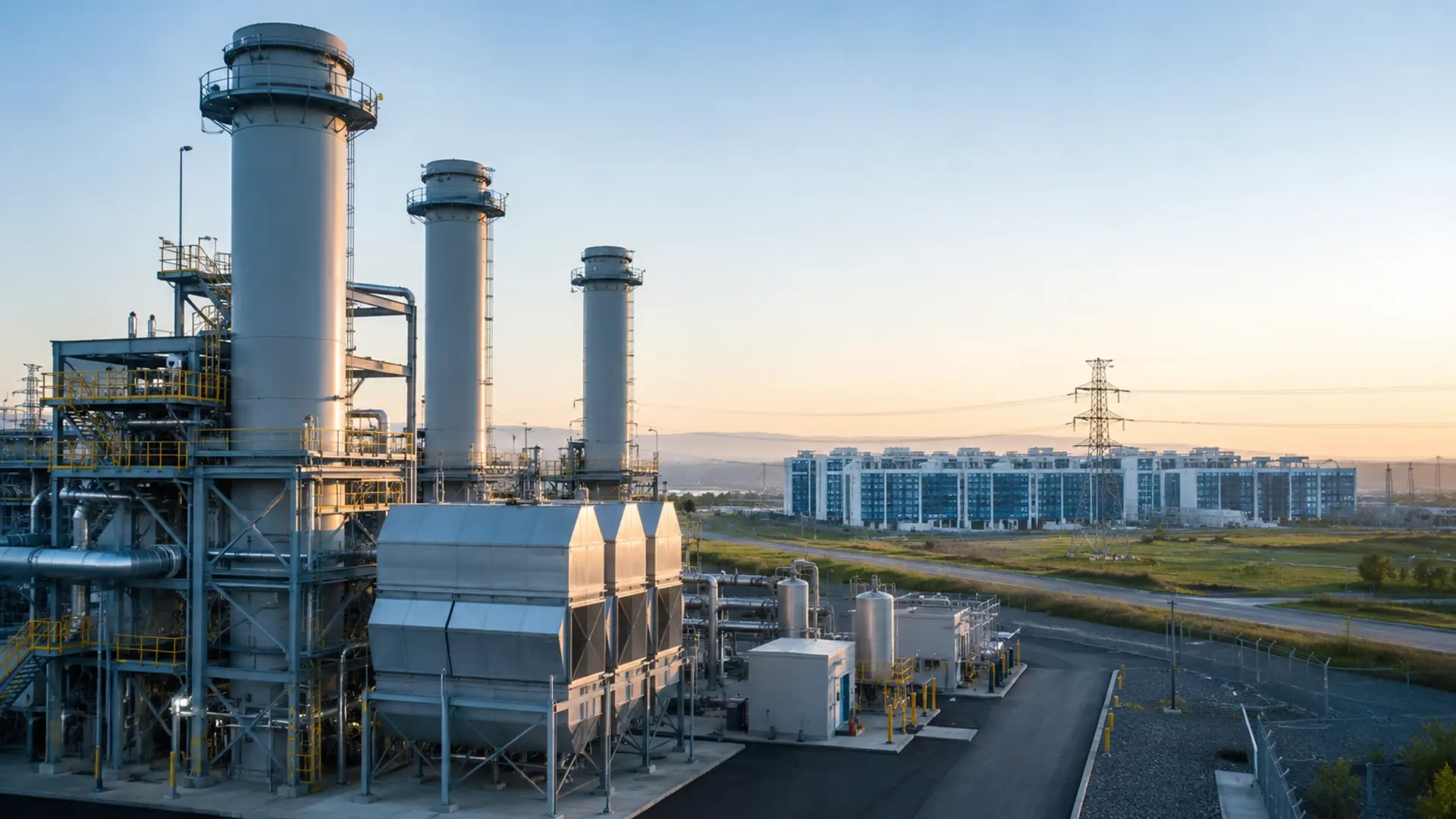
Cormetech makes selective catalytic reduction catalysts for stationary power generation and industrial applications. These systems are used to reduce nitrogen oxides from facilities such as power plants, refineries, and industrial sites, where regulators and customers are increasingly focused on local air quality as well as carbon targets.
Johnson Matthey has long been known for catalyst capabilities in vehicle emissions control. By acquiring Cormetech, the company is expanding more decisively into stationary emissions control at a time when power generation is becoming a strategic bottleneck for the digital economy.
The company said Cormetech’s technologies are highly complementary to its Clean Air Solutions business. That makes the transaction a portfolio move rather than a simple bolt-on: Johnson Matthey is seeking to combine mobile and stationary emissions expertise under a narrower corporate strategy.
For investors, the industrial logic is clear. AI has made data-center capacity a headline topic, but electricity, grid access, fuel availability, cooling, permitting, and emissions controls are the harder infrastructure questions behind that growth.
AI Infrastructure Pulls Clean-Air Markets Into Focus
The Cormetech deal shows how AI infrastructure demand is spreading beyond chipmakers and cloud operators. Suppliers of power equipment, engineering services, cooling systems, construction materials, grid components, and emissions-control technology are all being pulled into the same investment cycle.
Johnson Matthey said Cormetech has a $1 billion medium-term project pipeline and is expected to deliver strong growth in 2026/27. Those figures give the company a clearer way to present stationary emissions control as a growth business rather than a legacy compliance activity.
The U.S. market is especially important because data-center operators are racing to secure energy supply near large campuses. In several regions, gas-fired power generation and industrial backup systems are becoming part of the near-term answer, even as companies continue to make longer-term clean-energy commitments.
That creates a policy and business tension. AI companies and utilities need more power quickly, but new generation can intensify scrutiny over local pollutants, permitting, fuel use, and community impact. Emissions-control suppliers sit directly inside that tension.
Johnson Matthey Refocuses Around Clean Air
Johnson Matthey announced the Cormetech deal alongside full-year results that reinforced its broader restructuring. The company is selling its Catalyst Technologies business to Honeywell and moving toward a more focused group built around Clean Air and platinum group metals services.
That context is important because the acquisition is not simply about buying revenue. Johnson Matthey is using proceeds, divestments, and targeted acquisitions to sharpen its exposure to businesses it believes can generate cash and support shareholder returns.
Cormetech Deal Fits a Portfolio Reset
Johnson Matthey said the Cormetech deal represents another milestone in its strategy to focus on the company’s strengths. The group has been trying to simplify after earlier pressure around slower-growth businesses and changing end markets for catalytic technologies.
The company said the Cormetech purchase would be made at a 10.3 times multiple of expected 2026 EBITDA before synergies, based on expected EBITDA of about $35 million. It also disclosed that an additional earn-out of up to $100 million may be payable in cash during 2028 and 2029 if Cormetech reaches specified financial targets.
That structure gives sellers upside if the data-center and power-generation opportunity develops as expected, while allowing Johnson Matthey to tie part of the consideration to future performance. It also signals that management sees growth potential but wants discipline around valuation.
The transaction sits beside a larger portfolio move: Johnson Matthey’s planned sale of Catalyst Technologies to Honeywell, now expected to complete by the end of August 2026. The company said it plans to return about £1 billion of net sale proceeds to shareholders after that transaction closes.
Clean Air Earnings Become More Strategic
Johnson Matthey reported that Clean Air delivered an underlying operating margin of 14.5 percent in the year ended March 31, 2026, up 270 basis points year on year. The company said the division remains on track for a 16 percent to 18 percent margin target in 2027/28.
That margin trajectory helps explain why management wants to add scale to the segment. If Cormetech can increase stationary exposure while Clean Air continues to improve profitability, the deal could support the group’s cash-generation story.
Johnson Matthey also said it expects low- to mid-single-digit percentage growth in group underlying operating profit for the year ending March 31, 2027, excluding both Catalyst Technologies and Cormetech. Cormetech’s 2025/26 operating profit was listed at £12 million, and Johnson Matthey expects strong operating profit growth from the business in 2026/27.
The result is a cleaner investment narrative: fewer businesses, more emphasis on cash flow, and a targeted acquisition aimed at a market where AI infrastructure is changing demand patterns.
What the Cormetech Deal Says About Data-Center Power
The Cormetech deal underlines a broader market point: data centers are not just a technology story. They are increasingly an industrial, energy, environmental, and local-policy story, with suppliers competing to solve constraints outside the server hall.
As hyperscalers and AI companies add compute capacity, the downstream effects are visible across power generation, grid planning, land use, water systems, construction, and emissions compliance. Johnson Matthey is betting that one of those effects will be sustained demand for stationary clean-air systems.
Cormetech Deal Highlights Compliance Pressure
Power demand tied to AI can move faster than infrastructure planning. That creates pressure on utilities, independent power producers, and industrial operators to add capacity while satisfying environmental rules and community expectations.
Selective catalytic reduction systems are one part of that response. They are not a substitute for long-term power-sector decarbonization, but they can be critical for controlling specific pollutants from generation and industrial processes that remain in use.
The acquisition therefore gives Johnson Matthey a role in a practical, near-term problem. Data-center operators need reliable electricity, power suppliers need to meet demand, and regulators need assurance that new or expanded generation does not weaken local air-quality standards.
This is why the transaction is more significant than its headline price might suggest. It reflects how the AI investment cycle is creating revenue opportunities in industrial compliance markets that were not previously treated as part of the digital economy.
Data Centers Broaden the Supplier Map
The Cormetech deal also broadens the list of companies that may benefit from AI capital expenditure. The first wave of investor attention centered on GPUs, memory chips, cloud platforms, and semiconductor equipment. The next wave is increasingly focused on power and physical infrastructure.
That does not mean every industrial supplier becomes an AI winner. Companies still need relevant technology, customer relationships, manufacturing capacity, and the ability to convert pipeline into profitable contracts. Johnson Matthey’s case now depends on integrating Cormetech and proving that the medium-term project pipeline becomes durable earnings.
The company also faces execution risks. Regulatory approvals must be completed, earn-out targets may or may not be reached, and data-center power demand could shift depending on permitting, energy prices, grid constraints, and the pace of AI adoption.
Still, the strategic signal is strong. AI infrastructure is changing industrial demand in ways that reach emissions-control catalysts, not only chips and servers.
Risks and Market Implications
The Cormetech deal gives Johnson Matthey a clear growth angle, but it also exposes the company to markets shaped by regulation, energy policy, and the uncertain buildout path of AI infrastructure. Those forces can support demand, but they can also delay projects.
For business leaders and investors, the most useful reading of the transaction is that AI infrastructure spending is becoming more distributed. The opportunity is no longer confined to technology vendors; it is moving into industrial companies that help make the buildout possible.
Cormetech Deal Carries Execution Risk
Acquisitions linked to fast-growing markets can be vulnerable to overpaying if demand cools or projects slip. Johnson Matthey’s valuation, earn-out structure, and integration plan will therefore matter as much as the headline data-center theme.
The company is also making this move while executing a larger restructuring, including the Catalyst Technologies sale and a plan to return capital to shareholders. Managing portfolio change, integration, capital expenditure, and shareholder distributions at the same time requires operational discipline.
Johnson Matthey has said group capital expenditure for 2026/27 is now expected to be about £230 million, higher than previously planned, to support a new PGM refinery. That means investors will watch free cash flow closely even as the company argues that its focused model can improve returns.
The deal’s strategic merit will be tested over several years, not just at closing. The key questions are whether Cormetech’s pipeline converts, whether Clean Air margins continue to improve, and whether stationary emissions control becomes a durable growth pillar.
Industrial Suppliers Move Closer to AI Growth
The Cormetech deal gives a useful example of how AI demand can create opportunities in industries that rarely appear in front-page technology coverage. Catalysts, power systems, and regulatory compliance tools are becoming part of the infrastructure conversation.
If the AI buildout continues at its current pace, more industrial companies may try to reposition around data-center power, cooling, grid services, and environmental controls. That could lead to further acquisitions, partnerships, and capacity investments across the supply chain.
For policymakers, the transaction is also a reminder that data-center growth carries local industrial consequences. Electricity supply, emissions controls, permitting, and community impact will shape whether the buildout proceeds smoothly.
For Johnson Matthey, the acquisition offers a sharper story at a critical point in its restructuring: sell lower-priority assets, return capital, and add a business tied to a market with visible demand growth.
The Cormetech deal ultimately shows how the AI infrastructure boom is spilling into emissions control and power generation, creating opportunities for industrial suppliers that can solve practical constraints. Continue reading related coverage at Berrit Media for more on how technology demand, capital allocation, and industrial strategy are reshaping global business.
Discover more from Berrit Media
Subscribe to get the latest posts sent to your email.