AI inventory is no longer part of Starbucks’ operating playbook in North America after the coffee chain retired a worker-facing counting system that had been rolled out across company-operated stores less than a year ago. The reversal matters beyond one app failure because Starbucks had presented the tool as a practical example of how artificial intelligence could solve a persistent retail problem: empty shelves and missing drink ingredients.
According to a Reuters report published on May 21, Starbucks ended the program this week after an internal newsletter told employees the “Automated Counting” system would be retired. Reuters said the decision was confirmed by two people with direct knowledge of the move, while Starbucks told the news agency it wants to standardize how stores count inventory as it continues to focus on consistency and execution at scale.
Why Starbucks AI Inventory Rolled Back
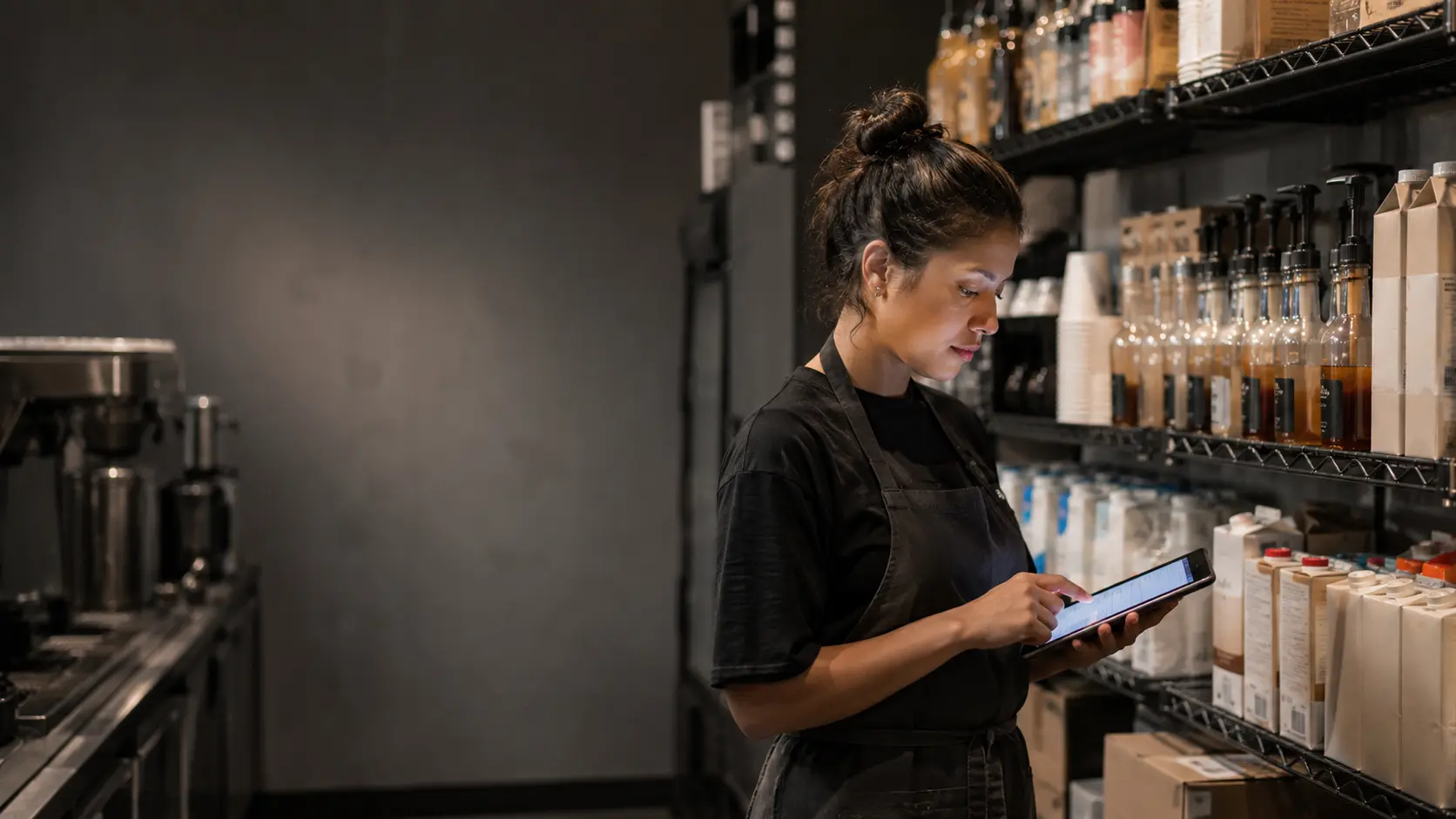
The retreat is notable because Starbucks had only recently pitched the technology as a meaningful operational upgrade. In a September 3, 2025 company post, Starbucks said the tablet-based system would roll out across North American coffeehouses and use computer vision, 3D spatial intelligence, and augmented reality to count beverage components such as milk and syrups.
At the time, Starbucks said the system would let stores count inventory eight times more frequently and improve replenishment by giving managers a near-real-time view of shortages. That language framed the tool not as a lab experiment, but as a frontline operating system tied directly to customer experience and sales.
How AI Inventory Moved From Promise to Problems
Reuters had already reported in February that employees and managers were seeing repeated errors from the system. Those issues included miscounting items, confusing similar products, and missing stock altogether, which undercut the central promise that the software would reduce manual work while improving accuracy.
That detail matters because store inventory is a narrow operational job with a low tolerance for ambiguity. A recommendation engine can improve over time without breaking the basic customer experience, but a counting tool that cannot reliably tell one type of milk from another creates immediate friction for workers who still need to make ordering decisions before the next rush.
By May, Starbucks appears to have decided that the credibility gap had become harder to defend than the efficiency case. Reuters reported that employees were told beverage components and milk would again be counted the same way as other inventory categories, bringing the process back to a more standardized manual approach.
Why AI Inventory Could Not Afford Small Errors
Starbucks’ own launch materials help explain why even limited mistakes could become a strategic problem. The company had connected the tool to a larger effort to keep frequently used ingredients available, reduce backroom time, and support more frequent replenishment across stores.
Once a company ties a system that closely to daily execution, the performance bar rises quickly. Small counting errors do not stay small when they shape orders for milk, syrups, and other beverage inputs that can affect whether a store can fulfill popular drinks consistently throughout the day.
That is also why the reversal says something broader about enterprise AI adoption. The hardest part is often not creating a model or a vision system, but building enough trust in repeated, routine conditions that store staff stop double-checking the output and start relying on it as part of normal work.
What AI Inventory Means for Brian Niccol’s Turnaround
The failed rollout lands in the middle of Brian Niccol’s broader “Back to Starbucks” turnaround, which has focused on restoring speed, consistency, and customer confidence. Product availability has been part of that effort because an out-of-stock item does not just cost one sale; it also weakens the promise that Starbucks can deliver a predictable premium experience at scale.
That context is why the decision is more important than a simple technology write-down. It shows management is still trying to solve the right problem, but has become more willing to abandon a visible tool when it does not hold up in stores.
What AI Inventory Says About Turnaround Discipline
There is a disciplined interpretation of the move. A turnaround only works if management is prepared to separate attractive narratives from useful systems, and frontline retail tools ultimately have to prove themselves through dependable execution rather than innovation language.
Starbucks’ latest financial results show why execution matters so much. In its fiscal second-quarter 2026 report released on April 28, the company said North America comparable store sales rose 7.1%, but operating margin in the region fell to 9.9% from 11.6% a year earlier, reflecting continued cost pressure even as customer traffic improved.
That combination creates little room for operational vanity projects. If a tool is meant to strengthen in-store consistency but instead adds confusion, management has a strong incentive to remove it quickly and redirect attention toward fixes that have a clearer path to better service and healthier margins.
Supply Chain Fixes Are Moving Back to Basics
Starbucks told Reuters it is also working on more frequent daily store replenishments and additional supply-chain changes. That response suggests the company is not stepping back from the objective of better product availability, only from one method that did not perform well enough in practice.
In some ways, that is a more grounded strategy. Retailers often discover that the operational gains they want depend as much on store process discipline, delivery frequency, and category simplification as on software sophistication.
For Starbucks, returning to basic counting while improving replenishment may prove less exciting than an AI story, but it could be more aligned with what a turnaround needs at this stage. Niccol has already shown a willingness to keep customer-facing labor and service investments in place even while reshaping the corporate cost base, and this decision fits that pattern of pragmatism over spectacle.
What the Starbucks Setback Says About Enterprise AI
The broader lesson is that retail AI stories are entering a less forgiving phase. Investors and operators are no longer judging these systems only by whether they sound modern or can be rolled out quickly; they are judging them by whether they can handle repetitive real-world tasks with enough consistency to replace an existing workflow.
That is especially true in consumer businesses where a flawed internal tool can ripple outward into empty shelves, slower service, or staff frustration. In that environment, a failed deployment becomes a business story, not just a software story.
Enterprise AI Still Faces a Frontline Proof Test
Starbucks is hardly alone in trying to automate routine work, and it will not be the last retailer to discover that store-level conditions are harder than product demos suggest. Lighting, shelf arrangement, packaging similarity, restocking patterns, and hurried employee behavior all create edge cases that can break a system designed around cleaner assumptions.
That is why Reuters’ reporting on the miscounts matters beyond Starbucks. It offers a concrete example of how enterprise AI can stumble when the cost of being almost right is still too high for day-to-day operations.
For business readers, the key takeaway is not that retailers will stop using AI, but that they will likely become more selective about where automation gets authority. Decision-support tools may keep expanding, while systems expected to replace human verification in core store tasks will face a much harder burden of proof.
Vendors and Retailers Will Face Harder Questions
The episode also puts more pressure on technology vendors selling AI into large operating networks. NomadGo, the app provider, told Reuters it is continuously learning from customer and user feedback, but the commercial question is whether learning cycles can keep pace with the daily reliability standards of a national retailer.
Retail executives, meanwhile, may need to rethink how they communicate these rollouts internally and externally. Early claims about speed, frequency, and automation can make strategic sense, but they also raise expectations that become harder to manage if employees keep encountering obvious errors in routine use.
Starbucks still has room to keep experimenting with store technology, and the company has reasons to do so as it chases a more efficient, more consistent operation. But this reversal is a reminder that in consumer-facing businesses, technology earns its place only when the people closest to the work can trust it without hesitation.
Starbucks may have retired one high-profile tool, but the underlying challenge of keeping stores stocked and service consistent remains central to its turnaround. For more reporting on strategy, technology, and operational shifts shaping major companies, continue reading related coverage at Berrit Media.
Discover more from Berrit Media
Subscribe to get the latest posts sent to your email.