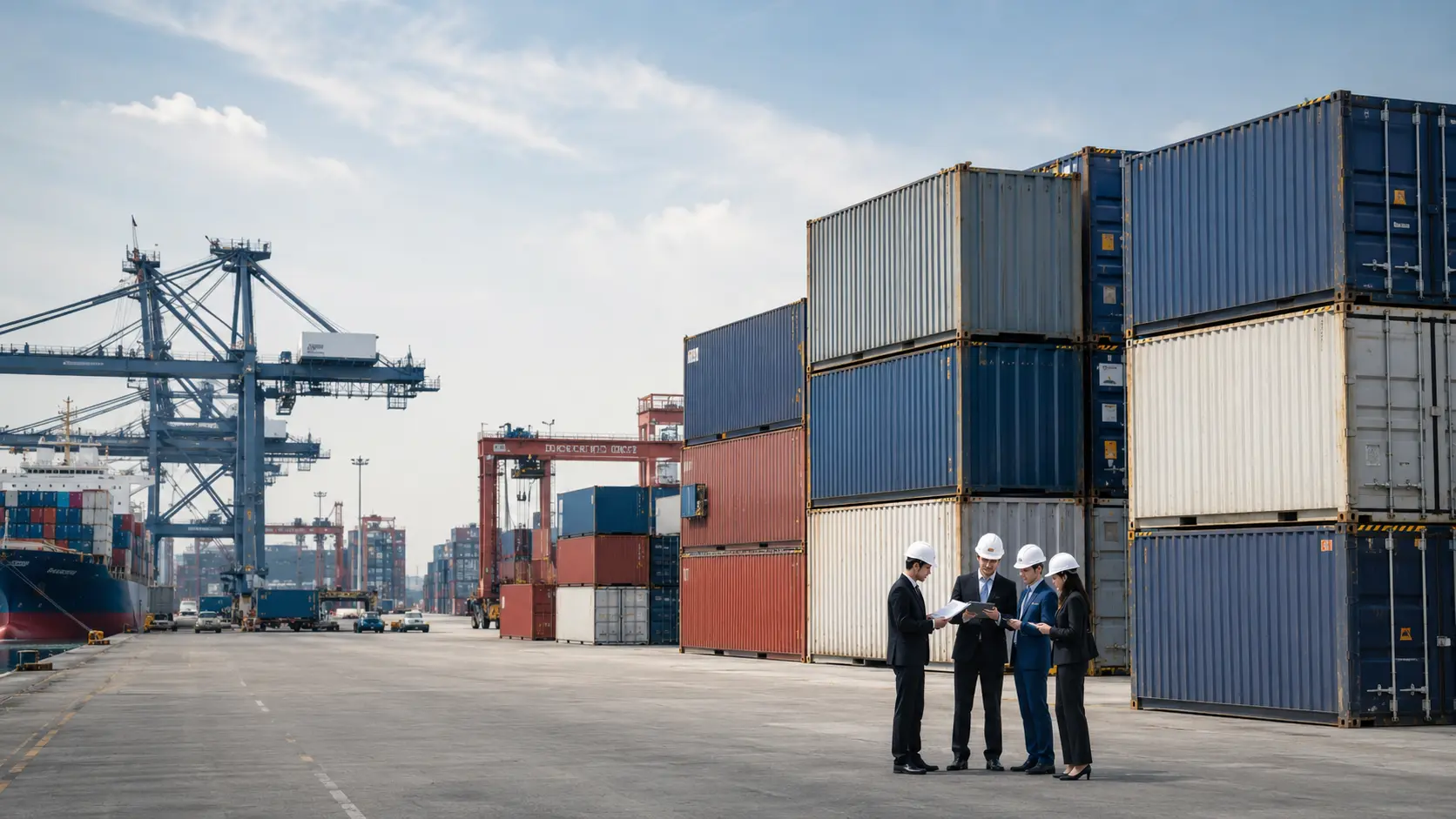
Container cartel allegations are back at the center of a major global trade story after U.S. prosecutors accused four dominant shipping container manufacturers and seven executives of fixing prices and restricting output during the pandemic-era supply shock.
The Justice Department said on May 19 that the alleged conspiracy ran from as early as November 2019 to at least January 2024 and affected nearly all standard unrefrigerated shipping containers. Prosecutors say one defendant, Singamas marketing director Vick Nam Hing Ma, was arrested in France in April and is awaiting extradition, while six executive co-defendants remain at large. The charges remain allegations, and the defendants have not been convicted.
The Container Cartel Case Rewrites a Pandemic Supply Story
For many businesses, the pandemic container shortage was treated as an unavoidable logistics shock driven by factory shutdowns, port congestion, and demand whiplash. This indictment argues that at least part of that pain may also have been engineered inside a concentrated manufacturing market.
That matters because shipping containers are not a niche industrial input. They are the steel boxes that move consumer goods, auto parts, electronics, medical products, and raw materials across oceans, rail networks, and truck corridors. A pricing conspiracy at that layer can ripple through procurement budgets, delivery timelines, and ultimately retail prices.
How the Container Cartel Allegedly Worked
According to the superseding indictment unsealed in the Northern District of California, executives from CIMC, Dong Fang, CXIC, and other co-conspirators met in Shenzhen in November 2019 and agreed to raise prices by limiting how many standard dry containers their factories would produce.
The Justice Department said the alleged arrangement went beyond informal signaling. Prosecutors claim the companies limited shifts and hours on production lines, agreed not to build new container factories, and created a financial penalty system to discourage cheating on the output restrictions.
One of the more striking details in the indictment is the allegation that 87 surveillance cameras were installed across 49 production lines to monitor compliance with the output limits. By September 2020, prosecutors say the companies were also coordinating how many containers would be produced for specific customers, including major lessors, shipping lines, and logistics operators.
Why Container Cartel Pricing Mattered
The Justice Department said the alleged conspiracy roughly doubled standard shipping container prices between 2019 and 2021. In its public remarks, the department framed the case not as a narrow industrial dispute but as a supply-chain event that touched American households and store shelves during the worst phases of the pandemic.
Reuters reported that the accused companies together accounted for about 95 percent of the world market for standard dry shipping containers, underscoring how much leverage a coordinated restriction could exert over global freight equipment. In a market with that level of concentration, even modest output cuts can have outsized pricing effects.
Prosecutors also pointed to the profit surge as part of the case narrative. The indictment says CIMC’s container manufacturing profit rose from about $19.8 million in 2019 to about $1.75 billion in 2021, while Singamas moved from a loss in 2019 to profits in 2020 and 2021. Those figures do not prove wrongdoing on their own, but they help explain why the case could become a defining antitrust test tied to pandemic commerce.
Why the Container Cartel Case Is Also an Economic-Security Story
The Justice Department’s public language suggests it sees the matter as more than retrospective price fixing. Officials repeatedly connected the alleged conduct to economic security, consumer welfare, and the resilience of essential trade infrastructure.
That framing reflects a broader policy shift. Regulators are increasingly treating chokepoints in physical infrastructure the way they treat chokepoints in digital platforms or strategic technologies: as areas where concentration can magnify national vulnerability when markets seize up.
How the Container Cartel Reached U.S. Commerce
Acting Assistant Attorney General Omeed Assefi said the alleged scheme affected roughly $35 billion in global commerce and touched virtually every American household through shortages and delayed goods. That statement matters because it gives the case a scale far beyond one manufacturing segment or one regional trade lane.
Standard dry containers are basic, but they are foundational. If fewer boxes are available, exporters struggle to secure equipment, shipping lines face tighter asset rotation, and importers pay more to move inventory at the exact moment supply chains are already under pressure.
That is one reason the indictment could resonate with policymakers well outside antitrust circles. It fits a larger debate over whether global supply chains remain too dependent on a small number of producers in sectors that appear commoditized until a disruption reveals how strategic they really are.
What the Arrest in France Signals for the Container Cartel Case
The arrest of Ma in France adds an international enforcement dimension that makes the case more consequential for executives far beyond the container sector. U.S. antitrust officials used the announcement to emphasize that cross-border cartel enforcement is not limited by where an executive lives or boards a plane.
That message is likely aimed at two audiences at once. First, it warns multinational managers that antitrust exposure can become personal when prosecutors pursue criminal cases. Second, it signals to foreign companies that conduct affecting U.S. commerce can still attract aggressive enforcement even when the alleged coordination occurred overseas.
The legal process will still take time, and extradition fights, motions, and evidentiary disputes could stretch the case out. But the public rollout was unmistakably strategic: prosecutors wanted to show they had moved from investigation to custody, indictment, and a broader deterrence message for global industrial cartels.
What the Container Cartel Case Means for Shipping and Procurement
Even before the case reaches trial, it is likely to influence how shipping lines, container lessors, logistics groups, and large importers think about supplier concentration. The broader lesson is that equipment markets can be just as vulnerable to hidden coordination as freight markets themselves.
For investors and corporate planners, the case also reopens questions that seemed settled after freight rates normalized. If a supply crisis helped expose structural dependence on a handful of producers, boards may revisit whether resilience should be priced into procurement strategy rather than treated as an avoidable cost.
Why Buyers May Revisit Container Cartel Exposure
Large cargo owners have spent the past few years trying to diversify ports, carriers, and inland transport options. This case suggests they may also need to think harder about the manufacturing base behind the boxes they lease or source, especially when a concentrated upstream market can shape availability long before cargo reaches a vessel.
That does not mean buyers can quickly rewire the container industry. Building new manufacturing capacity is expensive, technically standardized, and deeply tied to the economics of scale. But the indictment could still push procurement teams and trade financiers to ask tougher questions about concentration risk, counterparty exposure, and contingency planning.
It may also sharpen interest in whether public policy should encourage a more geographically diverse base for strategic trade equipment. Governments have already debated similar questions in semiconductors, batteries, and pharmaceuticals. Shipping hardware may now enter that conversation more directly.
What Comes Next in the Container Cartel Prosecution
The criminal case itself will turn on whether prosecutors can prove coordinated output cuts and price fixing, not just parallel behavior during a chaotic period. Defense lawyers are likely to argue that pandemic disruption, volatile input costs, and extraordinary demand swings better explain the container market’s pricing and supply patterns.
Still, the factual allegations are extensive enough to keep the case in view for months. The indictment describes meetings, customer allocation discussions, production caps, monitoring mechanisms, and profit outcomes in unusually concrete terms for an industrial antitrust matter tied to the pandemic.
If the government succeeds, the case could become one of the clearest examples of how a concentrated manufacturing chokepoint translated into higher costs across the real economy. If it fails, it will still leave companies, regulators, and investors with a sharper understanding of how fragile the shipping equipment base can be when a global crisis collides with market power.
The container cartel case is ultimately about whether part of the pandemic supply shock was artificially intensified inside one of global trade’s least visible but most important markets. For more analysis like this, continue reading related coverage at Berrit Media.
Discover more from Berrit Media
Subscribe to get the latest posts sent to your email.