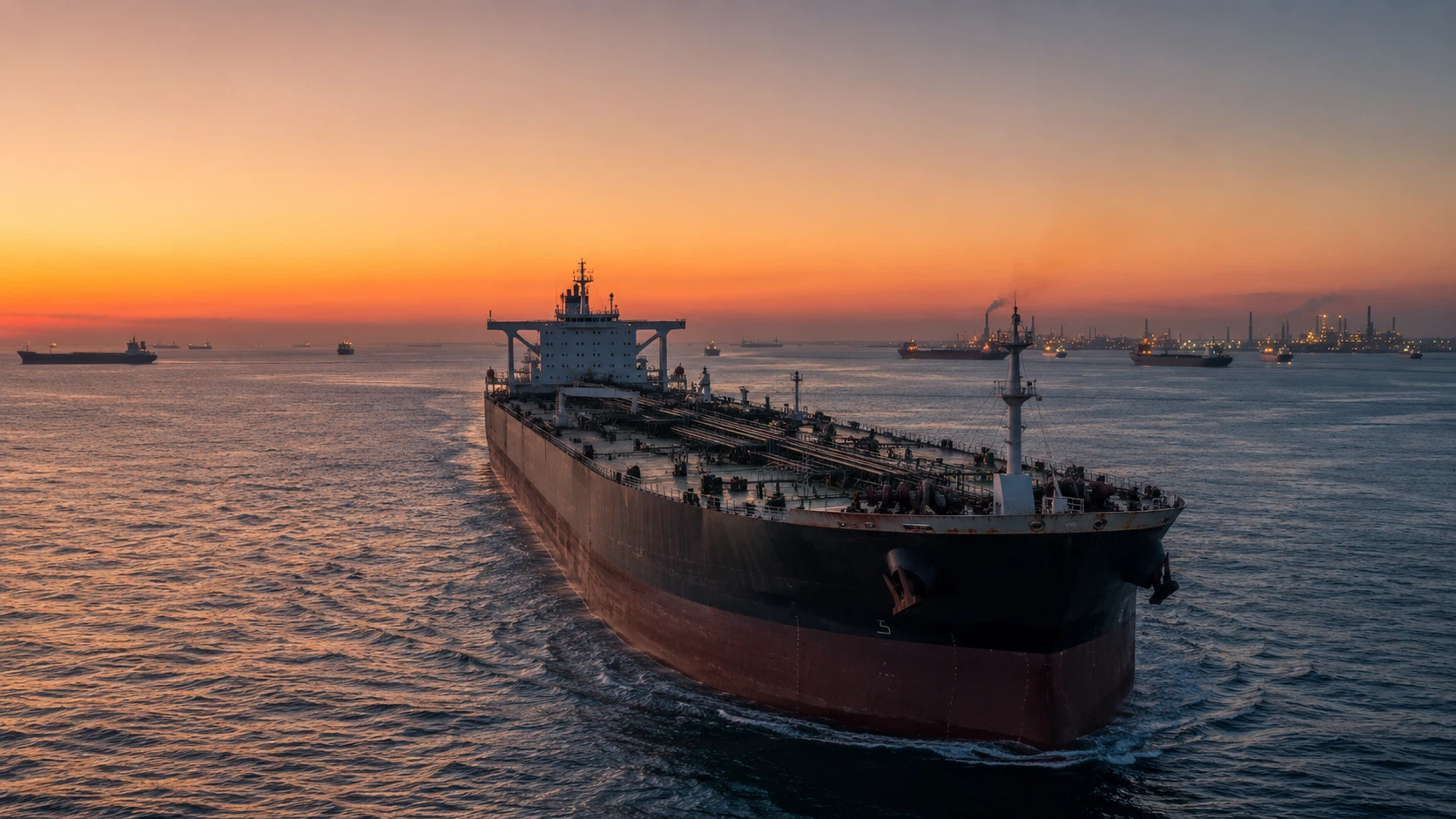
Russian oil sanctions relief is back after the U.S. Treasury issued a new license extending a narrow waiver for cargoes already loaded at sea, reopening a policy channel Washington had just allowed to lapse. The move gives importers and shipping intermediaries another month of legal breathing room, while also underscoring how quickly sanctions policy can bend when energy security and wartime supply shocks collide.
The new authorization, Russia-related General License 134C, was issued by the Treasury Department’s Office of Foreign Assets Control on May 18 and allows transactions ordinarily incident and necessary to the sale, delivery, or offloading of Russian-origin crude oil and petroleum products loaded on vessels on or before 12:01 a.m. eastern daylight time on April 17. Treasury said the authority now runs through 12:01 a.m. eastern daylight time on June 17.
That is a meaningful change from the position investors, traders, and policymakers were digesting only days earlier. The previous license, General License 134B, expired on May 16. In the new document, OFAC states explicitly that 134C replaces and supersedes 134B in its entirety effective May 18, turning what looked like a sanctions reset into a fresh temporary extension.
Associated Press reporting added the political explanation around the change. Treasury Secretary Scott Bessent said the extension was intended to help poorer and energy-vulnerable countries manage shortages linked to the Iran war, while Reuters-backed reporting said the administration faced requests from countries struggling to replace disrupted Gulf supplies. Together, those sources make clear that the latest move is not a broad sanctions rollback. It is a limited market-stabilization measure with strategic tradeoffs.
Why the Russian oil waiver returned
The return of the waiver matters because it changes the immediate compliance map for a part of the oil market that had already begun preparing for tighter restrictions. A lapsed license tells shipowners, insurers, traders, refiners, and banks to step back. A replacement license, even a temporary one, gives those participants a narrower but usable path to finish eligible transactions.
It also tells us something about how the administration is balancing two competing goals. On one side is the effort to keep pressure on Russian oil revenues and show consistency in sanctions enforcement. On the other is the practical need to avoid worsening supply stress when conflict in the Middle East is already distorting freight, pricing, and access to alternative barrels.
Russian oil license now runs to June 17
The official Treasury document is unusually precise about what is and is not being authorized. General License 134C covers transactions that are ordinarily incident and necessary to the sale, delivery, or offloading of Russian-origin crude oil and petroleum products that were loaded on any vessel on or before April 17. In other words, the waiver is tied to pre-existing cargoes, not a blanket reopening of unrestricted Russian seaborne exports.
The document also makes clear that the extension is not merely symbolic. Treasury lists supporting maritime and operational services that remain permitted when they are necessary to complete eligible cargo movements. Those include docking and anchoring, crew health and safety support, emergency repairs, environmental protection activity, vessel management, crewing, bunkering, insurance, classification, piloting, registration, flagging, and salvage. For the shipping chain, that detail matters because a cargo can be commercially agreed yet still become stranded if ancillary services are blocked.
Just as important, the license retains boundaries that prevent the waiver from turning into a wider loophole. Treasury says it does not authorize transactions involving persons located in or organized under the laws of Iran, North Korea, Cuba, or occupied Ukrainian regions, nor does it override other prohibitions involving Iranian-origin goods or services except as specifically authorized. That keeps the measure tightly framed as a Russia-related energy exception rather than a broader unwind of sanctions architecture.
Reversal follows a brief sanctions lapse
The timing of the new license is what gives this development real news value. Only days ago, the waiver had expired and the market was adjusting to the idea that Washington was reverting to a firmer sanctions posture. Treasury’s new action reverses that near-term conclusion and replaces it with a different one: energy-market management is still shaping enforcement tempo.
That reversal is also politically awkward because it comes after earlier signals that the waiver would not be renewed again. AP reported that Bessent had previously said the relief would lapse, only for Treasury to change course and authorize another 30-day extension. Reuters-backed reporting pointed to requests from poorer and more vulnerable countries that needed more time because Gulf supplies had become harder to access during the Iran conflict.
For markets, the lesson is less about rhetoric than about process. When a sanctions exception expires and is then quickly replaced, participants have to treat policy signals with caution. They cannot assume that a stated hard line will survive a deteriorating supply backdrop, and they cannot assume that every temporary extension marks a durable relaxation either. That ambiguity is itself a market factor.
What the extension means for buyers and markets
The practical importance of the new waiver lies in the breathing room it gives buyers, service providers, and governments that still depend on Russian barrels already in transit. By reauthorizing eligible activity for another month, Treasury reduces the immediate risk of cargo disruption at a moment when energy markets remain unusually sensitive to conflict-related shocks.
But the extension also preserves uncertainty. It does not guarantee that every buyer will proceed, every bank will finance, or every insurer will stay comfortable. Sanctions-heavy trade flows depend as much on risk appetite as on legal text. Even when a license exists, counterparties may still decide that compliance complexity, reputational exposure, or future enforcement uncertainty makes a transaction unattractive.
Russian oil flows stay open for vulnerable importers
One of the clearest implications is for energy-vulnerable countries that still need access to discounted Russian cargoes already on the water. AP said Bessent framed the decision as a way to help poorer countries facing supply pressure linked to the Iran war. Reuters-backed reporting added that some countries asked Washington for more time because Gulf shipments had become harder to secure.
India remains central to that conversation because it has been a major destination for Russian crude since Western sanctions reshaped trade routes. Even though the new license is not written as an India-specific measure, it keeps a limited legal pathway open for the types of seaborne cargoes that matter most to refiners and intermediaries managing Russian flows into Asia. That matters for procurement planning, freight arrangements, and near-term feedstock costs.
At the same time, the waiver should not be mistaken for a full normalization of trade. It applies to cargoes loaded by a specific cutoff date and preserves multiple sanctions restrictions. Buyers that rely on it still need to examine vessel timelines, counterparties, service exposure, and payment chains. The result is continued access, but under controlled and conditional terms rather than an unrestricted reopening.
Oil markets regain a temporary safety valve
The market effect is broader than the cargoes themselves. Temporary waivers like this one function as contingency plumbing for the physical oil system. They do not solve structural supply problems, but they reduce the odds that already loaded barrels will be trapped by legal and operational barriers at the same time that other geopolitical disruptions are narrowing flexibility elsewhere.
That matters because conflict-driven supply stress does not show up only in benchmark crude prices. It also moves through freight costs, insurance pricing, refinery margins, and the willingness of intermediaries to handle difficult cargoes. By restoring the waiver, Treasury is effectively preserving one small buffer against a more disorderly tightening in those channels.
Still, the extension only delays a bigger policy question. If the underlying Middle East disruption persists into June, Washington could face the same dilemma again: keep extending limited Russian oil relief to calm markets, or allow the waiver to end and accept tighter sanctions discipline with potentially higher commercial friction. That future decision will matter as much as the current one for energy traders and import-dependent economies.
Why sanctions policy looks more complicated now
The renewed waiver also reshapes the political and strategic reading of U.S. sanctions policy. Washington is trying to show that it remains committed to constraining Moscow, yet it is simultaneously preserving a narrow mechanism that helps some Russian-origin cargoes continue to move. That is a hard balance to explain cleanly, especially when prior public messaging suggested the waiver had reached its end.
This does not necessarily mean the administration has become softer on Russia. It may simply mean that energy-market stability has again taken precedence over cleaner sanctions optics. Even so, repeated reversals can affect credibility, because they encourage market participants and foreign governments to assume that sufficiently strong supply pressure may produce another exception.
Russian oil optics clash with pressure on Moscow
The tension is obvious. Every extension can be defended as a limited measure for already loaded cargoes and vulnerable economies, but every extension also weakens the appearance of a steadily tightening sanctions regime. Critics can argue that even narrow carve-outs still support Russian export revenues and blur the message Washington wants to send to allies, rivals, and traders.
That concern is stronger now because the current step came after the prior waiver had already expired. A same-day or pre-expiry renewal would have looked like continuity. Letting the license lapse and then replacing it makes the policy look reactive, driven less by a settled framework than by changing pressure from markets and diplomatic partners.
For Berrit readers, the deeper significance is that sanctions are no longer just a legal or geopolitical topic here. They are operating as a real-time market-management tool. That is why a narrow OFAC license can matter well beyond compliance desks, influencing oil trade economics, state-to-state bargaining, and expectations about future U.S. intervention in disrupted commodity flows.
Companies now have another month to prepare
Commercial actors will probably treat the June 17 date as both relief and warning. Relief, because eligible cargoes and their service chains have another month of formal cover. Warning, because the extension is time-limited and clearly framed around specific circumstances rather than a permanent policy adjustment.
That means compliance teams, trading houses, shipowners, and refiners are likely to spend the next several weeks reviewing documentation, verifying loading dates, stress-testing payment routes, and deciding which counterparties remain acceptable under a more complicated geopolitical backdrop. Many will also watch for further Treasury guidance, additional FAQs, or country-specific licensing signals if the situation worsens.
In short, the new waiver reduces immediate disruption but does not remove strategic uncertainty. Russian oil remains caught between sanctions pressure and energy-security pragmatism, and Treasury’s May 18 decision shows that Washington is still prepared to bend narrow rules when supply stress grows severe enough. Readers can continue following related policy, industry, and market coverage at Berrit Media.
Discover more from Berrit Media
Subscribe to get the latest posts sent to your email.