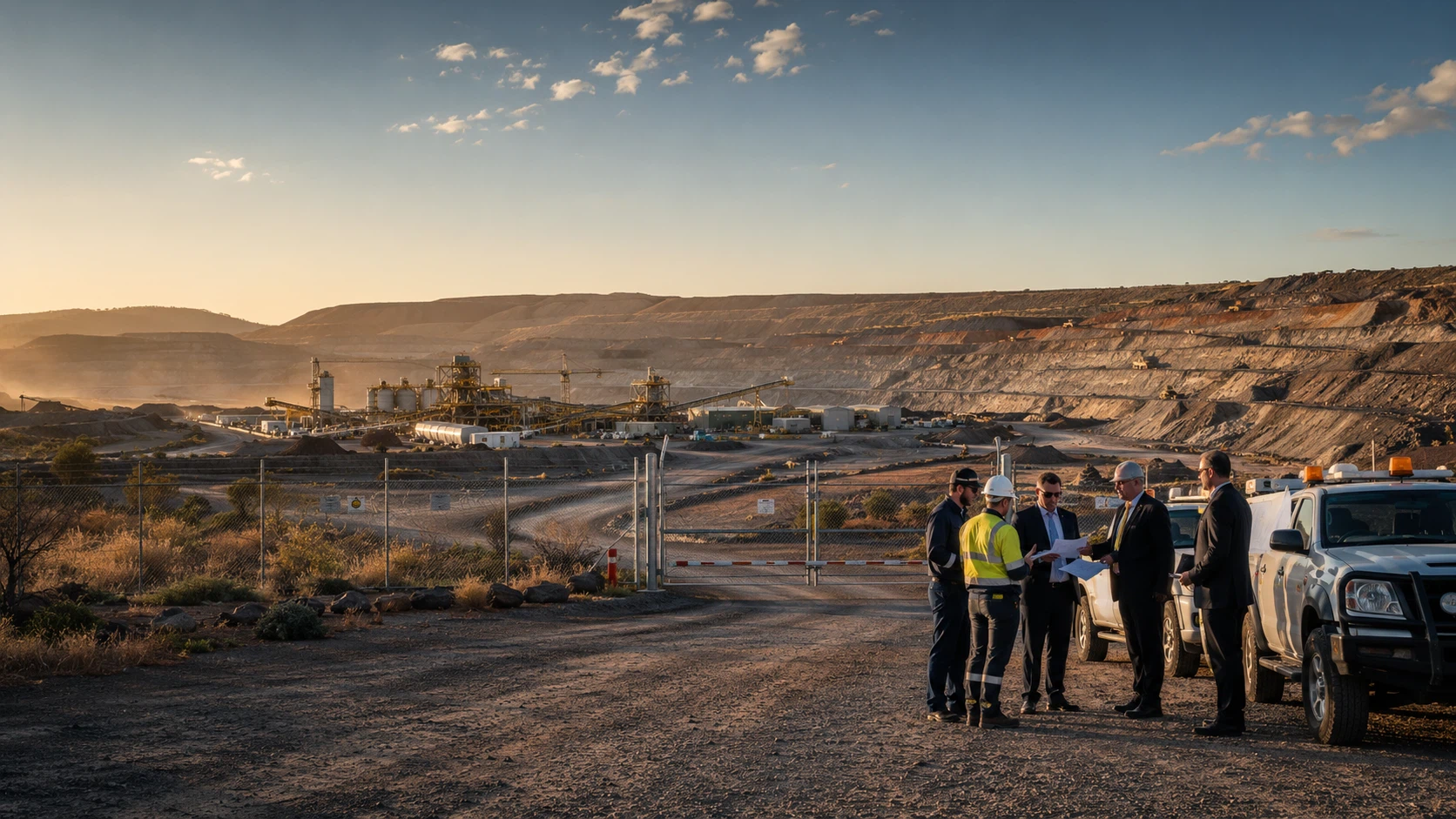
Northern Minerals moved deeper into the center of the global critical-minerals contest on May 18 after Australia ordered six shareholders to divest their stakes in the company, escalating a long-running foreign-investment battle around one of the country’s most strategically sensitive rare-earths developers.
Australian Treasurer Jim Chalmers said the decision followed advice from the Treasury and the Foreign Investment Review Board and was intended to protect the national interest while enforcing the country’s foreign-investment framework. Reuters reported that the order covers six shareholders, including Hong Kong-based Ying Tak, after authorities concluded that China-linked parties had sought to build influence over the company despite earlier disposal requirements.
The move matters beyond one small listed miner. Northern Minerals is developing the Browns Range heavy rare earths project in Western Australia, where deposits of dysprosium and terbium are seen as important to supply chains that feed semiconductors, defense systems, electric motors, and other high-value industrial uses. That makes the case a test of how far Western governments are willing to go to shield future mineral supply from strategic concentration.
Australia Escalates the Northern Minerals Case
Monday’s order did not appear out of nowhere. It extended an enforcement campaign that has been building since 2024, when Canberra first directed five shareholders to dispose of roughly 613.6 million Northern Minerals shares on national-security grounds.
What changed this week was the breadth and finality of the new intervention. Instead of restricting voting or transfers while regulators examined the issue, Australia moved to require new divestments after concluding that the earlier safeguards had not fully contained the ownership concerns surrounding the company.
Northern Minerals stake transfers drew fresh scrutiny
Northern Minerals itself had already flagged the dispute publicly. In an April 1 ASX announcement, the company said it had received correspondence from the Foreign Investment Review Board about the transfer of 361.5 million shares from previously targeted holders to Hong Kong Ying Tak Limited.
According to that filing, the Treasurer said he had reason to believe the transfers contravened the 2024 disposal order. The interim directions then barred Northern Minerals from recognizing votes tied to the relevant shares and from registering further transfers before the company’s next annual meeting.
That earlier filing now reads as an important bridge to Monday’s action. It showed regulators were not only concerned with the original shareholdings, but also with whether subsequent transactions had undermined the purpose of the initial national-security order.
Why Canberra widened the Northern Minerals orders
Reuters reported that Chalmers said the fresh divestment orders were consistent with advice from Treasury and the Foreign Investment Review Board. He framed the step as both a national-interest measure and a compliance action under Australia’s existing foreign-investment rules.
That distinction matters. Australia is not presenting the case as a new policy doctrine invented for a single miner. Instead, the government is signaling that it will use ordinary enforcement tools more aggressively when sensitive mineral assets appear to be slipping back toward contested ownership structures.
The message is also aimed at the market. By broadening the orders to six shareholders, Canberra is warning investors that transactions around strategic companies will be examined not only for form, but for whether they preserve or frustrate the intent of prior rulings.
Why Northern Minerals Matters to Rare Earth Supply Chains
Northern Minerals is not one of the world’s largest miners, but it occupies a strategic niche. Its Browns Range project is focused on heavy rare earth elements, especially dysprosium and terbium, which are harder to source outside China than many lighter rare-earth materials.
That is why the company has attracted outsized political attention relative to its market size. For governments trying to build alternative critical-minerals supply chains, heavy rare earths are not just another mining segment. They are a bottleneck tied to industrial resilience, defense planning, and the credibility of broader de-risking efforts.
Northern Minerals sits in a sensitive strategic gap
The company’s own April filing described Browns Range as a potential alternative source of dysprosium and terbium for clean-energy, military, and high-technology applications. Northern Minerals said its Wolverine deposit is believed to be the highest-grade dysprosium and terbium ore body in Australia and that it is advancing funding talks for a commercial-scale operation.
Those details help explain why ownership matters so much. A project positioned as a non-China supply option loses strategic value for policymakers if regulators believe influence over the company can still be consolidated through related-party transfers or opaque shareholder arrangements.
Heavy rare earths also occupy a particularly sensitive part of the materials chain. Dysprosium and terbium improve the heat resistance and durability of permanent magnets, making them relevant to advanced electronics, electric drivetrains, renewable-energy equipment, and defense platforms that cannot easily tolerate supply disruption.
Western buyers want Northern Minerals as a non-China option
The broader geopolitical backdrop strengthens the story. Western governments have spent the past several years trying to reduce dependence on China across mining, refining, battery materials, semiconductors, and industrial inputs that can become leverage points in a strategic confrontation.
In that context, Northern Minerals represents more than an exploration-and-development company. It is part of an emerging industrial-policy effort to secure upstream resource positions before supply-chain diversification becomes impossible or prohibitively expensive.
The company’s planned linkage to Iluka Resources’ under-construction rare-earths refinery at Eneabba adds to that logic. If Browns Range eventually feeds a domestic or allied processing pathway, Australia would gain not just ore output but a more credible story about building an integrated heavy rare-earths chain outside China.
The Northern Minerals Fallout Will Reach Beyond One Miner
The immediate market reaction was negative. Reuters said Northern Minerals shares fell more than 8% in trading after the announcement, reflecting investor concern about governance instability, ownership uncertainty, and the practical consequences of another intervention on a company still trying to finance its next phase.
Yet the longer-term significance may be larger for policymakers and dealmakers than for the stock itself. The case is becoming a reference point for how Australia and allied governments may police shareholder influence in sectors tied to national security and energy-transition strategy.
Northern Minerals now faces a harder financing test
From the company’s perspective, the latest order adds friction at a delicate moment. Northern Minerals is trying to move from strategic promise toward bankable execution, and investors typically prefer ownership clarity when funding large, capital-intensive mining projects.
At the same time, the intervention could produce a more investable register over the longer run if it resolves lingering questions about who controls or can influence the company. For some Western capital providers, a cleaner shareholder base may ultimately be more attractive than unresolved political risk.
The tension is that both things can be true at once. Enforcement can strengthen a strategic asset’s credibility over time while still creating short-term volatility, legal complexity, and financing delays that complicate the road to production.
The Northern Minerals precedent could reshape foreign-investment reviews
The precedent may prove just as important as the company. Australia’s February foreign-investment compliance update showed that courts had already imposed A$14 million in penalties on investors who failed to comply with earlier Northern Minerals disposal orders, underscoring that the government was prepared to move beyond warnings.
Now the new divestment order suggests regulators are willing to keep escalating when they believe prior remedies have been circumvented. That raises the compliance burden not only for investors in Northern Minerals, but for anyone building positions in sensitive Australian assets linked to minerals, energy, defense, or advanced technology.
For allies seeking resilient supply chains, that may be the intended point. Governments want private capital to fund alternative mineral capacity, but they also want to determine who can accumulate influence over those assets and under what conditions. Northern Minerals has become a live case study in that balancing act.
Northern Minerals is still only one company, but Australia’s latest intervention shows how quickly critical-minerals policy can spill into shareholder rights, market pricing, and industrial strategy. Readers can continue following related Berrit Media coverage for more on rare earths, policy risk, and global supply chains.
Discover more from Berrit Media
Subscribe to get the latest posts sent to your email.