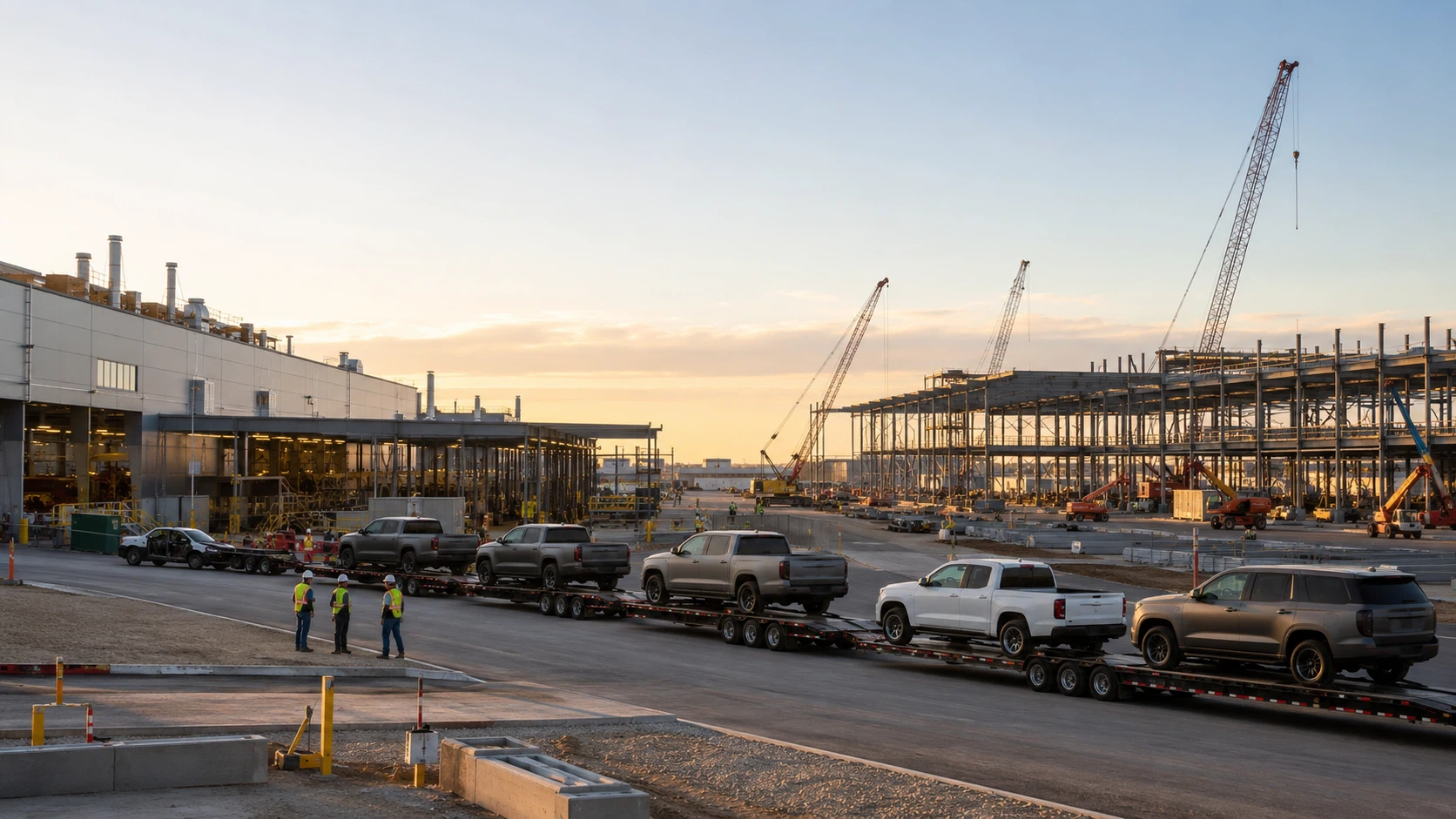
Toyota Texas expansion has moved from broad U.S. manufacturing rhetoric to a concrete new filing, with the Japanese automaker seeking approval for a $2 billion assembly-line project in San Antonio. The proposal, disclosed in filings reviewed by Reuters and local reporting tied to the Texas Comptroller’s Office, would add a new vehicle line at Toyota’s existing Texas complex and create 2,000 jobs.
The filing matters because it gives investors, suppliers, and local policymakers a clearer timeline for one of Toyota’s next major North American manufacturing decisions. It also shows how large global carmakers are still putting real capital behind regional production even as trade policy, model mix, and consumer demand remain in flux.
Toyota Texas Expansion Sets a New Production Timeline
The core of the filing is straightforward: Toyota wants to build a new vehicle assembly line at its San Antonio manufacturing complex under the internal name Project Orca. Reuters reported that the filing points to construction beginning by the end of 2026 and vehicle production starting in 2030.
That schedule gives Toyota several years to line up equipment, suppliers, workforce planning, and any public incentives tied to the site. It also means the company is signaling a long-horizon commitment rather than a short-term capacity adjustment.
Project Orca and the 2030 Production Target
According to Reuters, Toyota plans to spend about $1.05 billion on buildings and other property improvements and about $950 million on machinery and equipment. That split is important because it shows the project is not only a real-estate expansion, but also a full manufacturing-capacity buildout.
KSAT, citing the filing submitted to the Texas Comptroller’s Office, reported that construction on the new line is slated for completion in 2029, with vehicle production beginning in 2030. Those dates line up with Reuters’ account of construction starting before the end of 2026 and help anchor the project in a multi-year execution window.
Toyota has not publicly identified which vehicle will be built on the new line. That leaves room for future product decisions, but the absence of a named model does not reduce the significance of the filing itself, which already outlines the scale, timing, and labor expectations of the project.
Toyota Texas Jobs and Wage Commitments
The labor component is one of the clearest signals in the proposal. Reuters said the project is expected to create 2,000 new jobs from 2028 to 2030, while KSAT reported the filing also points to more than 600 construction jobs per year from 2026 through 2030.
KSAT further reported that Texas Workforce Solutions submitted a wage requirement of $88,583 a year for the new jobs. That detail matters because it turns the project from a headline investment number into a more measurable local economic commitment tied to the state’s incentive framework.
Together, the hiring and wage details suggest Toyota is planning a significant industrial expansion rather than a limited equipment refresh. For San Antonio, the project would build on an already sizable production base and extend the plant’s role in the company’s U.S. manufacturing map.
Why Toyota Texas Matters in the North American Network
Toyota’s filing lands at a time when the company is repeatedly emphasizing that it wants to build where it sells and source where it builds. In statements carried by Reuters and KSAT, Toyota said it regularly evaluates its manufacturing footprint to stay competitive and aligned with customer demand.
That framing matters because it places the Texas project inside a broader regional strategy rather than treating it as a standalone plant decision. The filing also gives Berrit Media readers a sharper way to read Toyota’s U.S. expansion story: less as public-relations language and more as a chain of site-specific capital commitments.
Toyota Texas Inside the $10 Billion U.S. Commitment
Toyota’s recent U.S. announcements provide that broader context. In November 2025, the company said it would invest up to $10 billion in U.S. manufacturing over five years, and later tied a $912 million hybrid-production investment across five plants to that commitment.
Toyota also said in a March 2026 announcement that a separate $1 billion investment across its Kentucky and Indiana operations was part of the same five-year U.S. plan. Seen against that backdrop, the Toyota Texas proposal looks like another major piece of a rolling manufacturing program rather than an isolated plant upgrade.
That matters for the investment case around Toyota’s U.S. operations. Instead of waiting for one blockbuster plant announcement, the company appears to be building capacity through a series of targeted projects that deepen its footprint across batteries, hybrids, SUVs, and now potentially another Texas assembly line.
Toyota Texas and Local Supply Chains
The San Antonio plant is already an established production site. KSAT reported that the factory opened in 2006 with Tundra production, currently assembles the Tundra and Sequoia, produced more than 197,000 vehicles in 2025, and employs more than 3,700 workers.
Those existing volumes help explain why a new line in Texas matters beyond Toyota itself. A project of this size can affect logistics providers, on-site suppliers, tooling companies, training pipelines, and local infrastructure spending long before the first vehicle comes off the line.
Toyota’s own language also points in that direction. In statements to Reuters and KSAT, the company tied the project to long-term investment in local manufacturing, jobs, and suppliers, underscoring that the value of the expansion reaches into the regional industrial ecosystem.
What the Filing Says About Industry Strategy
The Toyota Texas expansion is also a useful read-through for the wider auto industry. Carmakers are still balancing electrification, hybrid demand, tariff uncertainty, and the economics of building closer to major end markets.
Because Toyota has not yet named the future product, the filing does not settle every strategic question. Even so, the scale of the investment suggests the company wants to preserve flexibility while strengthening a U.S. manufacturing base that can support demand shifts over the rest of the decade.
No Product Named Yet in Toyota Texas Filing
One notable feature of the filing is what it does not say. Neither Reuters nor the local reporting tied to the Texas filing identified a vehicle program for the proposed line, which means outside observers still do not know whether Toyota is preparing for trucks, SUVs, hybrids, or another product mix.
That uncertainty is not unusual at this stage of a large industrial project. Companies often lock in land use, incentives, construction plans, and equipment budgets before they make a final public commitment on the exact model or production allocation.
For investors and suppliers, that means the headline is not about a single nameplate yet. It is about Toyota reserving optionality in one of its most important North American manufacturing corridors while still making a large enough commitment to shape supplier expectations.
How Rivals and Policymakers Will Read Toyota Texas
Competitors will likely read the Toyota Texas filing as another sign that scale still matters in North American auto production. A $2 billion assembly-line proposal is not a symbolic gesture; it is the kind of investment that can influence supplier location decisions and labor-market competition years before launch.
Policymakers, meanwhile, may see the project as evidence that incentive frameworks and workforce rules remain central to landing large manufacturing expansions. KSAT reported that the wage threshold in the filing is tied to Texas’ House Bill 5 requirements for companies seeking a school-district tax abatement.
That combination of private capital, public-policy structure, and long-dated production planning is exactly why the story rises above a routine plant update. It turns a corporate filing into a clearer signal about how industrial investment decisions are being made in the current U.S. market environment.
Toyota Texas expansion now stands as one of the more concrete recent signals of where large-scale auto manufacturing capital is heading in the United States, and readers can continue following related industry coverage at Berrit Media.
Discover more from Berrit Media
Subscribe to get the latest posts sent to your email.