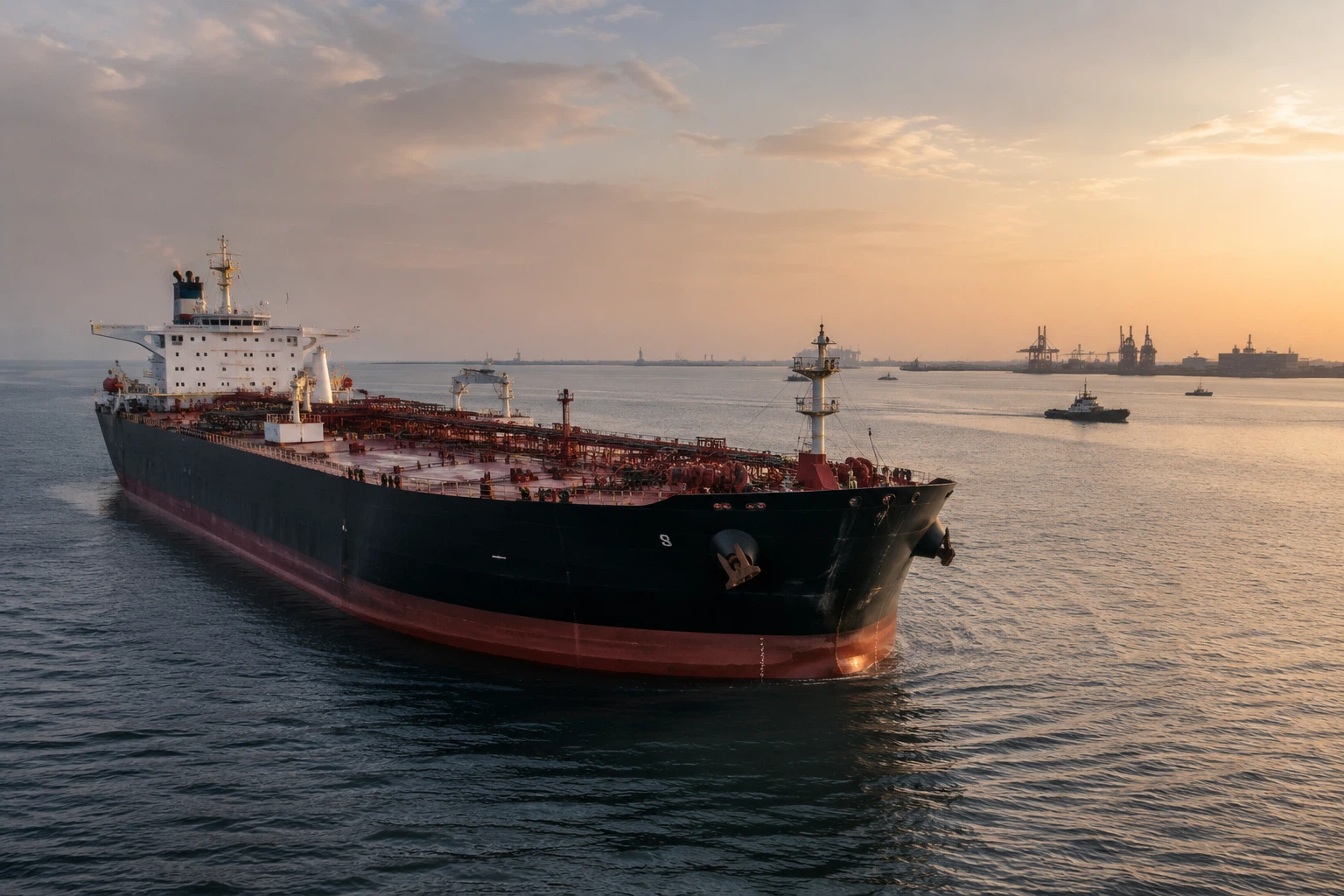
Russian oil is back under tighter U.S. sanctions after Washington allowed a temporary waiver for seaborne cargoes to expire on May 16, reopening a policy fight that reaches far beyond one license. The move removes a short-term escape valve the Trump administration had used during the Strait of Hormuz crisis, and it now forces importers, traders, insurers, and refiners to reassess how much sanctioned crude can still move without triggering legal or commercial risk.
The immediate impact is most visible in India, which Reuters identified as one of the countries that had been able to keep buying Russian cargoes under the waiver while global oil supplies were strained. But the broader significance is strategic: the lapse signals that the White House is no longer willing to balance wartime energy shortages with temporary sanctions flexibility for Moscow, at least not for now.
Why the Russian oil waiver mattered
The waiver was not a broad repeal of sanctions on Russian energy. Instead, it was a narrowly framed authorization from the U.S. Treasury’s Office of Foreign Assets Control, designed to let already loaded cargoes reach buyers while markets absorbed the shock from conflict-related disruption in the Middle East.
That distinction matters because the policy was always presented as temporary crisis management rather than a durable shift in Washington’s Russia stance. Once the license expired without renewal, the market lost that bridge and returned to a tougher baseline.
Russian oil waiver mechanics were tightly defined
OFAC’s General License 134B, issued on April 17, authorized transactions ordinarily incident and necessary to the sale, delivery, or offloading of crude oil and petroleum products of Russian Federation origin that had been loaded on vessels on or before 12:01 a.m. eastern daylight time on April 17. The license explicitly said that authority would run only through 12:01 a.m. eastern daylight time on May 16.
The same license also covered a practical set of supporting services that often determine whether a cargo can physically move, including vessel management, crewing, bunkering, insurance, classification, piloting, and salvage. In other words, the waiver did not simply bless ownership changes on paper. It enabled the shipping ecosystem around Russian oil cargoes to keep functioning within a narrow window.
Just as importantly, the license excluded transactions involving Iran, Cuba, North Korea, and occupied Ukrainian regions, underscoring that Treasury was trying to contain the exception rather than open a broader sanctions loophole. When that authorization ended, the legal room that had supported those cargoes ended with it.
Why Washington changed course on Russian oil
Reuters reported in April that the administration renewed the waiver after countries facing the energy shock from the Iran war pressed Washington to keep alternative barrels flowing. At the time, the White House was trying to limit the inflationary and political damage from higher fuel costs while the Strait of Hormuz remained vulnerable.
That made the Russian oil waiver a wartime market tool as much as a sanctions instrument. The administration’s argument, as reported by Reuters, was that oil needed to remain available to those who required it while negotiations with Iran evolved and supply disruption threatened the wider market.
By late April, however, Treasury Secretary Scott Bessent told AP that the United States did not plan to renew the waiver again. Saturday’s expiry brought policy back into line with that position, suggesting the earlier extension was an exception born of acute market stress rather than a new template for Russia sanctions enforcement.
What the expiry means for India and energy markets
India sits near the center of this story because it has become a major buyer of discounted Russian crude and because the temporary U.S. flexibility had helped keep those seaborne flows moving during a volatile period. Losing the waiver does not erase India’s need for supply, but it complicates how sanctioned cargoes can be financed, transported, and insured.
For global markets, the issue is less about an immediate disappearance of all Russian barrels and more about the return of friction. Even when oil still moves, sanctions uncertainty can raise freight costs, limit counterparties, and make refiners more cautious about procurement timing and price exposure.
India faces a narrower Russian oil window
Reuters said the lapsed waiver had previously allowed countries including India to buy Russian seaborne oil despite the underlying sanctions framework. That matters because India has been one of the most commercially important destinations for Russian crude since Western restrictions restructured trade flows.
Without the license, the operational challenge grows. Buyers now have to consider whether a cargo, payment path, insurer, or service provider could fall outside permitted activity, and that can delay transactions even before any formal enforcement action appears.
The result may be a narrower and more selective Russian oil trade rather than an instant stop. Some participants may step back for compliance reasons, while others wait for clearer signals from Washington on whether this is a firm reset or another pressure point that could change if energy markets tighten again.
Oil markets lose a short-term buffer
The waiver had served a specific market purpose during the Hormuz crisis: it gave the global system access to cargoes that might otherwise have been stranded by sanctions rules at a time when policymakers feared a supply shock. In that sense, it worked less like an ideological concession and more like emergency plumbing for a stressed oil market.
Now that the Russian oil exception has lapsed, the market loses part of that contingency architecture. Traders and policymakers alike will be watching whether the end of the waiver translates into higher price volatility, sharper shipping bottlenecks, or a wider scramble for alternative crude.
The old Hormuz risk has not fully disappeared either. That means sanctions policy and energy security are once again colliding in real time, with every disruption in transit or every jump in freight and insurance costs carrying implications for inflation, refining margins, and political pressure on fuel prices.
Sanctions policy returns to the center
The end of the waiver is also a reminder that sanctions policy is not only about punishment. It is about credibility, coalition management, and the question of whether temporary energy exceptions undermine the broader effort to constrain Russia’s war financing.
That debate never went away while the waiver was active. It merely sat beneath the more urgent concern that another supply rupture in the Gulf could make energy prices politically and economically harder to manage.
Allies and lawmakers kept pressing on Russian oil
Reuters reported that two senior Democratic senators, Jeanne Shaheen and Elizabeth Warren, urged the administration not to renew the license, arguing that it had provided revenue to Russia without producing meaningful relief for U.S. consumers. Earlier criticism from lawmakers and European officials had already framed the waiver as an uncomfortable departure from the West’s pressure campaign against Moscow.
That political criticism carried weight because it challenged both the effectiveness and the optics of the measure. If sanctions relief does not clearly lower fuel costs, critics can argue that Washington absorbed the strategic downside while getting little economic benefit in return.
Allowing the waiver to expire therefore does more than tighten commerce. It helps the administration signal that temporary flexibility has limits and that U.S. sanctions policy on Russian oil is still meant to restrict, not normalize, trade tied to Moscow’s export revenues.
Enforcement questions start now
The key question after expiry is not whether the license ended, because the Treasury document made that date explicit. The harder question is how aggressively the United States will police activity around Russian cargoes that now fall outside the waiver and how quickly market participants respond to that risk.
Shipping, commodity trading, marine insurance, and refining businesses will likely focus on documentation, loading dates, counterparties, and service exposure. In sanctions-heavy markets, commercial hesitation often arrives before formal penalties, because companies do not need an enforcement case to decide a trade is no longer worth the legal uncertainty.
That is why the expiry matters as a market event as much as a policy event. Even without a dramatic announcement beyond the lapse itself, the end of the Russian oil waiver can reshape behavior across supply chains simply by removing a narrow but important piece of regulatory certainty.
The Russian oil waiver may have been temporary from the start, but its expiration is a durable reminder that wartime energy management and sanctions discipline rarely stay aligned for long. Readers can continue following related policy, trade, and market coverage at Berrit Media.
Discover more from Berrit Media
Subscribe to get the latest posts sent to your email.