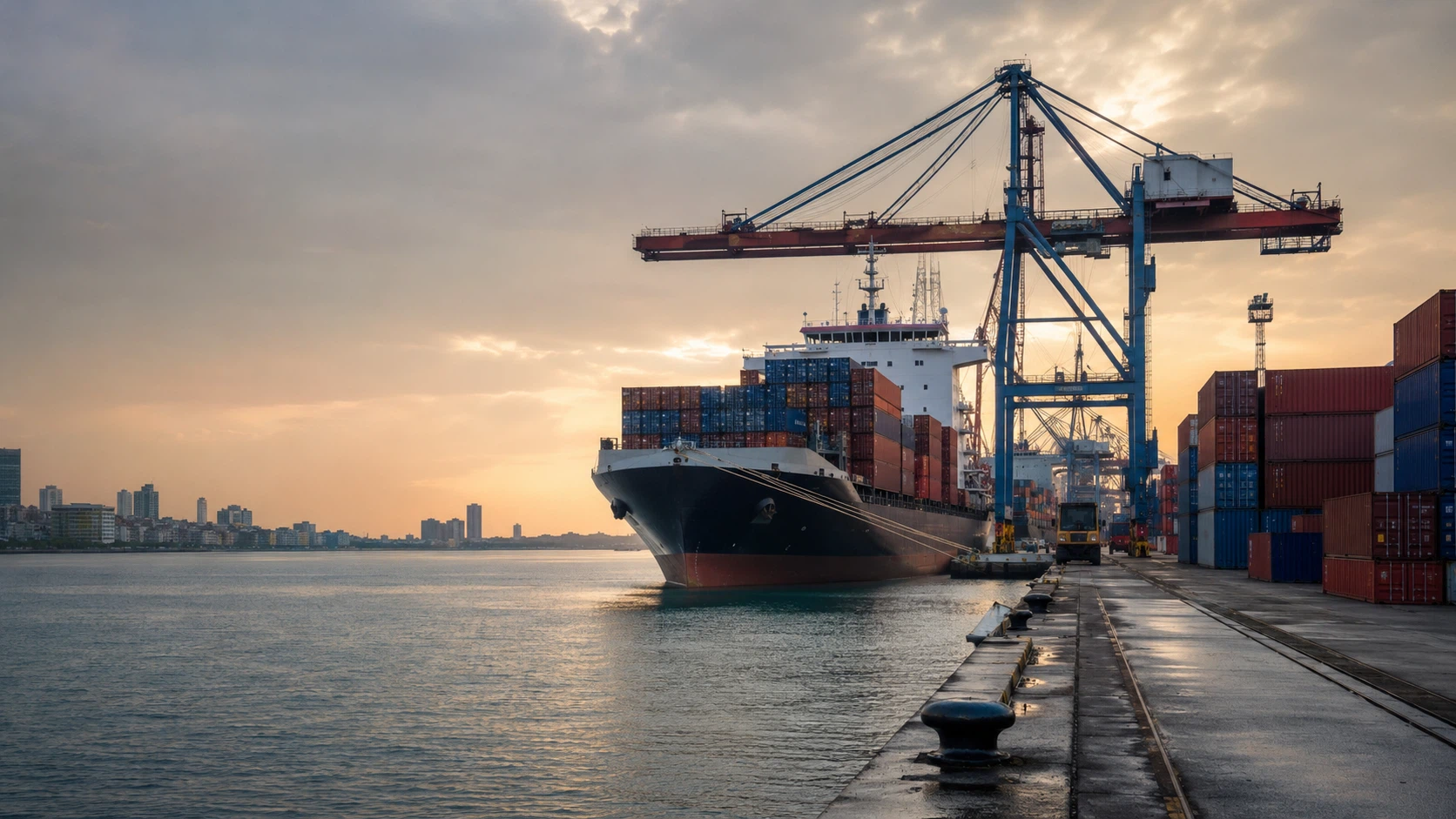
Cuba shipping has become a new sanctions stress point after Hapag-Lloyd and CMA CGM suspended bookings to and from the island until further notice, citing President Donald Trump’s May 1 executive order. Reuters reported on Sunday that the move by two major global carriers raises the risk of another trade shock for Cuba at a moment of shortages, rationing, and weak fuel supply.
The decision matters beyond a single route change. It shows how Washington’s broader sanctions architecture is beginning to change corporate risk calculations for foreign operators, even though the U.S. Treasury says existing Cuba regulations and licenses remain in force under separate rules.
Cuba Shipping Becomes a Sanctions Compliance Test
The May 1 executive order did not directly instruct every shipping line to leave Cuba. Instead, it broadened sanctionable conduct to cover foreign persons operating in Cuba’s energy, defense and related materiel, metals and mining, financial services, and security sectors, while also giving the U.S. government authority to impose penalties on foreign financial institutions that facilitate significant transactions for blocked parties.
That structure helps explain why large transport groups are reassessing exposure. A container carrier touches cargo owners, port agents, freight forwarders, banks, insurers, and customs processes at the same time, so any uncertainty around counterparties can quickly become a compliance problem rather than a narrow commercial decision.
Why the Cuba Shipping Risk Changed After May 1
The White House order created a new sanctions program that sits alongside the long-running Cuban Assets Control Regulations rather than replacing them. In plain terms, the administration widened the set of foreign actors that could be targeted, and the Treasury’s Office of Foreign Assets Control later said the order broadened sanctions risk for non-Cuban foreign persons and foreign financial institutions involved with blocked parties.
At the same time, OFAC said existing Cuba-related authorizations remain valid under the Cuban Assets Control Regulations. The agency also issued a general license on May 7 authorizing transactions that were already permitted or exempt under those regulations, which means the order did not automatically shut down every lawful channel tied to Cuba.
That legal nuance still leaves a large practical burden on companies. Shipping groups must decide whether they can confidently screen customers, cargoes, and payment flows without touching sanctionable sectors or state-linked entities. For a market as small and operationally difficult as Cuba, the safer move can be to pause first and ask questions later.
Cuba Shipping and GAESA Exposure
Reuters said one key consideration in the booking suspensions was the need to avoid shipping that could be linked to GAESA, the military-linked Cuban conglomerate that has long been a focal point of U.S. sanctions policy. That matters because logistics chains often involve intermediaries, warehousing, and service providers whose ownership and end use may not be obvious at the moment a booking is accepted.
For global carriers, the problem is not only whether a route itself is legal. The problem is whether every commercial relationship attached to that route can be defended to banks, regulators, and internal compliance teams. If that chain cannot be mapped clearly enough, a temporary blanket freeze becomes the simplest way to contain risk.
Reuters also reported that one possible outcome would be a narrower arrangement allowing shipments aimed only at Cuba’s private sector. Until something like that is formalized, however, a broad suspension gives carriers room to avoid accidental exposure while they monitor how Washington applies the order in practice.
The Cuba Shipping Freeze Hits an Already Stressed Economy
The timing is severe because Cuba’s economy was already under pressure from fuel constraints, import shortages, and a weak supply of hard currency. Reuters described the booking halt as the latest blow to an economy that was already struggling to keep shelves stocked and essential services functioning.
The immediate issue is not only export revenue. It is the day-to-day flow of food, industrial inputs, consumer goods, and commercial inventory that moves through container networks, transshipment hubs, and freight brokers. When major liners pause, the shock spreads quickly through prices, delivery times, and availability.
Private Businesses Face Cuba Shipping Uncertainty
The Trump administration has signaled that it wants to put more pressure on Cuba’s state-linked economy while giving private businesses more room where possible. Reuters said one scenario under discussion would allow carriers to keep serving the private sector even if broader shipping to the island remains restricted.
That possibility underlines how important small private importers and merchants have become in Cuba’s current commercial landscape. Even when they rely on informal or hybrid sourcing networks, they still depend on predictable booking windows, payment clearance, and freight handling to keep goods moving into the market.
For now, the suspension creates the opposite condition. Businesses that need to bring in merchandise, spare parts, packaging, or retail goods face uncertainty over timing, routing, and cost. In fragile markets, that kind of uncertainty can do as much damage as an outright ban because suppliers begin pricing in delay and compliance risk.
Fuel and Supply Chains Face Another Squeeze
Reuters cited two sources with direct knowledge as saying the suspension by Hapag-Lloyd and CMA CGM could jeopardize as much as 60% of Cuba’s shipping traffic by volume. The same report said cargo linked to China, Northern Europe, and the Mediterranean would be among the most affected flows.
The disruption also lands after another sign of commercial retreat. On May 15, Canadian miner Sherritt said it intended to eliminate its Cuban interests, including relinquishing its stakes in joint venture entities in Cuba and surrendering interests in Energas and oil and gas contracts, because it believed that was the only way to preserve its broader ability to do business after the executive order.
When a long-established foreign investor decides its best option is to unwind, and major liner operators stop taking new Cuba orders, the combined message to banks, insurers, suppliers, and auditors is unmistakable. Cuba exposure is becoming harder to justify even before every edge case of the new sanctions regime has been tested.
Cuba Shipping Will Reshape Trade Decisions Beyond the Island
The broader lesson is that sanctions pressure now reaches service providers that may not see themselves as political actors. Shipping lines, commodity traders, logistics agents, and financing intermediaries all sit inside the same compliance web, and each of them can become a pressure point when sanctions expand.
That matters for business readers because markets often react before enforcement becomes fully visible. Companies pause contracts, tighten internal controls, and cut marginal exposures in anticipation of risk. By the time regulators spell out every detail, a commercial withdrawal can already be underway.
Cuba Shipping Could Split State and Private Channels
OFAC’s guidance leaves theoretical room for a more selective trade model because it says existing authorizations under the Cuban Assets Control Regulations remain valid, and its May 7 general license preserves transactions that were already authorized or exempt. That means the legal framework does not necessarily require every foreign business relationship with Cuba to stop.
In practice, however, trade may become much narrower and more segmented. Operators will want stronger proof that counterparties, ports, brokers, and payment arrangements are not tied to blocked persons or sanctionable sectors. That makes a broad commercial route less attractive than tightly screened transactions with clearer end users.
If the private-sector-only option described by Reuters eventually emerges, Cuba trade could split into more controlled lanes rather than returning to the broader pattern that existed before the May 1 order. That would still represent a meaningful contraction in flexibility, scale, and business confidence.
Global Carriers Are Repricing Cuba Shipping Risk
Hapag-Lloyd and CMA CGM are not niche operators, so their decisions can influence how smaller logistics firms, insurers, and lenders calibrate risk. Once the largest players in a chain begin stepping back, service partners often become more cautious too because they do not want to be the weak link in a sanctions review.
Large multinationals also know that compliance stress can spread far beyond a single route. Sherritt said separation from Cuba may help address issues such as difficulties in obtaining an auditor or banking services. That is a reminder that sanctions pressure can change access to finance and professional services as much as access to customers.
Unless Washington offers clearer comfort around permissible private-sector trade, other foreign companies with Cuba links may choose the same playbook. They can pause first, reassess counterparties, and preserve access to dollar finance rather than wait for a harder enforcement test.
The booking freeze by Hapag-Lloyd and CMA CGM shows how quickly Cuba shipping can move from a regional logistics issue to a global compliance signal. For companies watching trade, sanctions, and supply chains, this story is no longer only about Cuba. It is about how policy risk can reorder commerce, and readers can continue following related coverage at Berrit Media.
Discover more from Berrit Media
Subscribe to get the latest posts sent to your email.