Gold merger activity is pushing another large reshaping of the North American mining map after Equinox Gold agreed to buy Orla Mining in an all-stock transaction that implies an $18.5 billion combined company. The deal would give Equinox a broader production base, deeper Canadian exposure and a larger pipeline of mines and development assets at a moment when bullion strength is rewriting capital-allocation decisions across the sector.
Equinox and Orla said on May 13 that the combined group is expected to produce about 1.1 million ounces of gold in 2026 and continue under the Equinox Gold name if shareholders and regulators approve the plan. Reuters, citing company details and market context, reported that the transaction would create the second-largest producer of Canadian gold while also expanding the group’s footprint across the United States, Mexico and Nicaragua.
Gold Merger Reframes the North American Mine Map
At its core, the transaction is a portfolio redesign rather than a simple scale grab. Equinox is using a full-share exchange to add Orla’s mines and projects just as investors are rewarding producers that can show longer reserve life, steadier jurisdictions and a clearer route to self-funded growth.
The companies framed the combination around North America, not global diversification for its own sake. That matters because mining investors have become more selective about where future ounces come from, especially when political risk, permitting delays and capital costs can erode the value of headline production targets.
Gold Merger Tilts the Portfolio Toward Canada
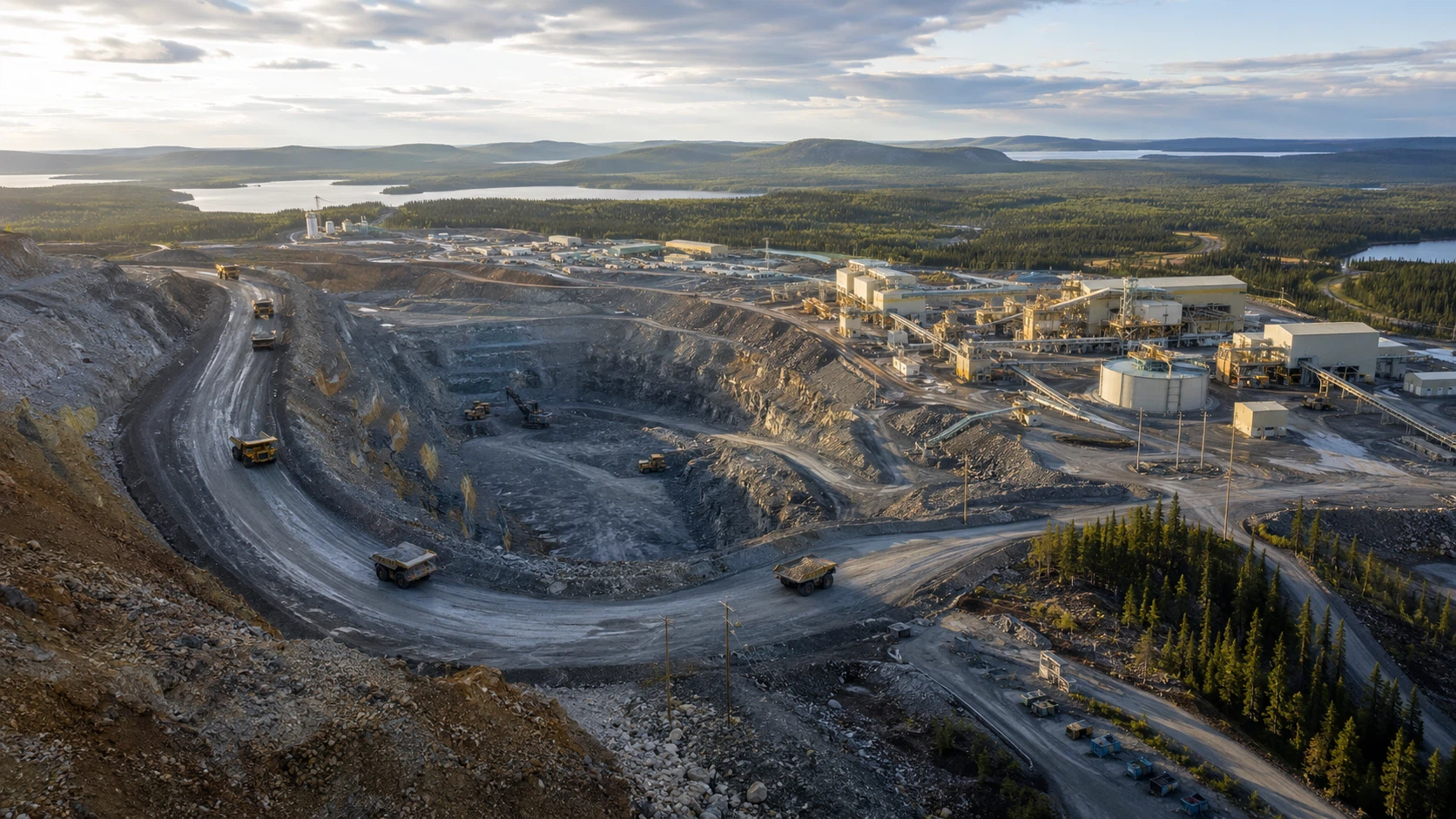
One of the clearest takeaways from the announcement is how heavily the combined company would lean into Canada. Equinox said its Greenstone mine in Ontario and Valentine mine in Newfoundland and Labrador are expected to produce about 450,000 ounces this year, while Orla’s Musselwhite mine in Ontario adds another 235,000 ounces.
Together, those three assets are projected to produce about 685,000 ounces in 2026, giving the merged group a much larger share of its output in a country investors often treat as a relative safe haven for mining capital. Reuters reported that Darren Hall said roughly 70% of the combined net asset value would sit in Canada after closing.
That concentration does not remove execution risk, but it does change how the company can present itself to shareholders. A larger Canadian core can support a more stable valuation narrative than a scattered asset base, particularly when funds are screening for jurisdiction quality as much as for headline exposure to gold prices.
Why Orla Matters Beyond Simple Scale
Orla brings more than extra ounces. Its portfolio adds Musselwhite, the Camino Rojo gold and silver mine in Mexico, and the South Railroad development project in Nevada, giving Equinox a broader mix of operating cash flow and future expansion options.
That balance is strategically useful because miners are under pressure to show both present production and a believable next chapter. A company that only offers current output can struggle to keep investor attention, while one that offers only distant growth can face skepticism about timelines and funding needs.
By adding Orla, Equinox gets a stronger bridge between those two demands. The company can point to producing assets that matter immediately while also highlighting a development pipeline that could lift annual output much further if construction, permitting and capital deployment stay on track.
Share Swap Gives Both Sides a New Growth Formula
The proposed structure is straightforward on paper. Under the arrangement agreement, Orla shareholders will receive one Equinox common share plus a nominal cash payment of $0.0001 for each Orla share they hold, leaving existing Equinox investors with about 67% of the combined company and former Orla investors with about 33% on a fully diluted basis.
That ownership split reflects a deal pitched as an at-market combination rather than an aggressive premium takeover. Both boards unanimously approved the transaction, and Equinox said the Orla special committee received fairness opinions from Scotiabank and Fort Capital supporting the financial terms.
Gold Merger Terms Are Built for Speed
The companies are pursuing the transaction through a court-approved plan of arrangement under Canadian law. That route is common in large Canadian transactions because it can provide a cleaner legal framework for combining public companies with multiple classes of stakeholders and required approvals.
The next major test is expected in July 2026, when Orla shareholders are scheduled to vote on the deal and Equinox shareholders are expected to vote on the share issuance needed to complete it. Orla needs support from two-thirds of votes cast, while Equinox needs a simple majority.
Management also lined up early support to reduce uncertainty. Equinox said Orla officers and directors, Pierre Lassonde and certain Fairfax affiliates, together representing about one-fifth of Orla’s outstanding shares, agreed to voting support arrangements, while Equinox insiders holding about 4% of its shares agreed to back the transaction as well.
Balance Sheet and Pipeline Become the Selling Point
The bigger pitch is what scale could unlock after closing. Equinox said the combined group would have a clear path to more than 1.9 million ounces of annual output over time, drawing on projects such as the Valentine phase 2 expansion in Canada, South Railroad and Castle Mountain in the United States, Los Filos in Mexico and the Camino Rojo underground expansion.
Those targets are still contingent on execution, commodity prices, technical assumptions and regulatory progress, so they should be read as an ambition rather than a guaranteed outcome. Still, internally funded growth is a powerful phrase in mining because it suggests a company may not need to return quickly to equity markets to finance every next step.
That is where the merger argument becomes financial as well as operational. A larger production base can support better liquidity, broader analyst coverage and potentially cheaper access to capital, which in turn can make future expansions easier to stage and defend to investors.
Investor Appetite and Jurisdiction Risk Drive the Timing
The timing of this move is not accidental. Reuters noted that a record rally in gold prices has strengthened miners’ cash flow and improved access to capital, creating a more welcoming backdrop for companies that want to bulk up while market sentiment is favorable.
At the same time, producers are being pushed to answer a harder question than simple volume growth: where should future ounces come from? In that debate, North American mines can command a premium because they are often seen as more predictable than projects exposed to sharp policy shifts, security disruptions or unstable fiscal terms.
Gold Merger Arrives as Producers Chase Safe-Haven Ounces
That backdrop helps explain why the combined company is leaning so hard on its Canadian identity even though it will still operate in the United States, Mexico and Nicaragua. For equity investors, the promise is not just more gold production but a higher share of production tied to jurisdictions that many funds treat as easier to underwrite.
Safe-haven thinking does not mean a mine is automatically low risk. Costs can rise, labor relations can tighten, environmental permitting can slow and technical surprises can still reshape timelines. But relative comparisons matter in mining, and companies know that jurisdiction can influence valuation almost as much as grade or reserve life.
Equinox and Orla are therefore presenting the merger as a way to improve the quality of each future ounce, not only the quantity. That is a more compelling story in a market where investors are willing to pay for resilience, especially when macro uncertainty remains high even as gold prices stay elevated.
What the Gold Merger Means for Competitors
If the deal closes in the third quarter as expected, the combined Equinox Gold would emerge as a much more visible North American competitor. Reuters said it would rank as the second-largest producer of Canadian gold behind Agnico Eagle, a position that could strengthen its standing with generalist investors who prefer larger, more liquid mining names.
The transaction may also increase pressure on mid-tier miners that lack either scale or a clearly differentiated asset base. In a rising gold market, boards can feel pushed to either prove they can generate disciplined organic growth or explain why a merger would create better returns.
For now, the market still has to judge whether Equinox can integrate Orla smoothly while preserving balance-sheet discipline and meeting development promises. Yet the logic of the transaction is easy to see: bigger Canadian exposure, a broader reserve base and a stronger pipeline are all valuable when the sector is competing for capital as well as ounces.
Equinox and Orla are betting that this combination will make them more relevant to investors looking for scale, jurisdiction quality and longer-run production growth in gold. Readers can continue following related coverage on mining, investment and corporate strategy at Berrit Media.
Discover more from Berrit Media
Subscribe to get the latest posts sent to your email.