The Cerebras IPO has become one of the clearest signals yet that public investors still want exposure to the infrastructure powering artificial intelligence. Cerebras priced 30 million Class A shares at $185 on May 13, began trading on Nasdaq as CBRS on May 14, and raised $5.55 billion before underwriters expanded the deal.
By May 15, the company said the underwriters had exercised their option in full, lifting the total number of shares sold to 34.5 million and gross proceeds to about $6.38 billion. That sequence turned a long-delayed listing into one of the biggest financing events of the year for an AI chip company.
The Cerebras IPO Returned After a Delayed Road to Market
The Cerebras IPO also mattered because it closed a chapter that had previously stalled. Cerebras first tried to go public in 2024, but the effort was later withdrawn after scrutiny tied to its relationship with G42, an Abu Dhabi-based AI company that had been central to its business.
Reuters reported during this year’s filing process that the national security review that once hung over the company had been cleared. That gave Cerebras a cleaner route back to the market just as investor appetite for AI infrastructure was strengthening again.
Why the Cerebras IPO Took a Second Run
The renewed offering did not appear out of nowhere. Reuters reported in April that Cerebras had publicly disclosed a fresh U.S. IPO filing, positioning itself as a Nvidia challenger at a moment when the broader listings market was showing early signs of recovery.
That reset mattered because the earlier filing had become entangled with concerns about customer concentration and geopolitical sensitivity. Reuters said G42 had provided more than 85% of Cerebras revenue in 2024, making the company look exposed to one customer relationship even before public investors started asking harder questions.
By early May, however, Reuters reported that Cerebras was back on the road with an indicated range of $115 to $125 a share. The eventual pricing at $185 showed that demand had accelerated sharply between the roadshow and the final allocation.
Revenue Growth Gave the Cerebras IPO New Momentum
The business case behind the Cerebras IPO became easier to tell once the company’s latest numbers were public. Reuters reported that Cerebras revenue rose to $510 million in the year ended December 31, 2025, from $290.3 million a year earlier, giving investors a fast-growth narrative rather than a pure concept story.
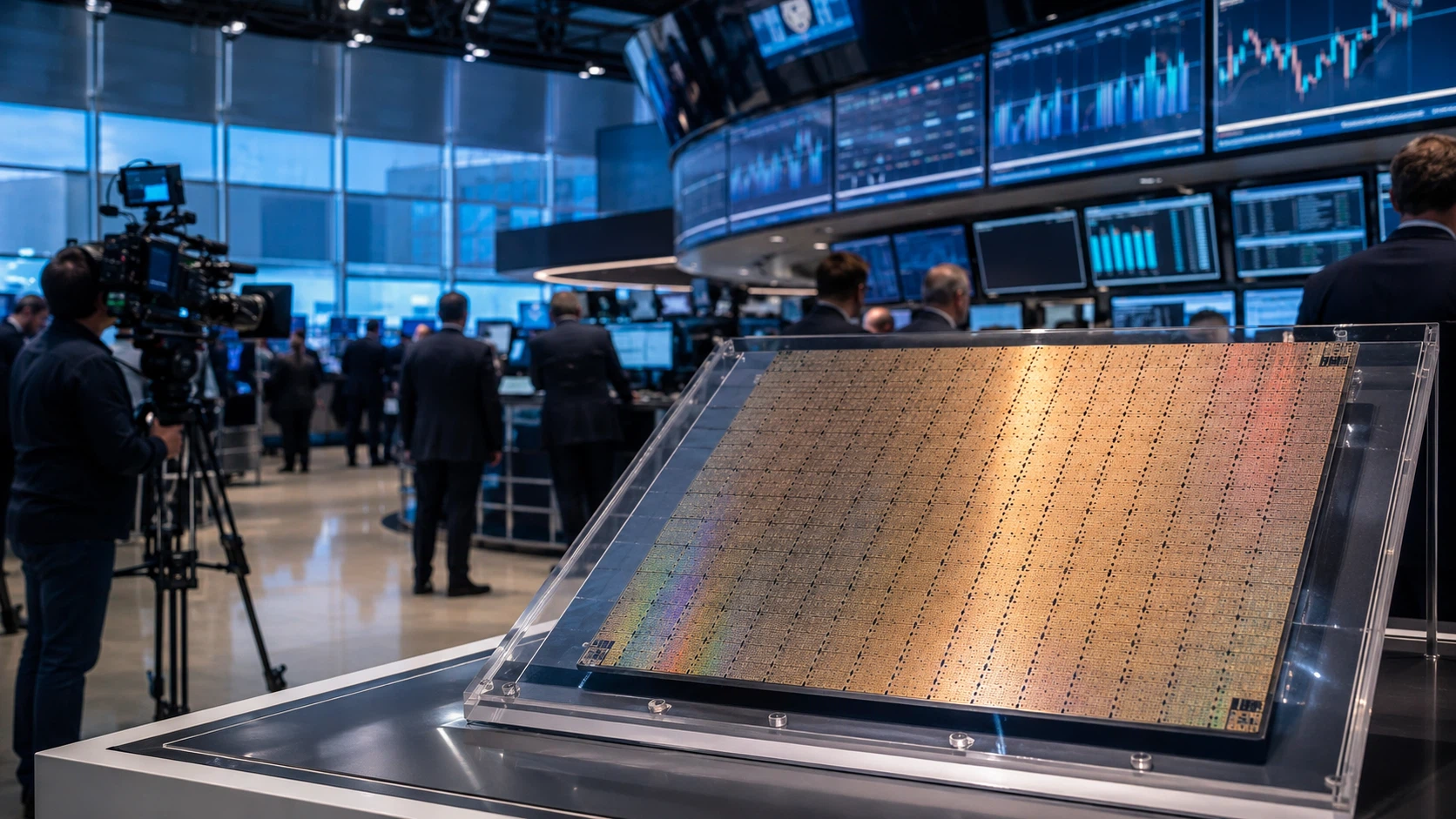
Cerebras also arrived with a hardware architecture that is easy for the market to frame. Reuters described the company as a designer of wafer-scale AI processors, using chips far larger than conventional processors to speed up AI workloads that can be slowed by more fragmented system designs.
Just as important, the company entered 2026 with a wider commercial story than it had during the earlier filing attempt. New partnerships with OpenAI and Amazon Web Services helped shift the discussion from one concentrated customer base toward a broader, though still evolving, AI infrastructure platform.
Why Investors Backed the Cerebras IPO So Aggressively
The pricing itself explained how far sentiment had moved. Reuters reported that Cerebras priced above the top end of its indicated range and then opened at $350 on Nasdaq, about 89% above the IPO price, giving the company a fully diluted valuation of roughly $106.75 billion at the open.
Those numbers suggest investors were buying more than a single listing. They were also buying the idea that the next layer of value in artificial intelligence may sit with companies supplying compute capacity, specialized chips, and the systems needed to serve large model developers.
The Cerebras IPO Rides Demand for AI Compute
Reuters said the listing came as AI-linked stocks continued to benefit from heavy spending across the sector. Large technology companies are still committing enormous sums to data centers, model training, and inference capacity, and that spending environment gives hardware and infrastructure suppliers a stronger backdrop than most traditional IPO candidates enjoy.
Cerebras has tried to differentiate itself by arguing that its systems can reduce bottlenecks common in more distributed chip clusters. Reuters described the company as packing hundreds of thousands of compute cores onto a single processor, an approach meant to speed up processing for demanding AI applications.
That does not make Cerebras a direct replacement for Nvidia across the whole market, but it does give investors a recognizable reason to pay attention. In a market that increasingly rewards infrastructure leverage, the Cerebras IPO offered one of the few public ways to express that thesis outside the largest incumbents.
OpenAI and AWS Changed the Market Case
Part of the excitement around the Cerebras IPO came from the customer list the company assembled before listing. OpenAI said in January that it was partnering with Cerebras to add 750 megawatts of ultra-low-latency AI compute to its platform, while Reuters reported the arrangement could be worth about $10 billion over three years.
In March, Amazon Web Services and Cerebras announced that Cerebras CS-3 systems would be deployed in AWS data centers and linked with Amazon’s Trainium3 chips. Reuters said the service was aimed at speeding up chatbots, coding tools, and other AI products that depend on fast inference.
Those partnerships gave the Cerebras IPO a more credible commercial frame. Instead of asking public investors to believe only in future technical potential, the company could point to two of the best-known buyers and builders in AI infrastructure as evidence that its hardware had already moved into serious deployment conversations.
What the Cerebras IPO Means for the 2026 Listings Market
For the broader market, the Cerebras IPO is important because it arrived as a test case for whether investors would still stretch for scale, speed, and AI exposure in new issues. Reuters described it as the largest IPO so far this year, which immediately turned it into a benchmark rather than just another semiconductor debut.
That benchmark status matters for founders, bankers, and late-stage investors who have been waiting for proof that the listings window is truly reopening. A single strong deal does not guarantee a broad revival, but a deal of this size can change expectations about what public markets are willing to absorb.
The Cerebras IPO Could Reset Pricing for AI Listings
The first clear implication is that companies tied closely to AI infrastructure may be able to command more ambitious pricing than many expected at the start of 2026. Cerebras not only cleared the market; it did so after increasing expectations and then delivering a debut that reinforced the final price rather than undercutting it.
That kind of reception can influence how other private companies and their advisers think about timing. If investors are willing to reward scale and scarcity in AI compute, then more infrastructure, chip, and platform companies may decide the public market is worth testing sooner rather than later.
Still, the lesson is not that every AI company can now float at premium terms. The Cerebras IPO combined a rare mix of size, technical differentiation, high-profile customers, and a market already primed for AI hardware narratives.
Risks Still Shadow the Cerebras IPO Story
Even so, the market enthusiasm does not erase the harder questions. Reuters cited a Renaissance Capital analyst who said the valuation looked reasonable at the $185 IPO price only when measured against far-out 2028 estimates, and considerably richer at the higher trading level reached during the debut.
Customer concentration also remains relevant even after the OpenAI and AWS deals. Cerebras has clearly broadened its commercial profile, but public investors will still want proof that revenue can become more diversified, repeatable, and less dependent on a handful of very large relationships.
Competition is another reason the Cerebras IPO will be watched closely after the opening frenzy fades. Winning a spectacular debut is one thing; proving durable execution in a market dominated by Nvidia and crowded with custom silicon efforts from major cloud groups is something else entirely.
The Cerebras IPO has therefore done more than raise money for one company. It has given the market a live test of how much capital, optimism, and scrutiny the AI infrastructure trade can attract at once. For more analysis on the companies, deals, and market shifts shaping that race, continue reading related coverage at Berrit Media.
Discover more from Berrit Media
Subscribe to get the latest posts sent to your email.