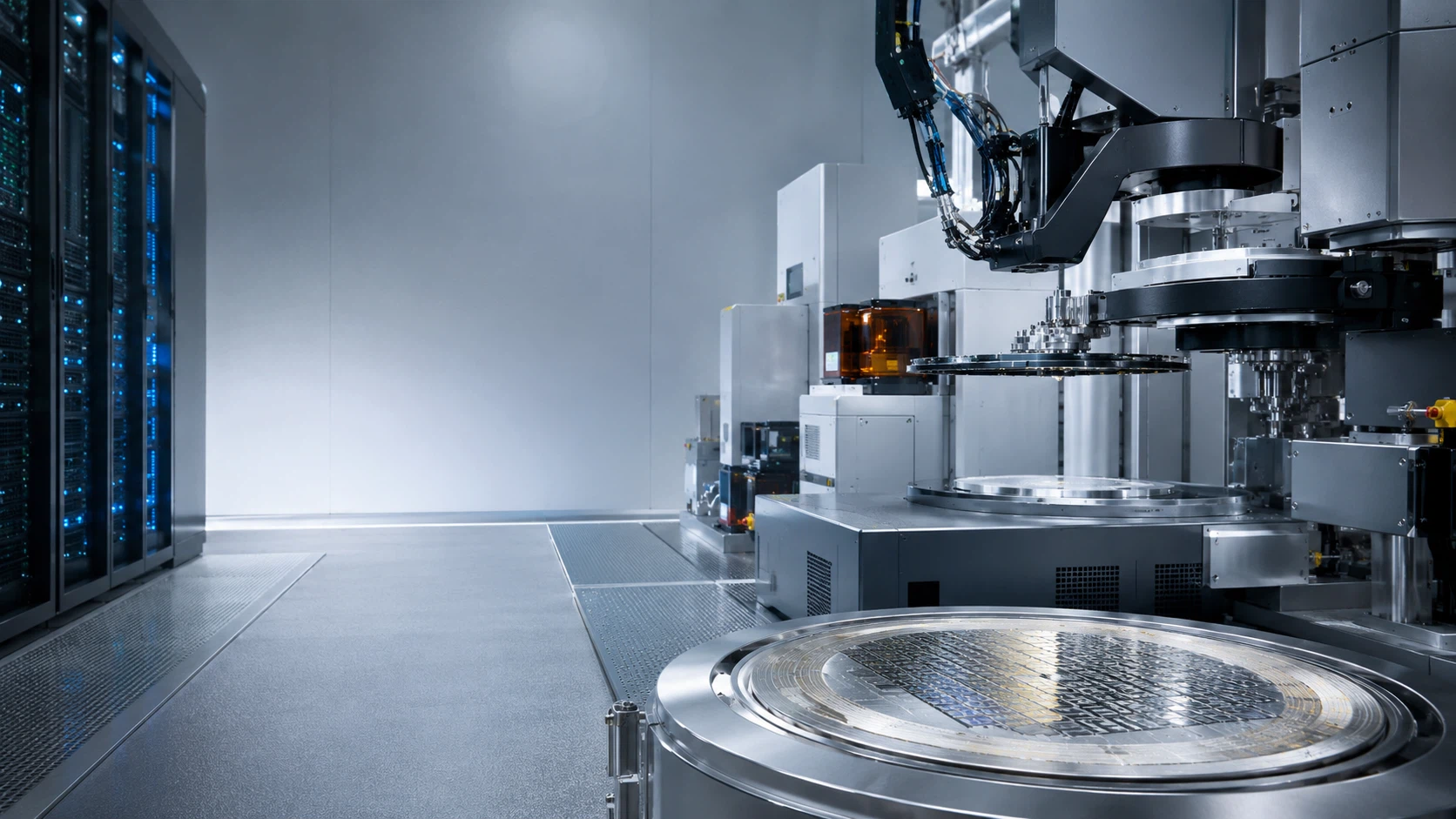
Applied Materials is raising its outlook after posting a record quarter, offering one of the clearest signs yet that the artificial intelligence build-out is reshaping the economics of chip manufacturing itself. The company said on May 14 that second-quarter revenue climbed to $7.91 billion, up 11 percent from a year earlier, as demand for leading-edge logic, DRAM and advanced packaging strengthened alongside global investment in AI computing infrastructure.
The update matters because Applied sits deeper in the semiconductor supply chain than the model makers and cloud platforms that usually dominate the AI conversation. When a company that supplies deposition, packaging and manufacturing equipment says customers are expanding orders, inventory plans and logistics needs, it suggests the current wave of spending is broadening from headline chips into the industrial systems required to make them at scale.
Applied Materials Sees AI Demand Reach the Equipment Layer
Applied’s latest results were strong on both current performance and forward guidance. The company reported record GAAP earnings per share of $3.51 and record non-GAAP earnings per share of $2.86 for the quarter ended April 26, while also lifting its near-term outlook.
Chief executive Gary Dickerson said Applied now expects its semiconductor equipment business to grow more than 30 percent in calendar 2026. Reuters, citing the company’s earnings call, also reported that Applied expects packaging revenue to rise by more than 50 percent this year, a notable signal in an industry where advanced packaging is becoming central to AI chip design and performance.
Applied Materials Forecast Moves Above Wall Street
For the third fiscal quarter, Applied forecast revenue of about $8.95 billion, plus or minus $500 million, and non-GAAP diluted earnings per share of $3.36, plus or minus $0.20. Reuters reported those targets were above analyst expectations compiled by LSEG, which had pointed to revenue of $8.09 billion and adjusted earnings of $2.88 per share.
The company also beat market estimates in the just-finished quarter. Reuters said analysts had expected second-quarter revenue of $7.65 billion and adjusted earnings of $2.66 per share, both below the numbers Applied ultimately delivered. Shares rose in extended trading after the report, reflecting investor confidence that demand conditions are still improving rather than flattening.
That distinction matters because investors have spent much of the past year trying to separate durable AI infrastructure demand from short-lived enthusiasm. In Applied’s case, the combination of record revenue, stronger profitability and a guidance lift points to a market that still has room to expand, especially in the manufacturing stages behind advanced logic and memory chips.
Advanced Packaging Becomes the Next Bottleneck
Applied’s comments underscore how the race to build better AI systems is no longer just about designing faster processors. It is increasingly about how efficiently chipmakers can connect memory, logic and packaging technologies into larger, more power-efficient systems.
That is one reason the company put fresh emphasis on advanced packaging in its release. Applied said it recently agreed to acquire ASMPT’s NEXX business, which supplies large-area advanced packaging deposition equipment. The company said that move would broaden its panel-level packaging portfolio and help customers build larger AI accelerators with better energy-efficient performance.
In practice, that places Applied closer to one of the most commercially important shifts in semiconductors. As AI workloads grow more demanding, chipmakers are looking beyond simple transistor scaling and toward packaging, interconnects and memory integration as the next levers for speed, power efficiency and system performance.
Why the Company Is Expanding Capacity
Applied’s management did not describe the current environment as a narrow spike tied to a single customer. Instead, it presented AI demand as a multi-year manufacturing cycle that is changing how the company plans supply, logistics and partnerships.
Chief financial officer Brice Hill said Applied has increased its build plan, inventory positions and logistics capacity to make sure it can support customer growth. That kind of language suggests management sees demand as sustained enough to justify operational moves now, rather than waiting for another quarter or two of confirmation.
Supply Chain Readiness Becomes a Competitive Edge
In semiconductor equipment, execution often matters as much as technology. Customers making multibillion-dollar capacity decisions want tools delivered on time, installed reliably and supported over long production ramps. Applied’s decision to expand inventory and logistics readiness indicates that it is trying to turn demand strength into market share and operational advantage before the cycle matures.
The pressure is understandable. AI computing infrastructure is pushing the entire supply chain to handle greater complexity, from materials engineering to process integration and testing. More powerful chips require more advanced manufacturing steps, and delays in equipment availability can ripple across foundry expansion plans.
That is why Morningstar analyst William Kerwin told Reuters that Applied’s results reflected a strengthening AI upcycle for wafer fabrication equipment investment. His framing is useful because it places the quarter in a broader pattern: the market is not only rewarding chip designers, but also the companies that supply the tools required to manufacture their products.
EPIC Center Ties Deepen With Chipmakers
Applied also used the quarter to highlight a growing network of research and development partnerships around its EPIC Center in Silicon Valley. The company said TSMC had entered a new innovation partnership with Applied to speed development and commercialization of technologies needed for the next era of AI.
Beyond TSMC, Applied said Arizona State University, Rensselaer Polytechnic Institute and Stanford would join the EPIC Center as inaugural research partners. It also announced collaborations involving Advantest, SK hynix and Micron, each focused on different parts of the semiconductor manufacturing and packaging stack.
Those relationships matter because they make the quarter about more than a revenue beat. They show Applied trying to position itself as a coordination point between equipment, materials, testing, memory and research institutions, which could strengthen its role as customers search for faster routes from laboratory breakthroughs to high-volume production.
What This Means for the Broader Chip Industry
The semiconductor industry has already been telling investors that AI is driving a new capex cycle. What Applied adds is a detailed view from the tools layer, where spending decisions are harder to fake and where customer commitments often show up before the finished systems reach market.
When a large equipment supplier says the build-out is accelerating across logic, DRAM and advanced packaging at the same time, it suggests the AI cycle is widening across the stack. That matters for chipmakers, memory companies, packaging specialists and cloud operators alike, because bottlenecks in any one layer can slow the entire system.
AI Spending Is Spreading Beyond GPU Designers
Much of the public debate around AI economics has centered on a few visible winners, especially the companies designing leading processors or selling access to large models. Applied’s quarter offers a reminder that a durable AI investment cycle depends on a much broader industrial base.
Reuters noted that rising spending by technology companies and enterprises is pushing manufacturers such as TSMC and Samsung to expand capacity. That, in turn, boosts demand for the sophisticated tools needed to deposit materials, etch structures and package the chips that power AI servers and related systems.
For business readers, that makes Applied’s results useful beyond the stock itself. They help show where value is forming inside the AI build-out and why the next phase of competition may hinge less on headlines around chatbots and more on who can scale physical semiconductor production fastest and most efficiently.
Applied Materials Faces a Bigger but More Complex Cycle
Even so, the company’s own filing language remains cautious about the risks ahead. Applied said future performance could still be affected by demand swings, trade and export rules, tariffs, geopolitical turmoil, customer concentration and the usual uncertainties around technology transitions.
Those caveats are important because semiconductor cycles can turn quickly, especially when capacity additions run ahead of final demand. Yet Applied’s current positioning suggests management believes the AI-led expansion is broad enough, and urgent enough, to justify more investment in operations, research partnerships and packaging capability right now.
That balance between confidence and caution is what makes the story worth watching. Applied Materials is not simply reporting a strong quarter; it is showing how the commercial center of gravity in AI is moving deeper into the manufacturing chain, where process control, supply discipline and packaging innovation may decide who captures the next wave of industry profits.
Applied Materials’ stronger outlook does not settle every question about the semiconductor cycle, but it does sharpen the picture of where AI money is flowing and why equipment makers are regaining strategic importance. For more context on the companies, capital flows and technology shifts shaping global business, continue reading related coverage at Berrit Media.
Discover more from Berrit Media
Subscribe to get the latest posts sent to your email.