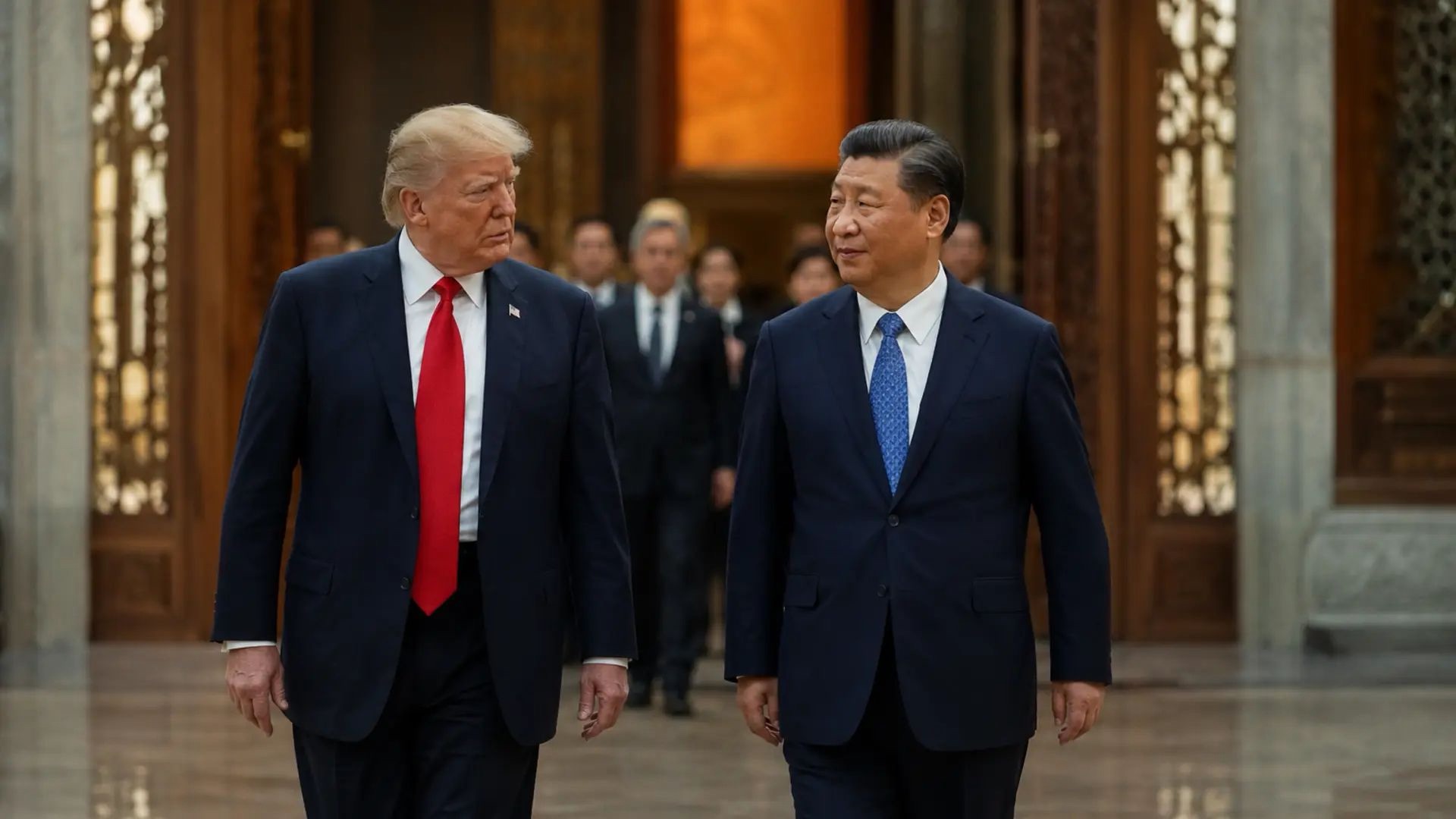
Trump Xi diplomacy moved back to the center of global politics on Friday as the U.S. and Chinese leaders closed a closely watched Beijing summit shaped by Taiwan tensions, Iran war pressure, and a fragile trade truce.
The two-day visit produced warmer symbolism than many analysts expected, but it stopped short of a sweeping breakthrough. Instead, the meetings showed how Washington and Beijing are trying to keep their rivalry from spilling into a wider crisis while major flashpoints keep multiplying across Asia and the Middle East.
A Summit Meant to Steady Trump Xi Ties
The Beijing meetings were designed to show that the world’s two largest powers can still talk directly even when mistrust remains high. Publicly, both sides emphasized stability, communication, and practical cooperation. Privately, each side also tried to protect its own red lines.
Chinese official readouts described the talks as part of a push for what Beijing called a constructive relationship of strategic stability. Trump, meanwhile, used a notably positive tone and said the bilateral relationship remained in a good place despite sharp disagreements over security and trade.
Trump Xi Puts Hormuz Back on the Table
One reason the summit drew such intense global attention was the Iran war and the strain it has put on the Strait of Hormuz. U.S. officials highlighted a shared desire to reopen the waterway, a vital energy corridor that normally carries about a fifth of global oil and gas flows.
That made the Trump Xi conversation larger than a standard bilateral meeting. Washington wants Beijing to use its ties and leverage to help push Tehran toward a diplomatic off-ramp. China, for its part, has strong reasons to prevent a longer disruption that would deepen energy risk and hit its own economy.
However, even that area of overlap came with limits. Trump said Xi wanted to help negotiate an end to the war and a reopening of the strait, yet there was no public sign of a concrete joint plan. The summit therefore lowered the temperature rhetorically without resolving the underlying crisis.
Trade Gains Stay Limited
Trade remained the other major test of the visit. Both governments had strong incentives to preserve the truce reached last year, especially as war-linked energy shocks and political pressure at home narrowed the room for escalation.
China said the two sides’ economic and trade teams had produced generally positive and balanced outcomes. Trump also pointed to commercial progress and said China would buy Boeing aircraft, giving the visit a business headline that both governments could use to claim momentum.
Even so, the broader economic dispute remains intact. There was no sign of a full reset on tariffs, export controls, or strategic technology restrictions. That matters because the core argument between Washington and Beijing is no longer only about market access. It is about power, supply chains, and control over the industries that shape military and economic influence.
Taiwan Overshadows The Friendly Optics
If the summit had one unmistakable warning shot, it came over Taiwan. The pageantry in Beijing suggested calm, but the language around the island showed how quickly the relationship can harden when sovereignty and security are involved.
That contrast defined the entire visit. Leaders smiled for cameras, praised dialogue, and showcased business ties. Yet the most consequential message was not about cooperation. It was about the cost of getting Taiwan wrong.
Xi Delivers His Sharpest Trump Xi Warning
According to China’s foreign ministry, Xi told Trump that the Taiwan question is the most important issue in China-U.S. relations. He added that if it is not handled properly, the two countries could face clashes and even conflict. For a summit framed around stability, that was an unusually direct message.
Beijing also repeated a harder political line, saying Taiwan independence and cross-strait peace cannot coexist. That language matters because it leaves very little ambiguity about how Chinese leaders are framing the issue internally and externally. It also signals that Taiwan remains the first lens through which Beijing judges the health of the wider relationship.
From China’s perspective, the warning served two purposes. It reminded Washington that diplomacy cannot be separated from security. Moreover, it showed that Beijing wanted to use a cordial summit setting to deliver a strategic message while the White House was seeking help on Iran and economic stability.
Strategic Rivalry Remains Intact
The U.S. side gave no indication that its position on Taiwan had shifted. Officials traveling with Trump said the subject came up, as it always does, and that Washington restated its own stance before moving to other issues. That formula reflected continuity rather than concession.
Meanwhile, the military logic behind the tension has not changed. Taiwan sits close to the Chinese coast, and any crisis there would immediately involve shipping routes, regional alliance commitments, and the credibility of American deterrence in Asia. Therefore, even limited diplomatic progress elsewhere cannot neutralize the scale of the risk.
This is why the summit looked simultaneously calm and unstable. The absence of an open rupture was important. But so was the absence of any visible framework that could make the Taiwan issue less explosive over time. On that front, Trump Xi diplomacy bought time, not certainty.
Why The Summit Matters Beyond Beijing
The significance of the visit extends well beyond the two leaders and their domestic audiences. Markets, allies, and rivals all needed signals on whether U.S.-China competition was becoming more manageable or more dangerous. The answer from Beijing was mixed.
On one hand, the summit showed that both capitals still want guardrails. On the other hand, it revealed how those guardrails are being tested by overlapping crises, from the Middle East to East Asia. That overlap is exactly why this meeting became the hottest geopolitical story of the day.
Markets, Shipping, and Alliances Are Watching Trump Xi
Energy traders were watching every line about Hormuz because the waterway remains central to inflation, shipping costs, and global growth expectations. Any credible sign that Beijing might help pull Iran toward de-escalation would matter far beyond diplomacy desks.
Asian allies were watching Taiwan language for a different reason. Japan, South Korea, and partners across the Indo-Pacific have to assess whether U.S.-China communication can prevent miscalculation or whether both sides are merely managing optics while strategic danger rises underneath.
Business leaders were also part of the message. Trump arrived with senior American executives, reinforcing the idea that commercial ties still matter even in a security-first era. Yet the delegation also underscored a harder reality: business now travels inside geopolitics, not outside it.
Diplomacy Buys Time, Not Resolution
The summit produced enough positive language to avoid a headline about collapse. China and the United States both signaled support for continued engagement, and Beijing said the two presidents also exchanged views on the Middle East, Ukraine, and the Korean Peninsula.
Still, the meeting did not solve the contradictions sitting at the heart of the relationship. Washington wants Chinese help on Iran while competing with China across technology, trade, and regional security. Beijing wants stable ties and open economic channels while insisting that Taiwan remains a non-negotiable core interest.
Therefore, the main outcome was not resolution but managed friction. That may be enough for now. Yet if Hormuz remains contested or Taiwan tensions rise again, the limits of this summit will become clear very quickly. The world got a reminder that top-level dialogue still matters. It also got proof that dialogue alone cannot settle a rivalry this deep.
The Trump Xi summit leaves global diplomacy with a little more breathing room but no durable answer to the crises surrounding it. Readers looking for the next shifts in energy security, Asia strategy, and major-power competition can follow more analysis and related coverage on Berrit Media.
Discover more from Berrit Media
Subscribe to get the latest posts sent to your email.