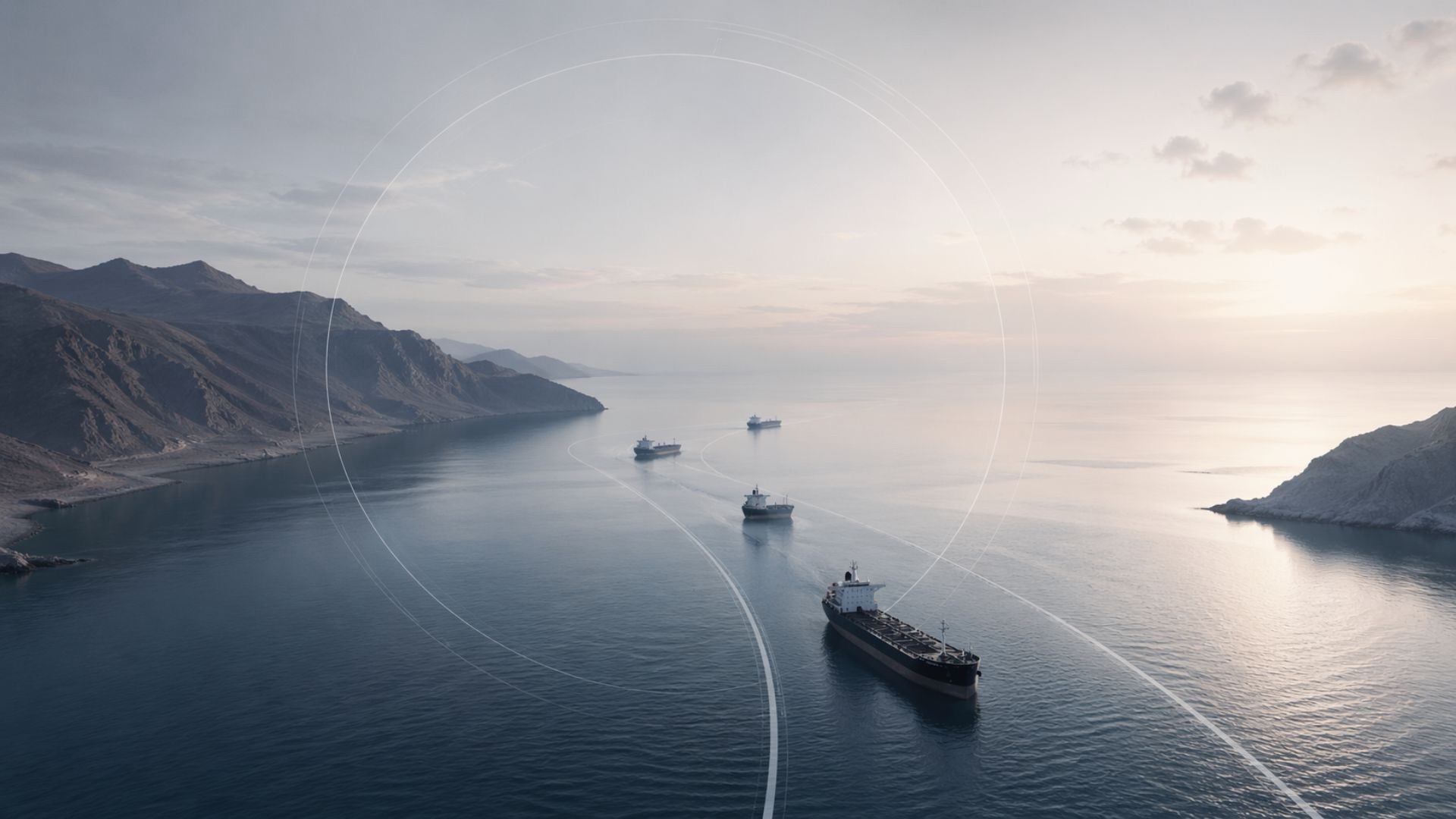
Hormuz Strait traffic has fallen to an extraordinary low, with only five ships passing through the waterway in the past 24 hours as security fears spread across one of the world’s most important energy corridors. The sharp slowdown followed Iran’s seizure of two container ships this week and the continued U.S. naval blockade of Iranian ports, according to Reuters.
The latest shipping data shows how quickly a regional confrontation can become a global economic risk. Before the war, about 140 ships moved through the strait each day. Now, only a handful are willing or able to cross. Among them was the Iranian-flagged oil products tanker Niki, which is under U.S. sanctions.
The collapse in traffic matters because the strait links the Persian Gulf with the Gulf of Oman and the wider Arabian Sea. It is not merely a regional route. It is a global pressure point for crude oil, refined fuel, liquefied natural gas, petrochemicals, fertilizers, and commercial cargo.
Hormuz Strait Becomes The Center Of A Wider Shipping Crisis
The Hormuz Strait has long been viewed as one of the most sensitive maritime chokepoints in the world. However, the latest fall in vessel movement shows that the risk is no longer theoretical. Shipping firms are now making operational decisions based on the possibility of seizure, attack, mines, or prolonged delay.
Reuters reported that Iran used small, fast boats to seize two container ships near the strait, raising concern among shipping and oil companies. The tactic has reinforced fears that even if major naval assets are weakened, smaller attack craft can still disrupt maritime traffic.
Hormuz Strait Traffic Falls To A Symbolic Low
Only five ships crossing in 24 hours marks a severe contraction for a route that usually carries dense commercial traffic. The figure is not just a number. It signals that shipowners, insurers, charterers, and energy traders are treating the passage as a high-risk zone.
This caution is rational. A vessel that enters the strait does not only face military risk. It also faces insurance complications, crew safety concerns, legal uncertainty, and possible delays at ports. Therefore, many operators would rather wait than send vessels into an unstable corridor.
The pressure is also affecting crews. Reuters reported that hundreds of ships and around 20,000 seafarers remain stranded in the Gulf, waiting for clearer security conditions before normal transit resumes.
Meanwhile, major shipping companies have little incentive to move first. Without firm safety guarantees, early movers carry the highest risk. In this environment, even a temporary reopening of the passage may not be enough to restore normal traffic.
Seizures Increase Fear Across Commercial Fleets
Iran’s seizure of two container ships has added a direct threat to commercial operators. The use of fast boats matters because this method is difficult to monitor and hard to neutralize completely. It also creates uncertainty over which vessels may be targeted next.
The concern extends beyond container shipping. Oil tankers, LNG carriers, bulk carriers, and support vessels all depend on predictable maritime security. Once a seizure occurs, insurers reprice risk. Charter rates can rise. Cargo schedules become unstable.
In addition, shipping companies must consider reputational and legal exposure. A vessel linked to sanctioned trade can trigger scrutiny. A neutral commercial ship can still be caught in a confrontation. That uncertainty encourages delay.
The result is a slow-motion bottleneck. Ships do not need to be physically blocked to stop moving. They only need to face a level of risk that makes passage commercially unacceptable.
Global Energy Markets Face A Fresh Supply Shock
The Hormuz Strait is central to global energy security. The International Energy Agency says around 20 million barrels per day of crude oil and oil products moved through the strait in 2025, equal to about 25 percent of global seaborne oil trade.
The U.S. Energy Information Administration also reported that about one-fifth of global LNG trade transited the strait in 2024, mainly from Qatar. That makes disruption in the area a direct concern for Asian buyers, European gas markets, and global fuel prices.
Hormuz Strait Disruption Hits Oil And LNG Together
The current crisis is unusual because it threatens both oil and gas flows at the same time. Oil markets can sometimes adjust through inventories, spare capacity, or alternate routes. LNG is harder to reroute because Gulf export flows depend heavily on vessels passing through the strait.
Qatar is especially important in this equation. Its LNG exports supply major buyers in Asia and Europe. When shipping through Hormuz slows, traders must reassess cargo availability, delivery timing, and spot market exposure.
Oil markets also react quickly because the strait carries crude from major Gulf producers. Even if some barrels can move through pipelines, bypass capacity remains limited. The IEA has warned that alternatives to the strait are constrained, which increases the market impact of any disruption.
Therefore, the latest traffic collapse can affect prices before physical shortages appear. Energy markets trade on expectations. If traders believe future supply will tighten, prices can rise immediately.
Asia Carries The Largest Exposure
Asia is highly exposed because a large share of Gulf energy exports flows eastward. China, India, Japan, South Korea, and other importers rely on Middle Eastern crude, condensate, fuel products, and LNG. A prolonged disruption would force buyers to compete for alternative supplies.
Europe also faces indirect pressure. The region has become more dependent on LNG since reducing pipeline gas exposure to Russia. If Asian buyers bid aggressively for non-Gulf LNG, European gas prices can rise even without direct dependence on Hormuz cargoes.
Meanwhile, emerging markets face a different problem. They often have less fiscal room to absorb higher fuel prices. A sustained oil spike can weaken currencies, raise import bills, and add pressure to consumer inflation.
This is why the Hormuz Strait crisis cannot be read only as a military story. It is also a test of global energy resilience, strategic reserves, shipping capacity, and diplomatic coordination.
The U.S. Blockade Adds Legal And Strategic Complexity
The U.S. blockade of Iranian ports has changed the operating environment for vessels connected to Iran. Reuters reported that the blockade remains in place as tensions continue, while Iran’s seizures have raised pressure on commercial shipping near the strait.
This creates a dangerous cycle. Washington uses naval power to restrict Iranian trade. Tehran responds by raising the cost of passage near one of the world’s most important waterways. Commercial operators then reduce movement, which spreads the economic effect beyond the two governments involved.
Hormuz Strait Now Carries Political Risk
Political risk has become the main factor shaping maritime traffic. Ships do not only face weather, congestion, or ordinary piracy concerns. They face a confrontation between state actors with naval assets, sanctions tools, and competing legal claims.
For shipping firms, the problem is practical. They need clarity. They need to know whether a voyage can be completed, whether insurance remains valid, whether ports can receive cargo, and whether crews can be protected.
However, the current situation offers little certainty. A ceasefire may reduce battlefield intensity, but it does not automatically remove maritime risk. The presence of naval forces, fast boats, mines, and sanctions enforcement keeps the corridor unstable.
As a result, the strait may remain technically open while still functioning far below normal capacity. That distinction matters. A passage can be open on paper and commercially frozen in practice.
Alternative Routes Offer Limited Relief
Some Gulf exporters can use pipelines to bypass Hormuz. Saudi Arabia can move crude toward the Red Sea, while the United Arab Emirates can route some oil through Fujairah. However, these alternatives cannot replace the full volume that usually passes through the strait.
LNG faces even fewer options. The EIA has reported that nearly all LNG flows from Qatar and the UAE through the Persian Gulf depend on Hormuz. This makes gas markets especially vulnerable during a prolonged maritime disruption.
Shipping congestion also creates secondary effects. Tankers waiting outside risk zones reduce available fleet capacity. Longer delays raise freight costs. Higher freight costs then feed into delivered energy prices.
Therefore, the immediate question is not only whether ships can physically pass. The larger question is whether enough ships can pass safely, regularly, and affordably to restore confidence in the market.
A Maritime Crisis With Global Economic Reach
The latest fall in Hormuz Strait traffic shows that the world’s energy system remains vulnerable to chokepoint risk. A single narrow waterway can affect refinery planning, LNG contracts, inflation expectations, shipping insurance, and diplomatic strategy.
For governments, the challenge is to prevent a security crisis from hardening into a supply crisis. For companies, the challenge is to protect crews and cargo while keeping supply chains moving. For consumers, the risk may appear later through higher fuel, electricity, transport, and food costs.
The immediate situation remains fragile. Only five ships in 24 hours is not a normal shipping pattern. It is a warning signal. The longer commercial operators stay away from the strait, the more pressure will build across global energy markets.
The Hormuz Strait has again become the place where maritime security, oil supply, LNG trade, and geopolitical power meet. For more analysis on energy risk, global trade, and market disruption, continue reading related coverage on Berrit Media.
Discover more from Berrit Media
Subscribe to get the latest posts sent to your email.