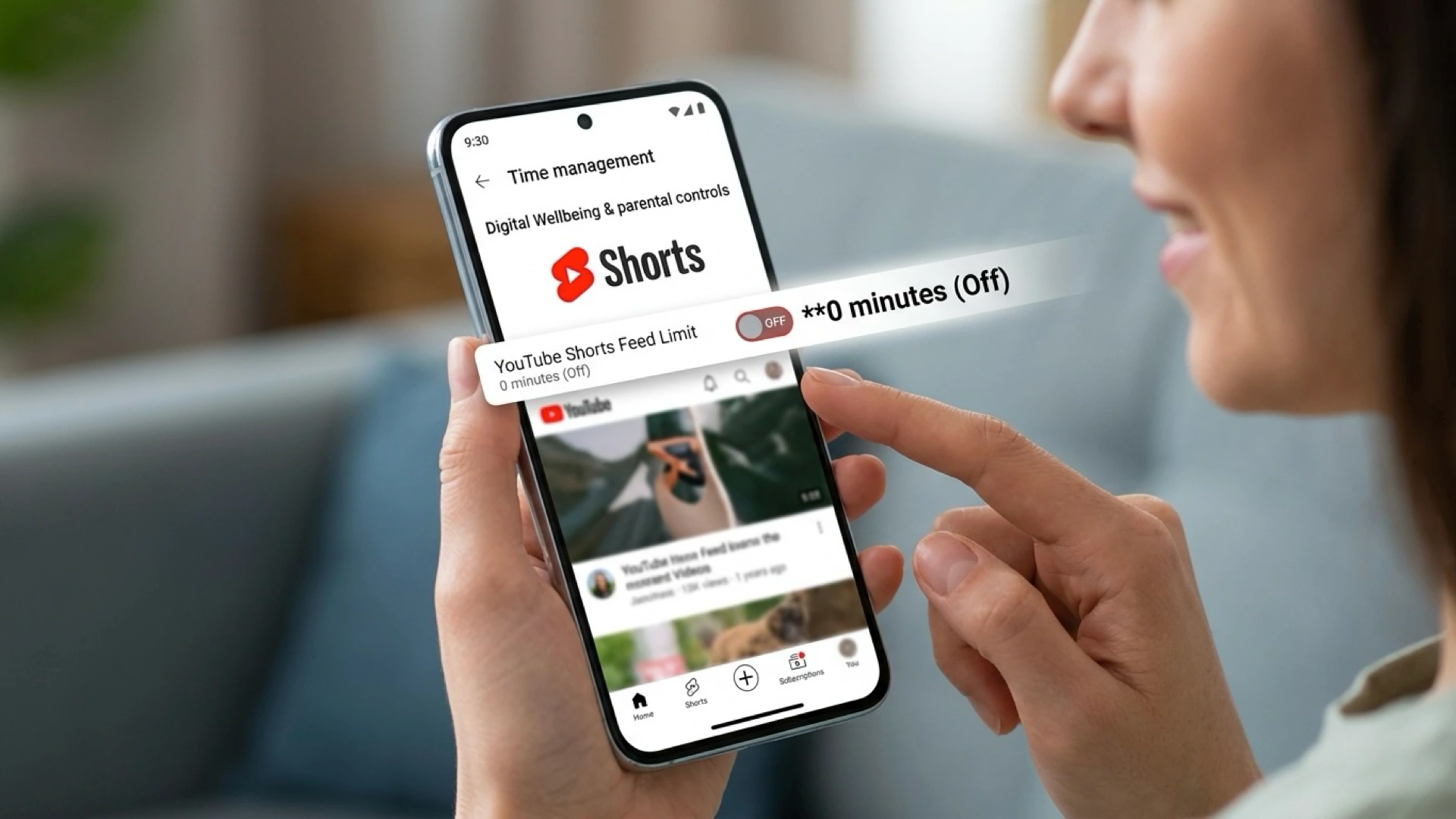
YouTube Shorts has finally gained a feature many users have wanted for a long time, a real way to make it disappear. The app now includes a zero minute feed limit inside its time management settings, which means users on Android and iOS can effectively shut off Shorts instead of merely reducing time spent on it. That small setting change lands like a major product decision because it turns a sticky engagement tool into something users can actually control.
The update builds on a timer system that first arrived with a 15 minute minimum option. That earlier version looked more like a nudge than a boundary. Now the control is far more blunt and far more useful. Users can open the YouTube app, head into time management, enable the Shorts feed limit, and choose their preferred cap, including zero minutes. Once the limit is reached, the Shorts tab stops showing videos and the app displays a message that the Shorts feed limit has been reached. In practice, the change also strips Shorts from the Home feed, making the feature much easier to ignore.
The move also broadens a control that had recently been tied to parental tools. Earlier updates pushed the feature toward families that wanted more oversight over short form viewing habits. Now it is becoming a mainstream setting for everyone, not just parents managing their children’s screen time. YouTube has described the zero minute option as “live for all parents” and “currently being rolled out to everyone.” That matters because it reframes digital wellbeing as a standard user feature, not a niche safeguard.
For a platform built to keep thumbs moving, this is an unusually clear admission that not every user wants more feed, more clips, or more algorithm. Sometimes the smartest product upgrade is not another recommendation. It is an exit door, and that is the kind of shift worth watching closely at Berrit Media.
Discover more from Berrit Media
Subscribe to get the latest posts sent to your email.