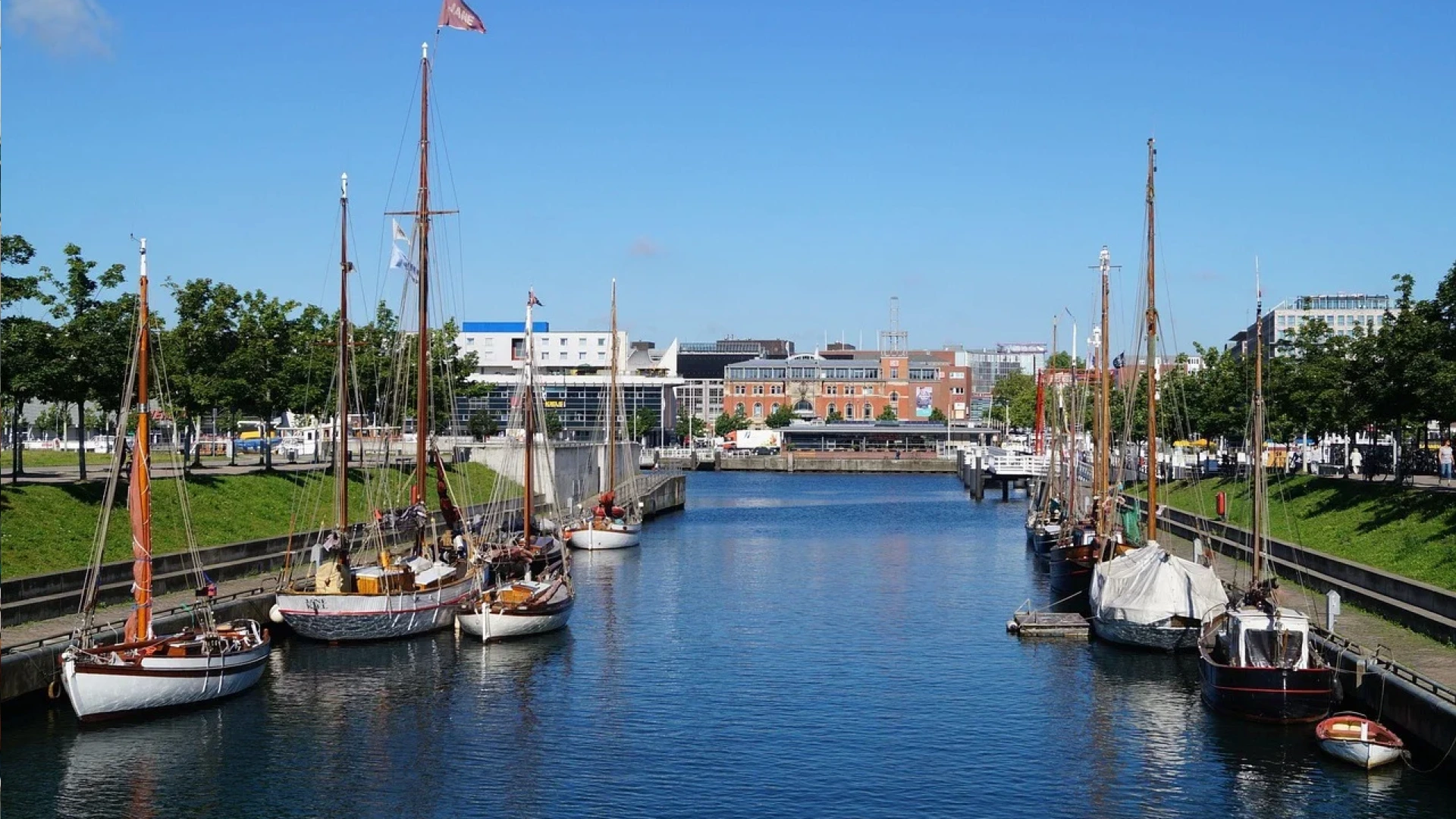
Kiel Canal stands at the center of one of Europe’s most practical infrastructure stories, combining freight efficiency, regional mobility, tourism appeal, and local identity in a single waterway. Stretching across northern Germany between the Baltic Sea and the North Sea, the canal is not only a shortcut for ships. It is also a system that shapes work, travel, business, and community life along its banks.
Its strategic value is clear. The canal allows vessels to avoid the longer route around Denmark, cutting distance, time, and fuel use. That makes it important for shipping economics, yet its importance does not stop at logistics. Around the canal, small harbors, ferries, campsites, cafes, cycling routes, and local services all depend on the rhythm of passing vessels and the constant movement that defines the region.
Kiel Canal Shows Why Efficiency Still Matters
The first impression of the canal is scale. It is a man made waterway, but it operates with the intensity of a major natural corridor. Ship traffic can become extremely dense, and the route has to accommodate everything from small sailboats to large container ships and tankers. That contrast is part of what makes the canal both productive and difficult to manage.
At its core, the canal exists because it saves time. For commercial shipping, that advantage is significant. Vessels using this passage can avoid a much longer detour, and that reduction in sailing distance also lowers fuel consumption. In practical terms, the canal improves route efficiency for cargo moving between Scandinavia and major ports in Germany and the Netherlands.
Kiel Canal Reduces Distance for Commercial Shipping
The canal’s economic case is straightforward. A vessel traveling through it can save roughly 250 kilometers compared with the alternative route around Denmark. In shipping, that difference matters because time, fuel, and scheduling reliability shape the cost of every voyage. Therefore, a functioning canal is not merely a convenience. It is an active cost saving asset.
Traffic volume reinforces that point. Roughly 30,000 ships pass through the waterway each year, making it one of the busiest artificial shipping routes in the world. Such numbers reflect more than steady demand. They show that the canal remains deeply embedded in regional trade patterns and maritime planning.
Moreover, the canal contributes to freight efficiency on land. Every container carried by ship toward large European ports can reduce dependence on long distance trucking. That shifts part of the freight burden away from roads, lowers fuel use, and supports a more efficient transport mix. As a result, the canal has a value chain effect that reaches well beyond the water itself.
Navigation Requires Precision, Discipline, and Experience
Yet the canal is not an easy route. Large vessels face narrow sections, strict speed limits, and the constant need for careful positioning. Senior navigators and helmsmen are required on major ships because the margin for error is small. Even experienced crews must maintain full concentration during each crossing.
The challenge becomes sharper when large and small vessels share the same corridor. Small sailboats can maneuver more easily, but they are also less visible from large cargo ships. Meanwhile, heavy vessels cannot change direction quickly. That imbalance creates a safety environment where anticipation matters as much as technical skill.
For smaller craft, the rules are equally serious. Engines must remain on while transiting the canal so course corrections can be made immediately in an emergency. That requirement reflects the canal’s basic reality: although the water may appear calm, the operational environment is tightly controlled and often unforgiving.
Aging Systems Face Rising Pressure
The canal’s role in trade is strong, but its condition raises harder questions. High traffic, larger ships, and years of underinvestment have increased the strain on structures that were never designed for endless escalation in vessel size and cargo intensity. Consequently, maintenance is no longer a secondary issue. It is central to the canal’s future.
This problem is visible in both the waterway and the lock systems. The canal continues to operate, but the effort required to keep it reliable is growing. What once looked like durable engineering now demands frequent intervention, close monitoring, and expensive repairs.
Kiel Canal Infrastructure Needs Constant Repair
By 2024, nearly 80 million tons of goods were transported through the canal. That level of activity brings economic benefit, yet it also accelerates wear. Sections of the route have already been described as badly damaged, forcing vessels to reduce speed in places where the structure has deteriorated.
Construction work has become a permanent feature along parts of the canal. Widening efforts and dredging operations continue as operators try to adapt the route to modern traffic levels. In some stretches, about 30,000 cubic meters of soil are being removed each week. That figure illustrates the scale of physical intervention now required.
However, the canal’s maintenance burden is not limited to dredging. The wider issue is cumulative neglect. Like roads, bridges, and rail lines, waterways can absorb budget cuts for a while, but not forever. Once deterioration spreads, repair costs can quickly outgrow the savings created by delayed investment.
Old Lock Technology Still Holds, but With Limits
The lock systems at Brunsbüttel remain one of the canal’s most critical points. Every ship entering or leaving the waterway must pass through them, and their operation depends on heavy steel structures, electric motors, transmissions, gears, and chains working in precise coordination. Each opening or closing cycle moves around 1,200 tons of steel.
That engineering is impressive, especially given its age. Much of the core technology is more than a century old. Even so, longevity does not remove risk. Older systems can remain functional, but only when maintenance is timely, skilled, and continuous. In this case, the locks still perform, yet they clearly demand increasing care.
The vulnerability became visible in early 2024, when worn sliding rail plates forced one lock chamber to shut for months. Repairs often had to be carried out by divers working in extremely poor visibility. Therefore, the issue is not theoretical. Reliability now depends on labor intensive intervention in a system that is already under pressure from modern shipping demands.
Local Communities Live With the Canal Every Day
Infrastructure is often discussed only in technical or economic terms. Yet the canal also has a social dimension that is unusually direct. Along its banks, people do not simply pass by it. They organize routines, livelihoods, and relationships around it. In many places, the canal functions almost like a public stage, a transport corridor, and a shared landmark at the same time.
This everyday intimacy gives the canal a broader meaning. It supports tourism, but it also shapes how residents experience place. For some, it creates jobs. For others, it creates habits, meeting points, or a sense of belonging. That is why debates about the canal are not only about logistics. They are also about continuity in local life.
Kiel Canal Sustains Tourism and Small Local Economies
Cyclists travel along the route from one end to the other, often taking time to stop at churches, museums, cafes, and viewpoints. Campsites and waterfront businesses benefit from this slow form of tourism, which turns the canal into more than a shipping asset. It becomes an experience economy built around movement, scenery, and scale.
Visitors are also drawn by the ships themselves. In places such as Rendsburg, people gather to watch cargo vessels pass at close range. Campsite operators maintain clear views because this spectacle has become part of the appeal. Some guests stay only one night, yet even short visits show how commercial traffic can generate a form of place based tourism.
Meanwhile, restaurants and public spaces along the banks gain value from the canal’s constant activity. Watching ships move through narrow passages or under bridges creates a distinctive atmosphere that turns infrastructure into an attraction. This is where the canal reveals a second economy, one built not on cargo, but on curiosity, leisure, and repeat visits.
A Working Waterway Also Connects Daily Life
The canal also shapes mobility for residents. In Sehestedt, a free ferry links the two sides of the community. Without it, everyday interaction would become far more difficult. Friendships, routines, and local activities rely on that crossing, which effectively acts as a civic connector.
That dependence may seem modest compared with global shipping, but it reveals the canal’s layered importance. On one level, the waterway serves international trade. On another, it influences school journeys, meetings, rehearsals, and simple social contact. In addition, delays or limitations on crossings can ripple into community schedules and local cohesion.
The canal also supports occupations tied to the landscape around it. Fishermen, campsite workers, local service providers, and waterfront businesses all operate within an environment shaped by vessel traffic and canal geography. Even when the work is not directly maritime, the canal still defines the conditions around it.
A Shortcut With Strategic and Human Value
The canal’s long term importance lies in this combination of functions. It is a freight corridor, an engineering system, a tourism asset, and a local lifeline. That combination is rare. Most infrastructure excels in one category. The Kiel Canal matters because it serves several at once, and because failure in one area would affect all the others.
That is why maintenance can no longer be treated as a background issue. The route continues to save time, lower transport distance, and support regional business. However, those benefits rely on locks, banks, dredging, and navigation systems that must keep pace with modern demand. Otherwise, the canal’s efficiency advantage will become harder and more expensive to protect.
Kiel Canal remains one of northern Germany’s defining infrastructure assets, not only because ships pass through it, but because life grows around it. Its future will depend on whether operational value is matched by sustained investment. Read more in depth coverage and original business and infrastructure stories on Berrit Media.
Discover more from Berrit Media
Subscribe to get the latest posts sent to your email.