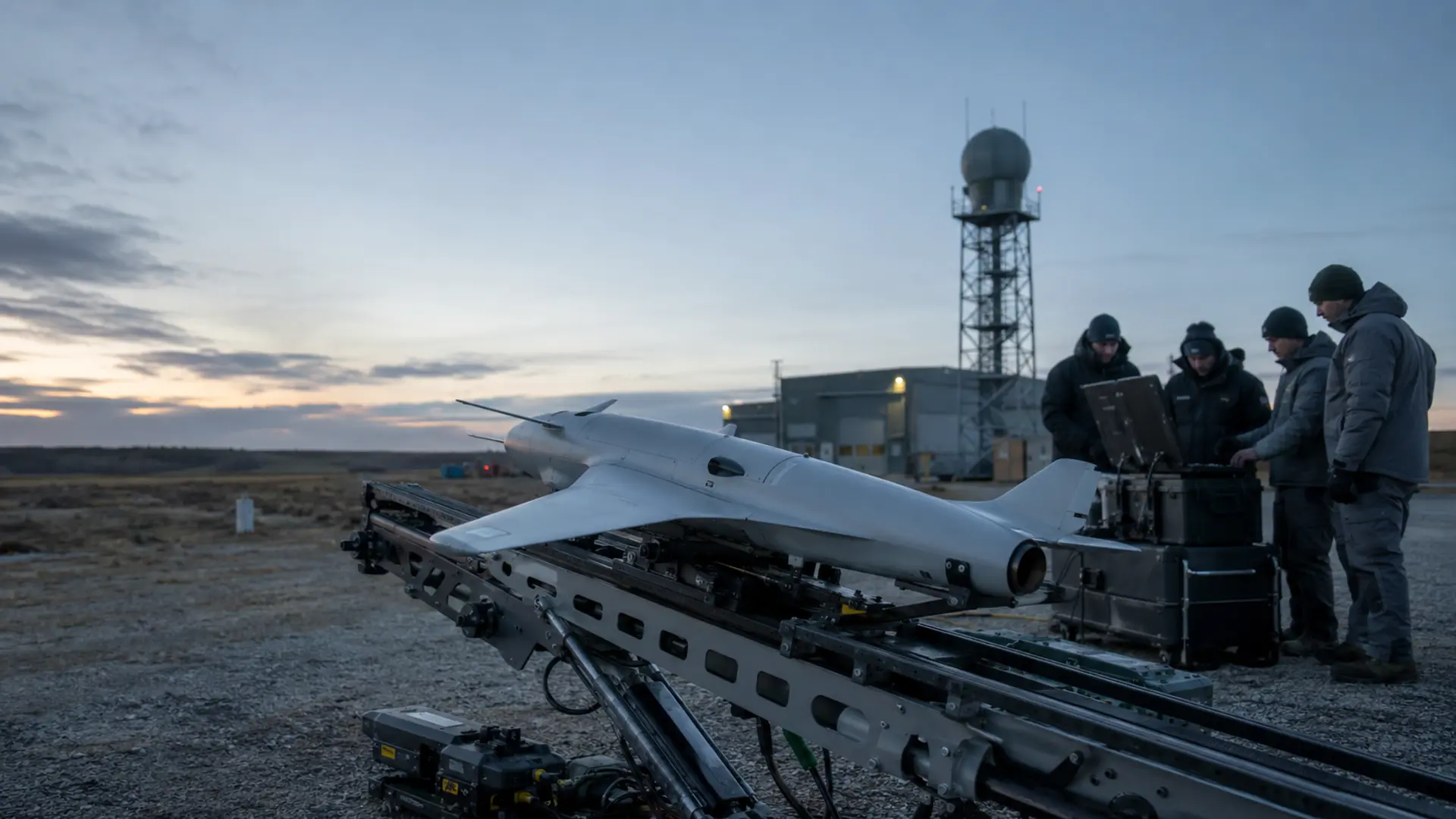
Alta Ares has raised €50 million in fresh funding, turning a young French counter-drone startup into another test of whether Europe can move defense technology from battlefield urgency to industrial scale.
The round, reported Tuesday by Reuters and Sifted, comes as governments and investors are reassessing air-defense capacity after repeated drone and missile attacks showed the limits of traditional, high-cost interceptors. Alta Ares says its systems use artificial intelligence to help intercept and destroy drones, missiles and glide bombs, a market where cost, speed and production capacity now matter as much as technical performance.
The financing is not just another defense-tech raise. It sits at the intersection of venture capital, European security policy, Ukraine’s battlefield experience and a wider industrial question: whether startups can produce effective systems quickly enough for militaries that are trying to replenish and modernize air defenses at the same time.
Alta Ares Enters A Larger Defense-Tech Cycle
The Alta Ares round gives Europe a fresh example of venture money moving into military hardware that only recently would have struggled to fit the standard startup model. Investors are increasingly willing to back defense companies when the product has clear operational demand, recurring procurement potential and a path to production.
Reuters reported that Alta Ares raised the money in its second funding round, after a much smaller €2 million raise in May 2025. The new capital will be used to expand production, chief executive Hadrien Canter told the news agency.
Why Alta Ares Matters To Investors
Alta Ares is operating in a market where the demand signal has become hard to ignore. Low-cost attack drones have forced militaries to think differently about air defense, because using expensive missiles against mass-produced unmanned aircraft can quickly become economically unsustainable.
That cost mismatch is one reason counter-drone startups have attracted more attention. The appeal is not only that a new interceptor may work technically, but that it may offer a cheaper response to repeated attacks, letting armed forces preserve more expensive air-defense assets for higher-end threats.
Sifted reported that the €50 million Series A was led by Air Street Capital, with Cherry Ventures, OTB Ventures and Harpoon Ventures among the backers. That investor mix matters because it shows counter-drone systems moving from niche procurement conversations into a venture-backed category with transatlantic capital support.
How Defense Demand Has Changed
Europe’s defense market has been reshaped by the war in Ukraine, but the implications now extend beyond the front line. NATO countries and allied governments are trying to rebuild inventories, add domestic manufacturing capacity and support technologies that can be adapted quickly as drone tactics change.
Alta Ares says its drone interceptors are already deployed in Ukraine, the Middle East and Asia, according to Reuters. That does not remove execution risk, but it gives the company a stronger claim than many early-stage defense startups that are still waiting for field validation.
French coverage distributed by AFP and carried by Boursorama also framed the raise around a capability gap in counter-drone defense. That framing is important for investors because it points to a market driven by operational need rather than a purely speculative technology cycle.
Production Is The Real Alta Ares Test
For Alta Ares, the business question now shifts from whether investors believe in the need for counter-drone systems to whether the company can manufacture at the pace customers require. Defense hardware startups often face a harder scaling path than software companies because supply chains, testing, export rules and procurement cycles all move differently.
Sifted reported that Alta Ares plans to use a mix of external manufacturers and in-house capabilities, with a new production facility expected in Toulouse. The company is targeting a much larger production rate from the start of 2027, according to the same report.
Alta Ares Must Scale Beyond Prototypes
Counter-drone technology is judged harshly in practice. Systems must detect, track and intercept small fast-moving targets under difficult conditions, often while operators face electronic warfare, poor visibility and rapidly changing attack patterns.
That makes manufacturing quality as important as headline capability. A startup can show impressive demonstrations, but military customers need repeatable performance, reliable parts, support capacity and enough units to cover real-world threats.
Alta Ares is trying to move through that difficult middle stage. Reuters said the company makes ammunition equipped with AI to intercept and destroy drones, missiles and glide bombs. If it can scale production while maintaining reliability, the company could become part of Europe’s broader effort to close gaps in layered air defense.
Factories Become Strategic Assets
The Toulouse production plan shows how defense startups are being pulled toward industrial policy. For Europe, the priority is no longer only to invent new systems, but to make them in enough volume and inside trusted supply chains.
This is especially relevant for air defense. Drone attacks can consume interceptors quickly, and the production race can determine whether a defensive system remains useful after the first wave of demand. Investors therefore have to examine not only the technology, but also the sourcing, assembly and quality-control plan behind it.
Alta Ares’ expansion targets also suggest the company is thinking beyond France. Reuters reported that the startup aims to develop activities in Poland, Germany and the United States, countries that all sit close to major defense procurement conversations for European and allied security.
Ukraine Experience Gives Alta Ares A Market Signal
The Ukraine connection gives Alta Ares a sharper commercial story, but it also raises the standard of verification and caution. Defense companies often describe systems as combat-proven, while outside observers still need to distinguish between deployment, operational use, confirmed performance and procurement scale.
What can be stated with more confidence is that Ukraine has accelerated the market for low-cost air-defense alternatives. The conflict has shown how drones can pressure cities, energy infrastructure and military logistics, while also forcing defenders to search for less expensive ways to defeat repeated attacks.
Alta Ares And The Shahed Problem
Russia’s use of Shahed-type one-way attack drones has become a central reference point for counter-drone companies. These systems are relatively cheap compared with many traditional air-defense interceptors, and they can be launched in numbers that strain defensive coverage.
That is where AI-guided interceptors become commercially interesting. If a system can identify and engage drone threats at a lower cost, it could help militaries reserve high-end missiles for aircraft, cruise missiles or ballistic threats.
Prior defense coverage has linked Alta Ares systems to efforts to counter Shahed drones, and Tuesday’s funding reports place that battlefield demand at the center of the company’s growth plan. Still, the investment case depends on production scale, customer adoption and credible performance data, not only on the visibility of the threat.
Europe’s Defense Startups Gain Leverage
European startups in defense technology are gaining leverage because governments need faster suppliers and more flexible development cycles. Traditional primes remain central to procurement, but smaller companies can sometimes iterate more quickly around urgent battlefield feedback.
Alta Ares fits that pattern. It is young, focused and tied to a specific operational problem rather than a broad defense platform. That focus may make it easier to attract capital, but it also concentrates execution risk around one market where technology and tactics can change quickly.
The round also shows how venture investors are becoming more comfortable with dual-use and defense-only businesses. That is a meaningful shift for Europe’s startup ecosystem, where defense investing had long faced cultural, regulatory and exit-market hesitation.
What Comes Next For Counter-Drone Funding
The Alta Ares financing will likely be read alongside other counter-drone and defense-robotics deals, as investors look for signs that the sector can produce venture-scale outcomes. The field is crowded, but demand is real, and public-sector budgets are moving toward unmanned threats.
The central question is whether startups can convert urgent interest into durable procurement. Military buyers do not buy the same way enterprise software customers do, and field performance can create or destroy a company’s reputation faster than a polished funding announcement.
Alta Ares Faces Procurement Reality
Defense sales require patience and evidence. Even when a capability is urgently needed, customers often require testing, integration with existing systems, export approvals, training and long-term support commitments.
For Alta Ares, that means the €50 million round is a starting point rather than proof of market dominance. The company must show it can meet military standards while scaling production and keeping unit economics attractive enough to solve the cost problem that made counter-drone systems urgent in the first place.
If it succeeds, the company could become part of a new European defense supply layer, sitting between traditional contractors and battlefield-driven innovation networks. If it stumbles, the sector will remain a promising but difficult category where demand does not automatically translate into sustainable companies.
The Investor Signal Is Broader Than Alta Ares
The broader signal is that investors are now treating air-defense technology as an industrial growth market, not only a government procurement niche. The same logic has been visible in autonomous systems, battlefield software, secure communications and defense manufacturing startups.
That does not mean every counter-drone startup will become a large business. The market will likely reward companies that can combine reliable hardware, adaptable software, credible deployment records and the ability to produce at scale.
Alta Ares has now raised enough capital to make that case more seriously. The next evidence investors will watch is whether the company can turn deployment claims and production plans into signed contracts, repeat orders and sustained manufacturing output.
Alta Ares’ new funding captures a larger shift in European defense technology: the race is moving from urgency to capacity. As drone threats keep reshaping security budgets, readers can continue following related startup, investment and industry coverage at Berrit Media.
Discover more from Berrit Media
Subscribe to get the latest posts sent to your email.