Apoha Funding gives a London- and San Francisco-based physical-world AI startup $36 million to build what it describes as a missing data layer for how molecules and materials behave under real-world conditions.
The company emerged from stealth in early June with backing led by Singular and participation from Tim Draper’s Draper Associates, Seedcamp, Redalpine, Wilbe, Nucleus and grant support from Innovate UK, according to MobiHealthNews and other technology coverage. The round is modest compared with the largest AI financings of 2026, but the angle is distinct: Apoha is not trying to train another language model. It is trying to measure how matter changes, fails and performs so AI systems can reason about drugs, food, materials and physical products with better empirical data.
Apoha Funding Targets A Physical AI Data Gap
The Apoha Funding story sits at the intersection of deep tech, healthcare, materials science and venture capital. The company’s thesis is that AI has learned from massive text, image and audio datasets, but still lacks comparable behavioral data about physical matter.
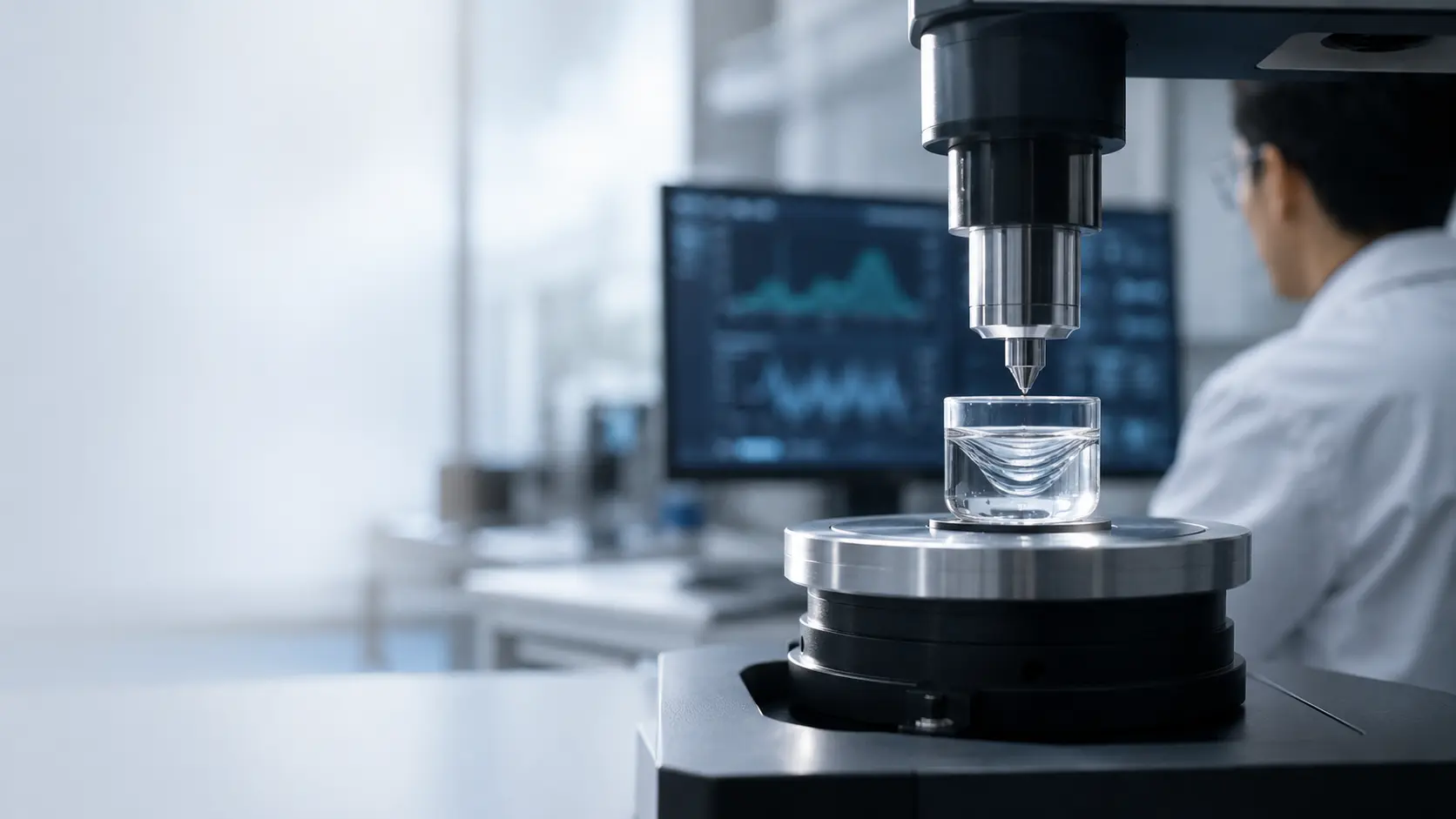
Apoha calls its approach Liquid State Intelligence. Its platform measures how tiny samples of molecules, formulations or materials respond when they are suspended in liquid and exposed to stress, turning the resulting wave patterns into machine-readable data for AI models.
Why Apoha Funding Is Different From Model-Lab Raises
Much of the AI funding cycle has centered on software models, coding tools, cloud infrastructure and agents. Apoha’s raise is different because the company is trying to create experimental data that cannot simply be scraped from the internet or synthesized from existing digital archives.
In a June 3 company essay, Apoha CEO and co-founder Shamit Shrivastava argued that machines have learned to see, hear, read and speak because cameras, microphones, text and the internet created large-scale datasets. Apoha’s contention is that the contact senses of touch, taste and smell never produced an equivalent corpus for machine learning.
That framing matters for investors because it positions Apoha as a data-infrastructure company for the physical world, not just a laboratory automation startup. If the platform proves useful, the defensibility may come from proprietary behavioral measurements as much as from software models.
How Liquid State Intelligence Works
MobiHealthNews reported that Apoha’s Vibe product suspends a small sample in liquid, applies stressors and captures the wave patterns generated by the molecule or material in response. The company says those patterns produce more than 1,000 empirically measured descriptors of behavior.
The practical goal is to detect whether a molecule, formulation or material is likely to aggregate, gel, crystallize, separate, degrade or otherwise fail under realistic conditions. That could be important in drug discovery, where a candidate can have promising biology but still fail because it cannot be formulated, delivered or manufactured reliably.
Apoha says its technology has been used to identify high-risk antibody candidates from very small amounts of material. MobiHealthNews reported the company’s claim that Boehringer Ingelheim uses the platform to identify high-risk antibody candidates with greater than 90 percent precision from just eight micrograms of material. That claim should be read as company-reported performance, but it gives the market a concrete benchmark for the platform’s intended use.
Apoha Funding Extends AI Beyond Digital Data
The broader significance of Apoha Funding is that AI investment is moving deeper into areas where better models alone may not be enough. Physical-world AI often needs fresh measurement systems, laboratory workflows and domain-specific datasets before software can deliver reliable predictions.
This is a different investment proposition from a pure application layer. Apoha’s opportunity depends on whether its measurement platform can become a repeatable source of behavioral state data for customers in pharmaceuticals, food, beverage, materials and other science-driven industries.
Why Molecules Need More Than Structure
Apoha’s company materials argue that molecules and formulations are not defined only by composition or structure. They also have behavior: how they respond to concentration, temperature, shear, surfaces, buffers, storage, time and other conditions that determine whether a product actually works.
That distinction is especially relevant in biologics and complex formulations. A therapeutic antibody may bind the right target and still encounter problems if it aggregates, gels, precipitates or otherwise behaves poorly during development or delivery.
For AI systems, the bottleneck is that these behaviors are hard to predict from static descriptors alone. Apoha’s pitch is that dynamic contact-based measurements can capture signals conventional assays measure slowly, separately or too late in the product-development process.
Where The Platform Could Find Demand
MobiHealthNews said Apoha is targeting drug discovery and other industries including food, materials and physical-world AI. TechMarketView separately described the company as addressing a data gap beneath physical AI through the Vibe platform.
In food and beverage, behavioral data could help identify proteins, sweeteners, fats or formulations that perform like existing ingredients under heat, shear, storage or mouthfeel requirements. In materials, the same logic could apply to electrolytes, coatings, polymers, serums, fuels or other formulations where performance depends on behavior under stress.
The commercial question is whether customers will treat Apoha’s data as a high-value decision layer. If its readouts can reduce failed experiments, shorten development timelines or surface better candidates earlier, the company could sit in an important workflow between discovery and scale-up.
Apoha Funding Tests The Physical AI Investment Thesis
Venture investors have increasingly backed companies that extend AI from digital tasks into physical systems. Robotics, autonomous labs, industrial simulation, chip design, materials science and drug discovery all depend on models interacting with the real world rather than simply generating text or images.
Apoha fits that pattern, but with a narrower and more scientific claim. It is trying to convert material behavior into data that AI systems can use, which could make it relevant to both scientific discovery and product development.
Why Investors May Care About The Data Layer
Singular led the round, while Draper Associates and existing backers joined, according to MobiHealthNews. For investors, the appeal is likely tied to a familiar AI infrastructure question: who owns the data layer that makes models useful in a high-value domain?
General AI systems can assist with research, search and workflow automation, but the strongest scientific AI products often depend on proprietary experimental data. Apoha’s argument is that behavioral state data can become a new input category for models that need to understand molecules and materials in context.
That gives the startup a potentially differentiated position if the measurements prove reproducible, scalable and commercially useful. It also gives customers a reason to engage even if they already use other AI drug-discovery or laboratory automation tools.
The Risks Behind Apoha Funding
The opportunity is still early. Apoha’s language around machines learning to taste, feel and smell is compelling, but the company will need to show that its measurements consistently improve decisions across industries, not only in selected use cases.
Scientific platforms face adoption hurdles that software startups often avoid. Customers will ask whether the data is reproducible across labs, whether readouts correlate with real product performance, whether workflows fit existing R&D processes and whether regulatory or quality teams can trust the outputs.
There is also competition from established analytical instruments, simulation tools, automated labs and AI drug-discovery platforms. Apoha does not need to replace all of them, but it must prove that its behavioral measurements add information those systems cannot easily provide.
What Comes Next For Apoha Funding
The fresh capital gives Apoha room to expand its Liquid State Intelligence technology and translate stealth-era research into broader commercial deployment. The company has been founded since 2021, and its public launch moves the story from laboratory promise to customer execution.
The next milestones will likely be more important than the size of the round. Investors and customers will watch for named partnerships, peer-reviewed or customer-validated performance data, broader product availability, and evidence that the platform can work across multiple material classes.
Partnerships Will Shape Credibility
For a company operating in science-heavy markets, partnerships can matter as much as capital. Apoha’s reported work with Boehringer Ingelheim gives it a pharma reference point, but broader adoption will require more proof across different types of molecules and formulations.
Pharmaceutical customers may be especially valuable because failed developability decisions can be expensive. If Apoha can identify weak candidates earlier, the economic case could be direct: fewer wasted experiments, faster prioritization and better use of scarce material.
Food, beverage and materials companies may provide a different kind of validation. Those markets involve complex product behavior, consumer experience and manufacturing constraints, giving Apoha a chance to show that Liquid State Intelligence is not limited to one narrow pharmaceutical workflow.
Why The Story Matters Beyond Apoha
The Apoha Funding development also says something about where AI investment is heading. The next defensible AI businesses may not all be built on larger models. Some may be built on better instruments, better measurements and proprietary datasets that help models understand parts of the world that were not previously digitized.
That is why a $36 million round can still be strategically interesting. If AI is moving from digital content toward physical products and scientific discovery, the companies that create new data classes may become more important than their funding totals suggest.
For Berrit Media readers, Apoha’s launch is a reminder that the AI market is broadening from model scale to measurement depth. The question now is whether Liquid State Intelligence can move from a compelling scientific thesis into repeatable commercial infrastructure. Continue reading related coverage at Berrit Media for more analysis of startups, deep tech and the investment shifts shaping physical-world AI.
Discover more from Berrit Media
Subscribe to get the latest posts sent to your email.