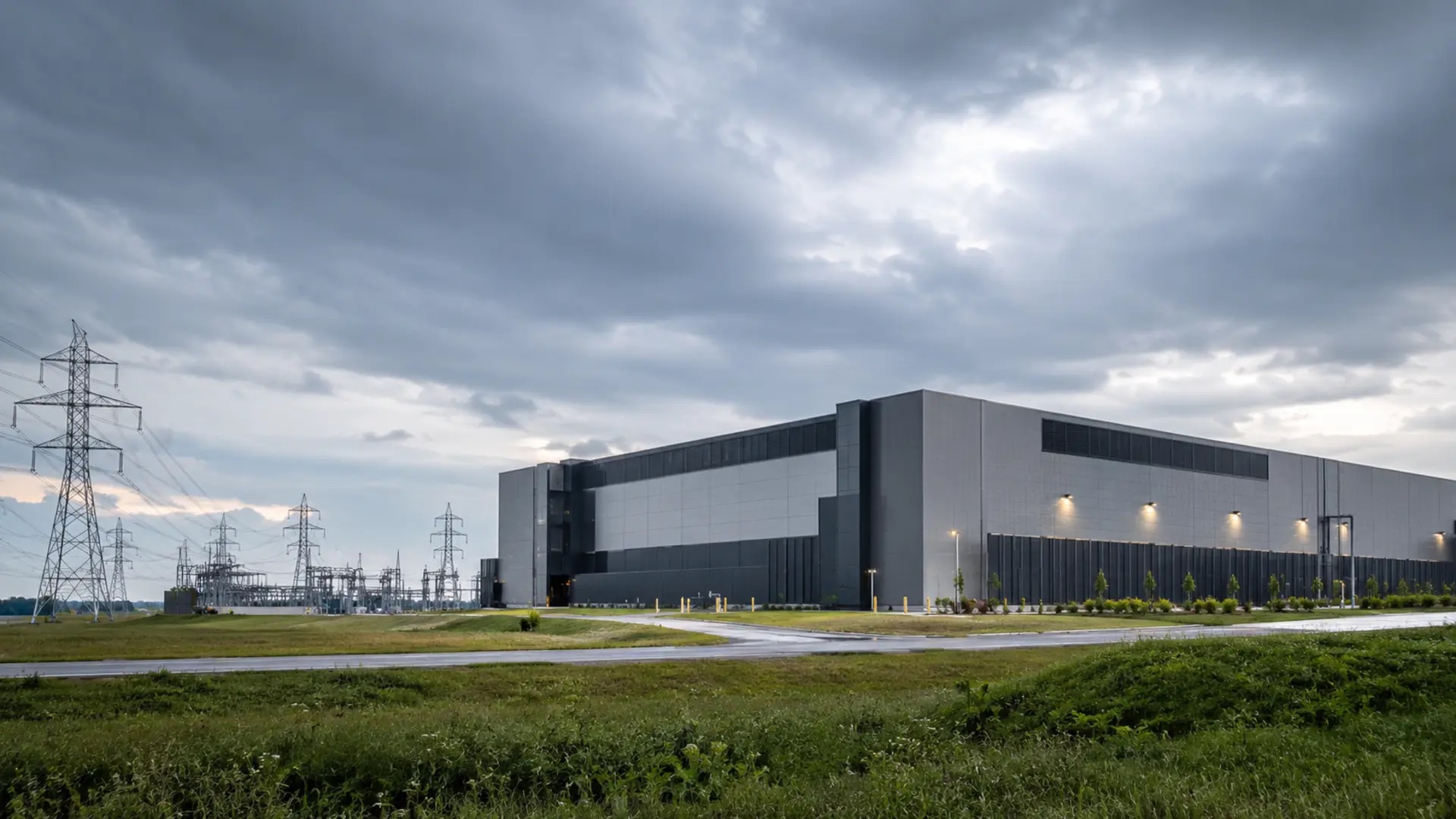
Data Centers are becoming a new test of state industrial policy after Ohio paused new tax exemptions for the large computing facilities that underpin artificial intelligence, cloud services and digital infrastructure.
Gov. Mike DeWine announced on May 27 that the Ohio Tax Credit Authority should pause consideration of new data center tax exemption requests while lawmakers study the sector’s growth and its wider impact. The decision, reported by the Associated Press and Ohio-based outlets, does not ban new projects, but it temporarily removes a major incentive from one of the most active U.S. data center markets.
The move matters beyond Ohio because it shows how quickly the economics of AI infrastructure are colliding with state budgets, power systems and local politics. For technology companies, developers, utilities and investors, the question is no longer only where to build. It is also whether public subsidies can survive the scale of demand created by the AI boom.
Data Centers Force A New Incentive Debate
Ohio’s pause turns a tax-policy dispute into a broader signal for the data center industry. States have spent years using tax breaks, infrastructure support and faster approvals to attract cloud and technology investment, but the fiscal cost of that strategy is now receiving sharper scrutiny.
DeWine said data centers remain a critical part of a technology-driven economy and pointed to the importance of data infrastructure for innovation and business attraction. At the same time, his office said a temporary pause was appropriate while the Ohio General Assembly’s Joint Data Center Committee reviews the full impact of the sector’s rapid growth.
Data Centers Shift From Economic Prize To Budget Exposure
The immediate trigger was the scale of Ohio’s sales and use tax exemption for data centers. AP reported that the state had projected the exemption would total $136 million in fiscal 2025 and $142 million in fiscal 2026, based on prior experience. Instead, the state reported that the cost reached $554 million in 2024 and nearly $1.6 billion in 2025.
That gap changes the political frame. A subsidy that once looked like a manageable tool for economic development now looks large enough to compete with other budget priorities. It also makes the cost of AI-era infrastructure more visible to taxpayers, especially when data centers often create fewer direct jobs than factories of similar capital intensity.
For business leaders, the lesson is that incentive stability cannot be assumed when usage grows faster than public forecasts. A data center project may still bring construction activity, local tax revenue, utility investment and technology-sector visibility, but lawmakers are increasingly likely to ask whether the public contribution is proportionate.
That question is likely to travel. Other states competing for AI infrastructure will watch Ohio’s review because many use similar economic-development playbooks. If incentives become more expensive than expected, governors and legislatures may face pressure to cap, narrow or redesign them before the next wave of hyperscale commitments arrives.
Tax Incentives Now Sit Inside The Data Centers Business Model
The Ohio case also shows that tax incentives have become embedded in the economics of data center development. Large facilities require servers, cooling systems, backup equipment, electrical components and construction materials at a scale that can make sales and use tax exemptions highly valuable.
DeWine’s office said data centers that had previously received sales and use tax benefits reported $27.2 billion in capital investment in 2025. AP separately reported that Ohio saw roughly $37 billion in data center-related investment in 2024 and 2025, underscoring why state officials have treated the sector as strategically important.
Yet the same investment scale makes exemptions more expensive when deployment accelerates. As AI workloads require more computing capacity, each new wave of chips, servers and electrical equipment can increase the value of tax-free purchases. That links the public cost of incentives directly to the pace of technology spending.
Investors should therefore treat state incentive policy as part of data center risk analysis. A project can still be attractive without a subsidy, but any sudden change in tax treatment can affect construction budgets, returns, site selection and negotiations with utilities or local governments.
Why The Data Centers Pause Matters For AI Infrastructure
Ohio is not simply reviewing an isolated tax benefit. It is confronting the pressure created by the AI infrastructure buildout, where cloud providers, colocation firms and hyperscale developers are racing to secure land, power and connectivity.
The political difficulty is that the benefits and burdens do not always arrive in the same place. A data center campus can support a state’s technology brand and attract capital, while nearby communities may focus on electricity demand, water use, land changes, noise, transmission lines and the limited number of permanent operating jobs.
Data Centers Are Becoming A Power-System Question
The AI boom has turned electricity availability into a central constraint for technology growth. Data centers need large, reliable power supplies, and the newest AI facilities can require far more energy density than earlier cloud computing campuses.
That demand creates a difficult policy trade-off. States want the investment, but utilities and regulators must determine who pays for generation, transmission, grid upgrades and reserve capacity. If those costs are spread too broadly, households and smaller businesses may conclude that they are subsidizing the infrastructure behind private AI services.
Ohio’s review gives lawmakers time to examine that balance. The pause is limited to new tax exemption requests, but the wider debate is about whether the public sector has enough information to evaluate long-term costs before approving more incentives.
This is where the story intersects with national AI strategy. The United States wants more domestic compute capacity, but compute capacity is not abstract. It requires physical campuses, grid capacity, skilled labor, cooling infrastructure and predictable permitting. State policy will shape how quickly that capacity can be built.
AI Infrastructure Incentives Face Local Political Limits
Public resistance is becoming a material constraint for data centers. AP reported that opposition has swept through cities, suburbs and towns in Ohio, while residents are trying to get a referendum on the November midterm ballot that would seek to ban hyperscale data centers statewide.
Whether or not that effort succeeds, it shows how quickly data center politics can move from zoning meetings to statewide campaigns. That matters for developers because community acceptance is becoming part of project execution risk, alongside financing, power procurement and supply-chain timing.
Business groups and labor unions have pushed back, warning that pausing the tax break could make Ohio less competitive against other states. Their argument is straightforward: if states reduce incentives, projects may move to markets that still offer lower costs and faster approvals.
But the counterargument is gaining force. Critics contend that the public should not provide open-ended benefits without clearer evidence of net value. For policymakers, the challenge is to avoid a binary choice between rejecting data centers and subsidizing them without limits.
What Ohio’s Data Centers Review Could Change
The next phase will depend on how Ohio’s legislative committee frames the evidence. A narrow review could focus on revenue loss and application procedures. A broader review could examine electricity demand, water use, local land impacts, job creation, public transparency and the structure of future incentive agreements.
The pause gives state officials a chance to reset terms before approving more exemptions. It also gives the industry a chance to make a more detailed case for why public support should continue and what safeguards should come with it.
Data Centers May Face More Targeted Incentive Rules
One likely outcome is not a permanent rejection of incentives, but a more targeted version of them. Ohio could choose to limit eligibility, require stronger reporting, add cost caps, tie benefits to local infrastructure commitments or differentiate between projects based on power use, job creation and community agreements.
That would mirror a broader shift in economic development. Public officials are increasingly under pressure to prove that subsidies produce measurable returns. For data centers, that could mean more scrutiny of permanent employment, taxable activity, utility investments and whether local communities receive enough direct benefit.
Technology companies may also need to disclose more about the infrastructure effects of their projects. In the past, confidentiality around customers, equipment and power needs was often treated as routine. As data centers become more politically contested, opacity may become a liability.
For investors, targeted rules would not necessarily be negative. Clearer standards can reduce uncertainty if they establish predictable approval paths. The greater risk is a patchwork of sudden pauses, local moratoriums and ballot initiatives that make planning harder across markets.
State Competition For Data Centers Could Become More Selective
Ohio’s decision could encourage other states to reconsider how they compete for data centers. The old model rewarded speed and generosity. The next model may reward disciplined incentives, grid planning and credible community benefits.
That shift would not end competition. AI infrastructure demand remains strong, and companies still need large sites close to power and fiber. But it could change the terms of competition from simple tax relief toward more complex packages built around energy supply, workforce, permitting and public accountability.
The companies best positioned for that environment will be those that can show local value beyond construction spending. Long-term power procurement, grid contributions, community investment, water-management plans and transparent reporting may become as important as headline capital expenditure.
Ohio’s pause is therefore a warning and an opening. It warns that AI infrastructure incentives can become politically fragile when costs outrun projections. It also opens the door to a more mature framework for deciding which data center projects deserve public support.
Data Centers will remain central to the AI economy, but Ohio’s tax pause shows that the public terms of that buildout are still being negotiated. The next stage will test whether states can attract digital infrastructure while protecting budgets, communities and power systems, and readers can continue following related coverage at Berrit Media.
Discover more from Berrit Media
Subscribe to get the latest posts sent to your email.