Rail merger scrutiny intensified on May 28, 2026 after U.S. regulators paused their review of Union Pacific’s proposed combination with Norfolk Southern and demanded a much deeper record on competition, service quality, shipper access, and industry spillover effects before the case can move ahead.
The Surface Transportation Board said it was accepting the carriers’ revised major merger application for consideration, but holding the rest of the proceeding in abeyance while the companies provide supplemental information by July 27. That means the merger remains alive, yet the evidentiary bar has clearly risen at a moment when investors, customers, labor groups, and rival railroads are all trying to shape the outcome.
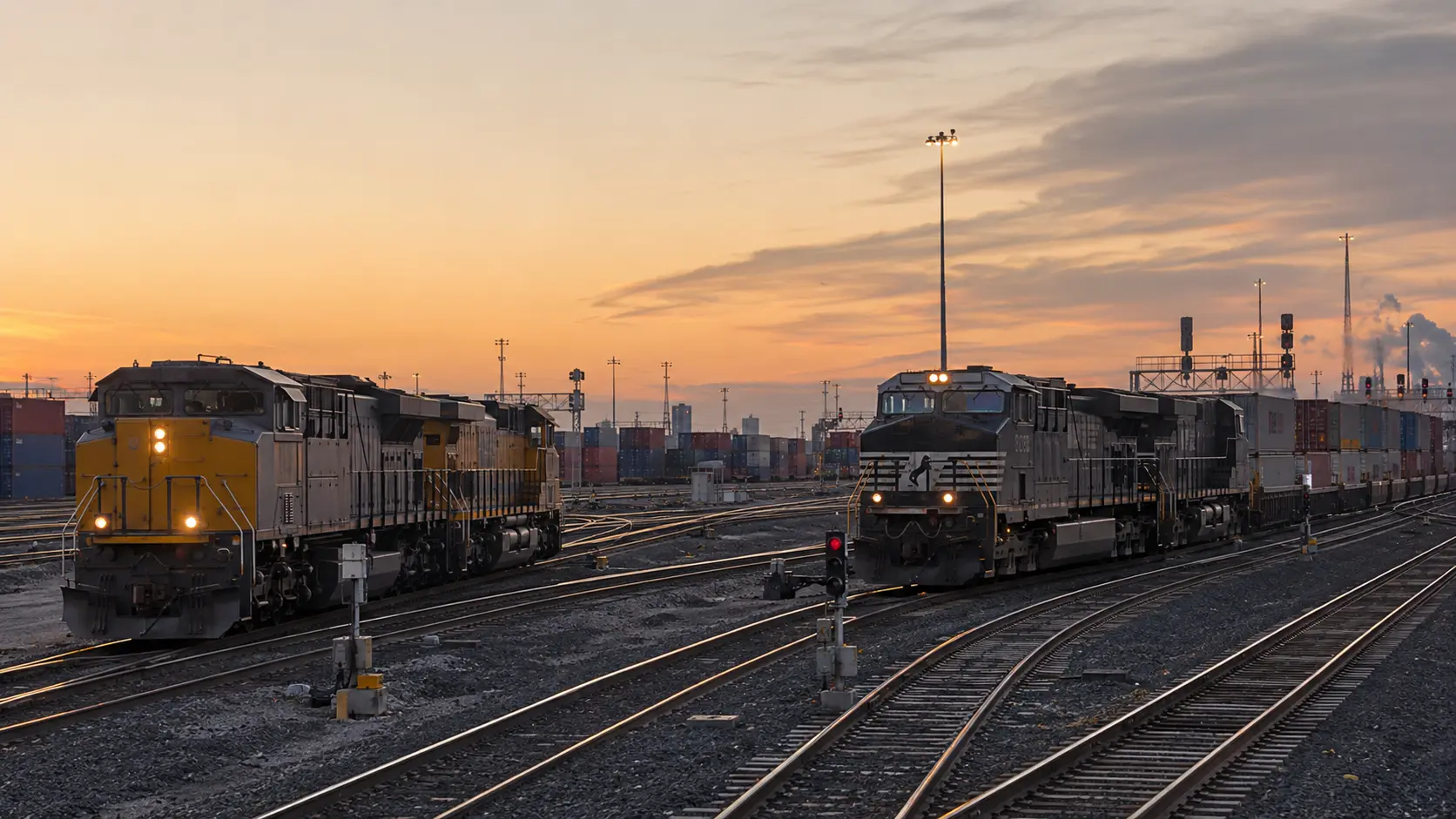
The pause matters because the deal would redraw the structure of U.S. freight rail. Union Pacific and Norfolk Southern argue that combining their western and eastern networks would create the country’s first transcontinental freight railroad, while critics say the transaction could reduce competitive options for shippers and put more pressure on service reliability across a system that already sits at the center of U.S. supply chains.
Why the Rail Merger Review Was Paused
The board’s latest decision did not reject the application, but it made clear that the current record is still not detailed enough for hearings and environmental review to continue. In its notice, the regulator listed a long set of unresolved questions that go well beyond headline market-share concerns.
That matters because large U.S. rail combinations are judged not only on whether they create a bigger network, but also on whether they preserve effective competition, protect connecting railroads, avoid service disruptions during integration, and avoid harming passenger operations or local communities. The board’s order shows it wants more than broad strategic promises before it lets the process advance.
Rail Merger Questions on Competition
The Surface Transportation Board said the companies must supply more information on how the combined railroad would affect competition in specific traffic lanes, gateways, and interchange points. Regulators are also asking for a stronger explanation of how shippers that rely on access to more than one rail option would fare after the combination.
The supplemental request also reaches downstream effects. The board wants more support around traffic-diversion assumptions, market-share projections, and the way the transaction could influence smaller connecting carriers or future consolidation elsewhere in the industry. Those requests suggest the agency is looking not only at the direct overlap between Union Pacific and Norfolk Southern, but also at how the combination could reshape bargaining power across the wider rail network.
For a transaction of this size, that distinction is important. A railroad merger can appear limited on a route map while still changing pricing leverage, equipment flows, or interchange economics in ways that ripple into ports, warehouses, manufacturers, and agricultural shippers. By pausing the case now, regulators are signaling that those second-order effects need to be documented, not merely asserted.
Rail Merger Questions on Service and Access
The board is also pressing the companies on service assurance. Its order asks for more complete evidence on gateway access, car supply, operating assumptions, and the practical protections available to customers during what would likely be a long and complex integration period.
That service focus is central to how U.S. rail deals are judged. Freight customers care less about merger logic in the abstract than about whether trains arrive on time, interchange handoffs remain smooth, and service failures can be corrected quickly when networks are stitched together. The regulator’s latest filing shows it wants those risks addressed in operational terms rather than left to general management confidence.
The request reaches beyond freight customers alone. The agency also asked for fuller treatment of possible effects on passenger and commuter services, as well as the supporting work papers behind certain assumptions in the revised application. That broader scope reinforces the idea that the board sees the case as a public-interest test, not just a corporate combination.
What Union Pacific and Norfolk Southern Have Argued
Union Pacific and Norfolk Southern returned with a revised application on April 30 after the board said on January 16 that the original filing was incomplete. The companies have spent the months since then trying to present the deal as a network-expansion case that would improve efficiency and strengthen rail’s competitive position against long-haul trucking.
In their public materials, the carriers say a combined railroad would allow more single-line service across the country, shorten handoffs, and make the freight system easier for customers to use. Their argument is that scale, if structured properly, would not simply enrich the merged company but could make the wider logistics chain more efficient.
Rail Merger Cost Savings Claim
The companies have said the transaction could generate about $3.5 billion in annual value for shippers. They have also argued that a coast-to-coast network would simplify routing and help pull freight off highways, framing the merger as an efficiency and infrastructure play rather than a simple consolidation bet.
That argument is commercially powerful because railroads remain a backbone for industrial goods, chemicals, agriculture, autos, and intermodal freight. If a single-line network truly reduced transfer friction, some customers could benefit from lower complexity and shorter transit times. But the board’s latest order shows those claims still need more detailed support before they can carry the case.
The companies now have an opportunity to strengthen that record. Their next submission will matter because it has to translate strategic claims into line-by-line competitive analysis, operational commitments, and evidence that customers would keep meaningful alternatives where regulators think concentration could become a problem.
Rail Merger Burden Remains High
This case is unfolding under the more demanding merger standards that have governed major U.S. rail combinations for years. Reuters reported that the proposed Union Pacific and Norfolk Southern deal would be the first major railroad merger to be considered under the stricter rules adopted after earlier rounds of consolidation reshaped the sector.
The board’s filing also makes clear that the review will remain broad and public. It said a full environmental impact statement is appropriate and outlined plans for multiple in-person scoping meetings as well as virtual sessions. That kind of process lengthens the path to approval and gives customers, local communities, labor groups, and rival carriers more time to build the record for or against the transaction.
In practical terms, that means the burden on management is no longer just to sell the logic of a bigger railroad. It is to prove, in detail, that the system would work better for the market after the merger than it does before. The current pause underscores how far the companies still have to go on that front.
What the Pause Means for Shippers, Rivals and Investors
The immediate market reading was cautious. Reuters reported that Union Pacific shares fell about 4.2% and Norfolk Southern shares dropped roughly 5.4% in morning trading after the board’s action, reflecting investor concern that the review could become longer, costlier, and less predictable.
That reaction fits the broader politics of the deal. Reuters also reported that the proposed combination has drawn opposition from business groups, rival railroads, and labor unions. Even for investors who like the strategic logic, the transaction now faces a wider contest over competition policy, network reliability, and who would bear the risks if integration goes badly.
Rail Merger Timeline Gets Longer
The most obvious effect of the board’s decision is delay. With the proceeding paused until supplemental information is filed on July 27, the companies must first satisfy the regulator that the record is complete enough to resume the rest of the case.
That alone can shift the economics around a transaction. A longer review can increase advisory and planning costs, complicate stakeholder management, and create more time for critics to challenge assumptions on service, pricing, and competition. Reuters said the board’s normal review timetable could push any final decision well into 2027, which raises the chance that external market conditions will change before the deal is decided.
For shippers, the longer timeline creates a different kind of uncertainty. Customers that might benefit from single-line service cannot plan around those gains yet, while customers worried about concentration have more time to press their case. In a sector where contracts, equipment planning, and routing decisions stretch far beyond a quarter, that uncertainty has real business consequences.
Rail Merger Stakes for U.S. Logistics
The larger issue is what kind of freight network U.S. regulators want to encourage. Supporters of the deal see a chance to create a more seamless rail system that could compete harder with trucking and handle cross-country freight with fewer handoffs. In that version of the story, the merger is a scale response to modern logistics demands.
Critics see something else: a risk that fewer major players could weaken shipper leverage, reshape interchange access, and set off pressure for further industry consolidation. The board’s request for more evidence suggests regulators are taking that concern seriously, especially where local market structure or connecting-carrier access could leave some customers with fewer practical alternatives.
That is why the current pause matters beyond the two companies involved. The Union Pacific and Norfolk Southern case is becoming a test of how U.S. merger policy balances scale, infrastructure efficiency, competition, and execution risk in one of the country’s most important industrial networks.
For now, the rail merger remains possible but far from settled. The next filing will determine whether Union Pacific and Norfolk Southern can turn an ambitious strategic case into a convincing regulatory one, and readers can continue following related business and policy coverage at Berrit Media.
Discover more from Berrit Media
Subscribe to get the latest posts sent to your email.